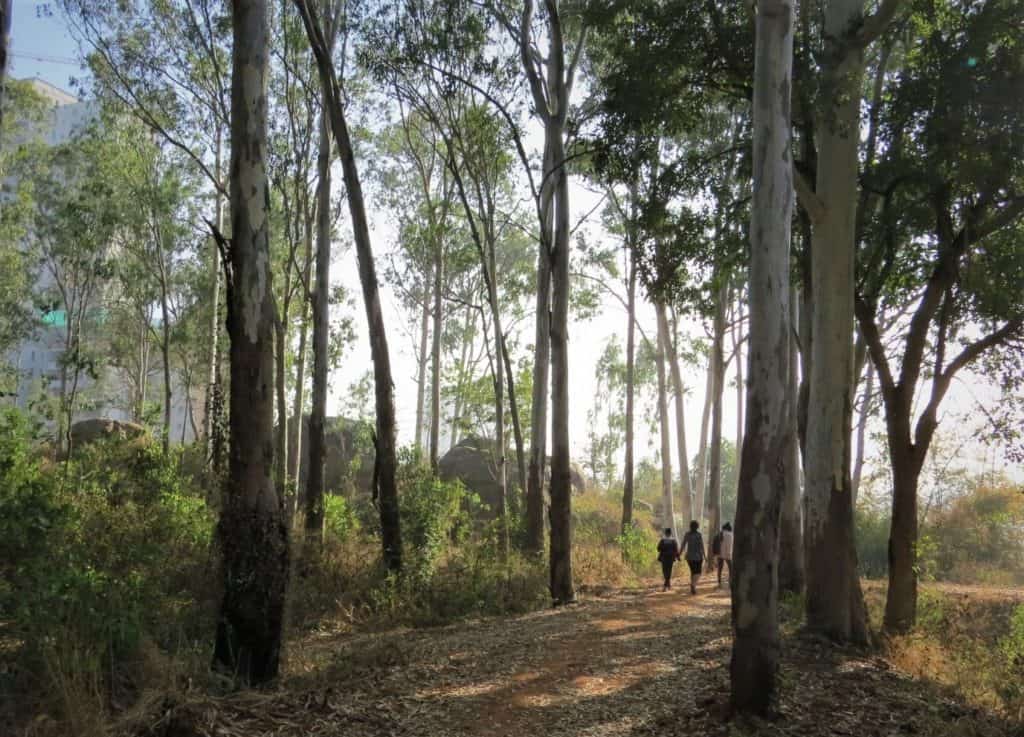
A multi-cause walk! What is that, you might ask. Well, I conducted one at Turahalli “Tree Park” (I have to put that odd name in inverted commas still!) on February 13.
We have, for some time now, been protesting vigorously against the Karnataka Forest Department (KFD), who after already carving out a slice of the Turahalli forest and making a “Tree Park”, were proposing to make yet another one, with cement seats and play areas and sandpits, in the middle of the last standing piece of the once-majestic forest.
After strong protests, the KFD finally climbed down and said they would put their plans “on hold” — which is a minor victory — but we are afraid they will bring up the plan again soon. As per the recent announcement, the existing “tree park” is now set to get a play area, cemented seats, and metal play equipment, at a cost of several lakhs to the exchequer.
Read more: Why has the ‘tree park’ plan in Turahalli forest irked Bengaluru?
I have been conducting birding and nature walks for a while now after the COVID lockdown was lifted, and having visited Turahalli Tree Park earlier, felt it was a productive (not too manicured) place for birds and other living beings.
I also realised that conducting a walk during the particular weekend (February 12-15, 2021) would mean that I would be doing an open walk for the Great Backyard Bird Count (GBBC), which is a global event that runs for four days every February. So all these reasons combined resulted in this walk at Turahalli.
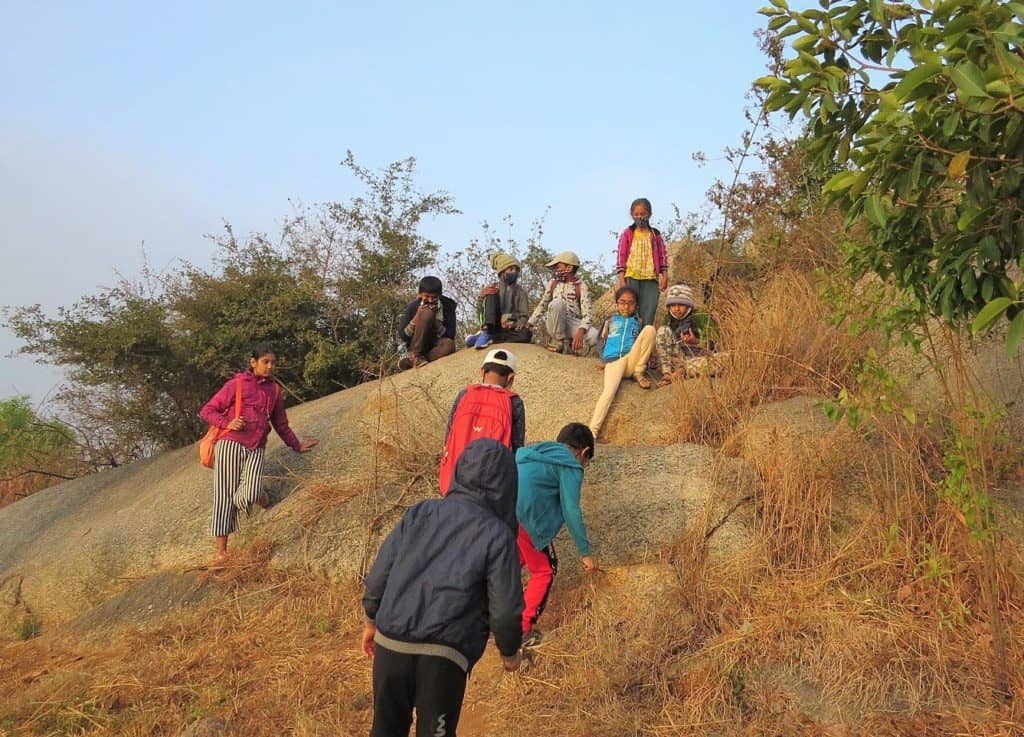
Vijetha Sanjay, who is a children’s nature mentor, brought all the children of her “Chiguru” (green shoots) group, and several people from the neighbouring apartment complexes joined in too.
I had expected about 30-35 people, but ultimately, about 60+ people joined the walk, which was very heartening indeed. Waking up and being at a birding spot at 6 am is not easy for anyone!
Spotting the birds
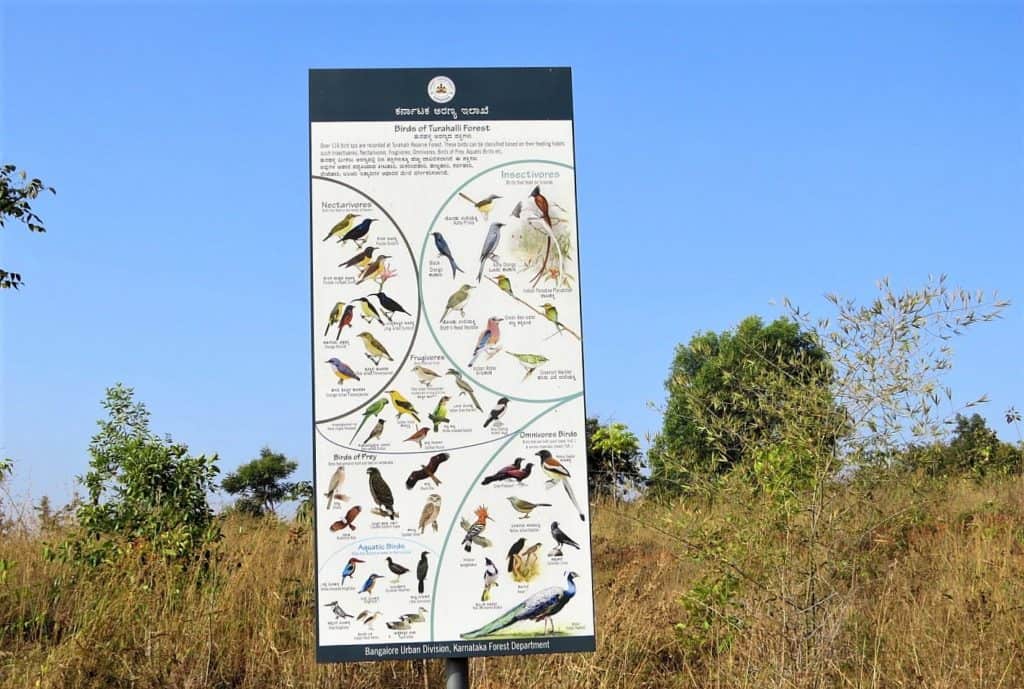
We started our walk by listening to several birds — the Coppersmith and White-cheeked Barbets, the Tailorbirds and the very-loud-for-its-size Ashy Prinia.
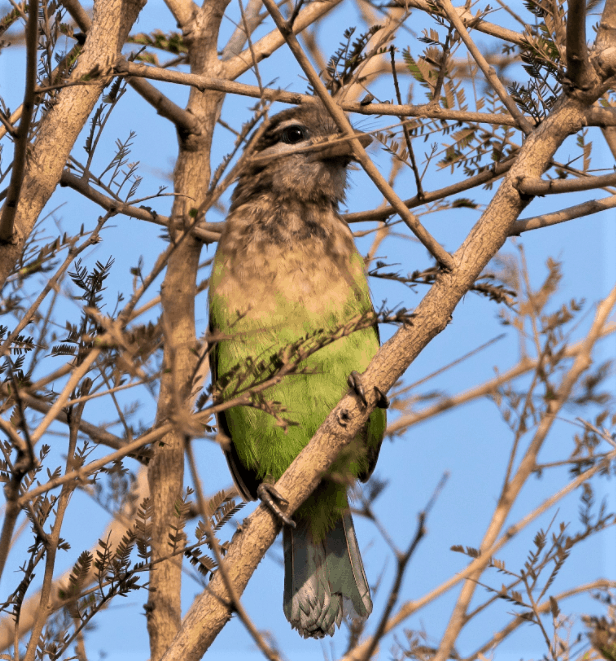
But more delights awaited us on both the audio and video fronts. Certainly, I had not thought that I would hear Puff-throated Babblers with their “p-Q!” call, though I expected the chatter of the Yellow-billed Babblers.
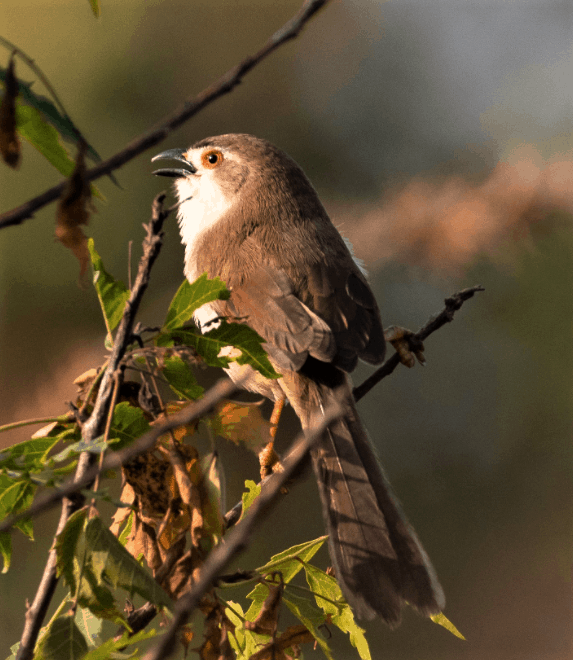
Another Babbler that gave us a video, as well as audio, was the Yellow-eyed Babbler, and many of us were able to click them too, to their satisfaction.
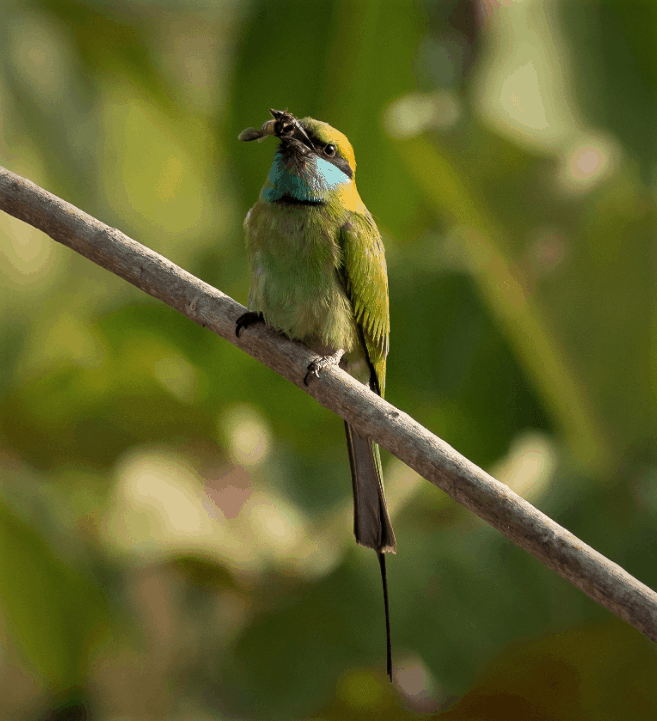
Apart from the usual Green Bee-eaters, Vishesh spotted one Chestnut-headed Bee-eater too.
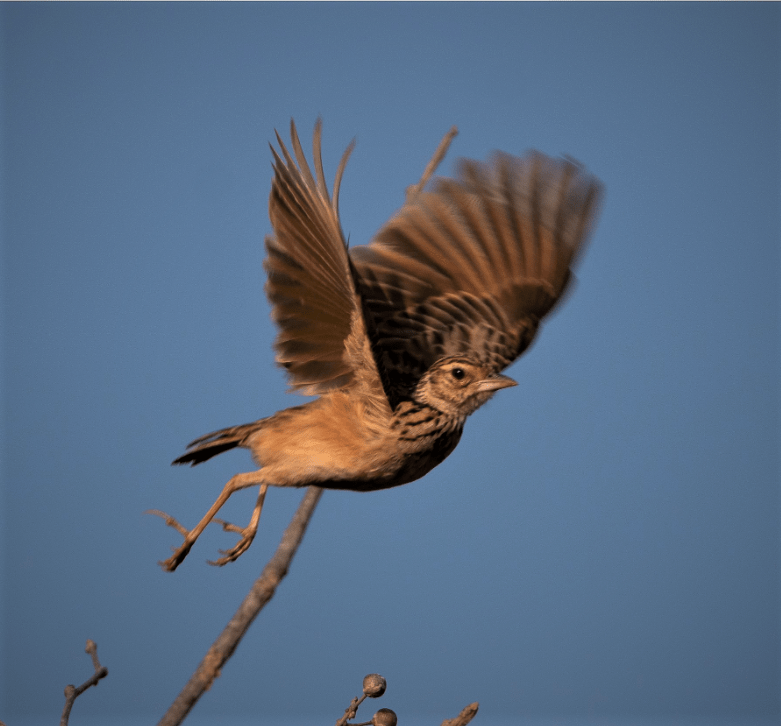
A Jerdon’s Bushlark greeted us with the typical Lark behaviour, flying into the air, singing, and then dropping back.
A Greater Coucal (it’s called the Southern Coucal now, I think) came briefly out into the open, before hopping back into the clutter. Drongos, both Ashy and Black, swooped around, calling as they hawked insects for their breakfast.
The smaller birds did not disappoint us either. Whether it was the smallest bird known in India now (the Pale-billed Flowerpecker) or a winter visitor( Asian Brown Flycatcher), they both could be seen clearly. Two female Red Avadavats showed us their lipsticked beaks as they foraged.
A Common Hawk-Cuckoo (no longer common, alas) posed on a perch for us; its characteristic call could be heard at many places as we walked. Two Grey Francolins suddenly fluttered off from the ground where our approach disturbed them. Swallows, both Red-rumped (resident) and Barn (migrant) swooped overhead.
Two Cinereous Tits put up a dance show for us as they hunted for insects on the trees, flying around each other as if just enjoying the air and the morning. It was difficult to identify the warblers that we saw in brief flashes! But the Indian White-eyes were easy to see as they flitted across as yellow dots.
The Black and Brahminy Kites soared overhead, and we watched Purple and Purple-rumped Sunbirds nectaring on the flowers of trees.
Read more: Tale of a backyard bird-rescue
Very satisfied with the way our outing had turned out in terms of birds, we walked back to the gate, and dispersed to our homes; some of us stopped by at SLV Coffee Thindi for some delicious breakfast and hot coffee!
You can see all the pictures of the birds spotted on eBird and the entire album of the walk on Flickr.
Superb article…we just missed as we joined this group exactly after a week.
How can we get in touch with the team for future bird walks if any?