Long before it was called the commuter rail or the suburban rail, it was known as the circular rail.
When it was first talked about in the 1980s, it sounded like simplicity itself: Bengaluru has railway tracks on three sides — East, North and West. Build tracks on the Southern side and voila, we will have a circular railway that goes all around the city. Well, that was the plan.
Let alone its name, even the concept of a circular railway was forgotten. Years later, when several mass transit options were considered to meet the growing city’s transport needs, the commuter/suburban rail project did not receive the boost it needed.
Our 2009 article Commuter rail plans going nowhere? talked about the back and forth between the State and the Railways over commuter rail project (CRP). Many moons, Budgets and announcements have passed by. Finally in October 2020, the project was approved by the Prime Minister’s Office.
The much-downsized proposal now is for 148 km, and 58 stations, with four corridors: KSR Bengaluru City to Devanahalli, Baiyappanahalli to Chikkabanavara, Kengeri to Whitefield, Heelalige to Rajanakunte.
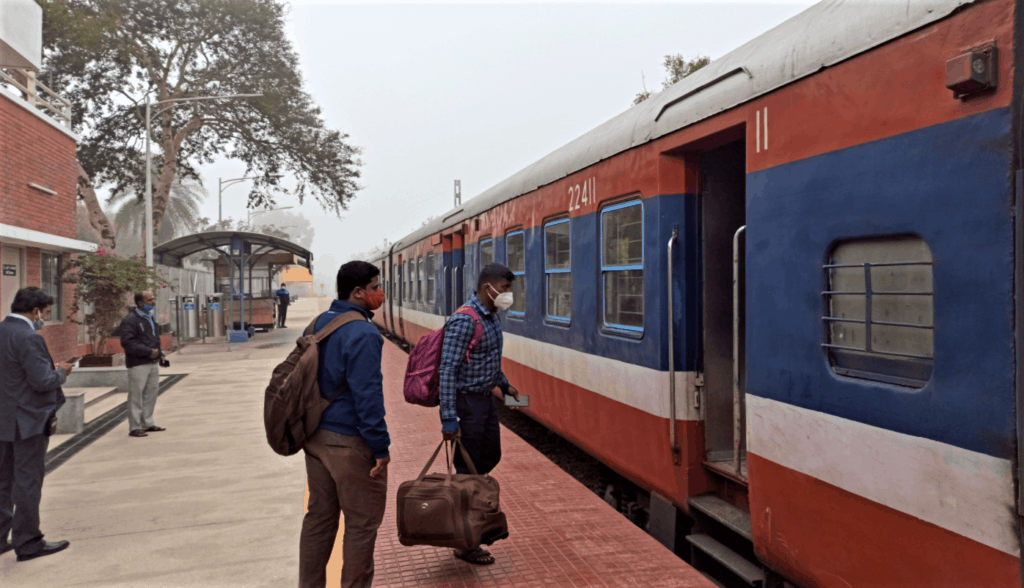
On January 4 this year, the Bengaluru-Kempegowda International Airport Halt (KIAH) service train started on the existing track. The next commuter rail service is expected only in 2023-24. These are only baby steps.
Activists and public opinion have played a stellar role in keeping the movement for commuter rail alive for over three decades. The concept received unprecedented public support soon after the #steelflyoverbeda protest, when the commuter rail — through the #chukubukubeku campaign — was presented as the alternative.
On January 16, 2021, Citizen Matters arranged a discussion with a panel of rail activists on the way forward for the CRP. They included: Prakash Mandoth, Ex-Zonal Railway Users Consultative Committee; Rajkumar Dugar, Citizens for Citizens; Sanjeev Dyamannavar, Praja RAAG; Tara Krishnaswamy, Citizens for Bengaluru; Zibi Jamal, Whitefield Rising; and Sathya Sankaran of Praja RAAG.
Read more: If Bengaluru needs Commuter Rail, Commuter Rail needs Bengaluru
The panel agreed that mobilising the suburbs is the way forward for the much-sidelined project, and prescribed what citizens should do to ensure there are no more delays. Here’s what they had to say:
Sathya Sankaran — Praja RAAG
Zibi Jamal — Whitefield Rising
Rajkumar Dugar — Citizens for Citizens
Tara Krishnaswamy — Citizens for Bengaluru
Sanjeev Dyamannavar — Praja RAAG
Prakash Mandoth — Former ZRUCC
Also read:
The state needs to step up and do the needful. However, the Metro Lobby is so strong that every possible attempt to scuttle this project.