Recently, a few of us from the ‘Save Our Lake’ group of L & T South City and Brigade Millennium apartments formed the Puttenahalli Neighbourhood Lake Improvement Trust (PNLIT), and formally registered it under the Trust Act of the Government of Karnataka.
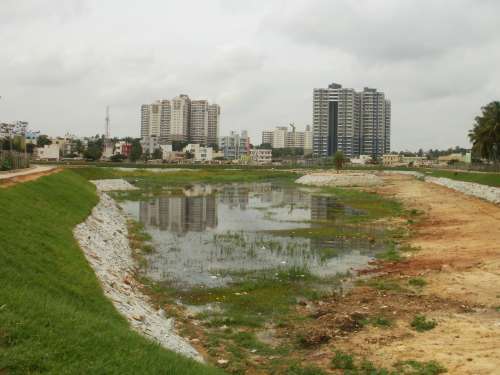
We have been working for a while to restore Puttenahalli Lake, and turn it into a place of conservation and recreation amidst our homes. Citizen Matters too has helped in this cause. Thanks to the BBMP, allied agencies and individuals, this restoration is now showing visible signs of success. PNLIT will also be procuring saplings to help attract birds.
Given that PNLIT has been involved in the revival of the Puttenahalli Lake, right from getting it included in BBMP’s list of lakes to be restored, we are confident that the management of the area and maintenance of the lake will be entrusted to us.
Our initial focus has been the lake and we also plan to work on environment protection, interventions to boost the economy of the area, partner charitable efforts of individuals and organisations in the area and create educational programs that promote social and economic objectives for the neighbourhood.
It took our Save Our Lake Team nearly two years but we managed to get our Puttenahalli Lake entered in the BBMP’s list of lakes for revival. The first list had only some 20 odd lakes (http://www.bbmplakes.info)
Get others interested in this exercise. Do a signature campaign and contact your local MLA, BBMP councillor of your ward.
Write to the BBMP Chief Engineer (Lakes). Contact NGOs like Bangalore Environment Trust for advice. Usha Rajagopalan
We can build a showcase neighbourhood initiative, and be a trend-setter in our city. We invite you and others who feel for the environment to contribute to PNLIT generously, and make this dream take shape before our eyes.
We are happy to report that the initial response to PNLIT and its proposed activities has been very encouraging, and we hope that you will help add to this momentum. Together we can make Puttenahalli Lake and the region around it a model area.
With warm regards,
First Trustees of PNLIT: Arathi Manay, Usha Rajagopalan, O P Ramaswamy, Prasanna K Vynatheya.
⊕