World Water Day – Let’s clean our lake!

With our trees sprouting new leaves or bursting into flower, each day is a celebration of our lake. The World Water Day (March 22nd) is but an excuse for us to get together and do our bit for Water. Post Ugadi, please join us on Sat. 28th March to clean the dry parts of the lake bed. Help us remove the plastic, pull out weeds and plant bamboo perches for the birds. For just a couple of hours of work on one day in a year, get the satisfaction of preparing your lake for the monsoon. 
 
We are delighted to have the Karnataka State Pollution Control Board as our partner in this lake clearing drive.
 
Time: 7 a.m. to 9 a.m.
Venue: Puttenahalli Lake, near MLR Convention Hall

Tender new leaves
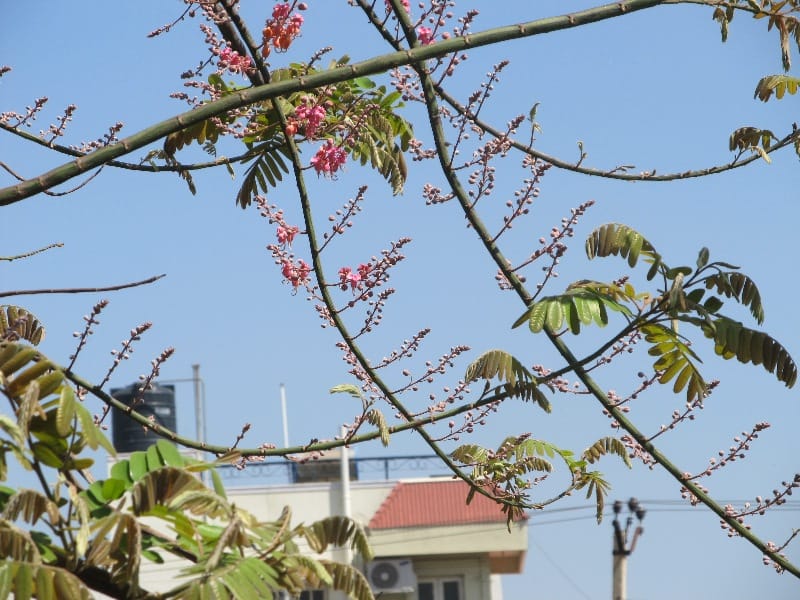
Pink Cassia flower bud sprays

Good site for planting bird perch

To ensure that we have enough garden equipment for all volunteers, please confirm your participation with a reply to this mail.  Children below 15 years can work with you on the bund, de-weeding, mulching, etc. There will be plenty of work for all!   
 
With Ugadi greetings,
Usha
 

Leave a Reply

Your email address will not be published. Required fields are marked *

Similar Story

The wild in the city: What citizen scientists tell us about Bengaluru’s biodiversity

Spatial and temporal biodiversity patterns, as observed by citizen scientists in the city during 2016-2025, were studied at a datajam in December 2025.

Imagine you’re out on a morning walk, phone in hand, when you spot a butterfly you’ve never seen before. You snap a photo, log it into a citizen science app, and voila! You’ve just contributed to crucial biodiversity monitoring. This isn’t just a hobby; it’s part of a global movement where ordinary people collect, record, and sometimes analyse data about plants, animals, and ecosystems. Citizen science stretches the reach of ecological research. Every observation adds to unique longitudinal datasets that reveal phenology — periodic events in the life cycle of a species — along with species distribution shifts and population…

Similar Story

Air quality management is a governance problem, not just an environmental one

Despite massive funding, Indian cities face weak governance, poor data, and limited capacity, as air pollution continues to worsen.

Indian cities are struggling to breathe. Air pollution is a year-round governance challenge. In 2024, 35 of the 50 most polluted cities globally were in India, with PM2.5 concentrations above 66.4 μg/m3. This is at least 13 times the World Health Organization (WHO) guidelines and at least 1.6 times the National Ambient Air Quality Standards (NAAQS) in India. Citizens continue to bear the brunt of worsening air quality, and urban local governments (ULGs) are at the forefront of the problem, being primarily accountable for their citizens' first mile. While they do have a role to play in addressing this threat,…