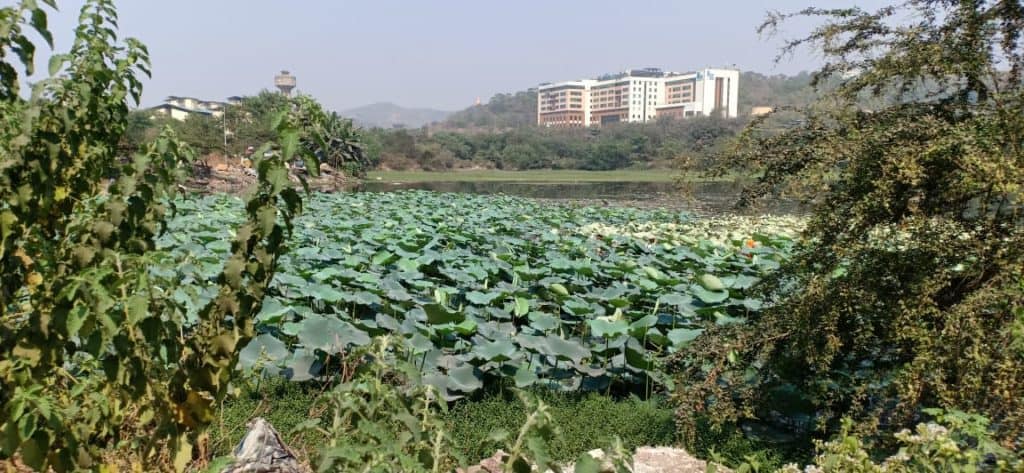
Another wetland in Navi Mumbai is under threat. Lotus Lake is located in Sector 27, Nerul, very close to the Belapur Sports Ground. The approximately 3-hectare lake derives its name from the thousands of lotus plants that can be seen on its surface, and in fact, lends its name to several shops and buildings in the area.
A notified wetland, but only on paper
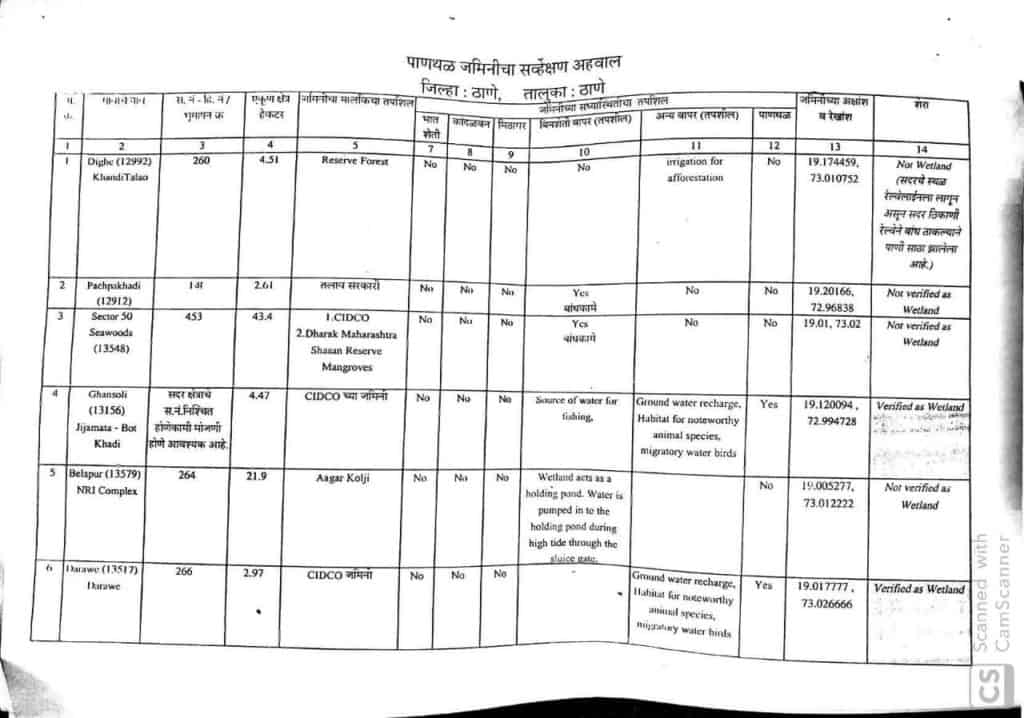
As per the National Wetland Atlas, the lake is a notified wetland. In its January 2019 assessment, the Thane Tahsildar has marked the Lotus Lake coordinates, officially known as “Darawe”, as owned by CIDCO and a “Verified as Wetland”. Despite this, nothing has been done to ensure that it remains so.
Read more: How a Navi Mumbai citizens group fought for the flamingos
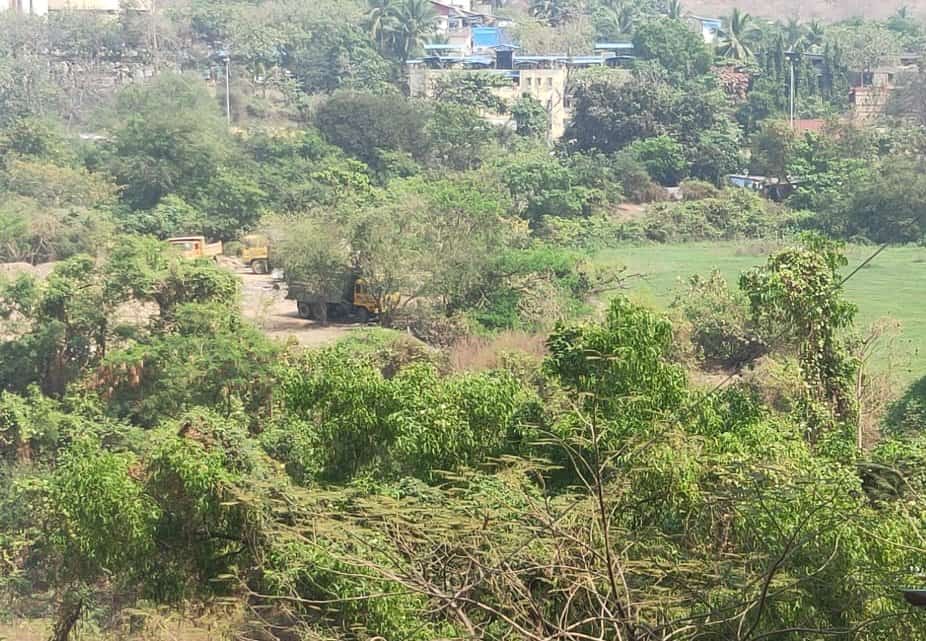
As with many water bodies, we’d noticed for a while that a part of the lake was encroached by human activity – mostly dumping of garbage. However, over the last few weeks, some vigilant citizens observed that the area has been very active. A part of the fencing has been removed to enable full size trucks to move in and out of the premises. There has been rampant dumping of building debris and rubble on the periphery of the lake and even in the water.
Discovery of illegal dumping activity
Some days ago, a few citizens from the neighbourhood took it upon themselves to keep “watch” at the place where the vehicles were entering. During this time they encountered a jeep from the Navi Mumbai Municipal Corporation (NMMC) Debris Dept. Two people who alighted told them to “move out of the way” as the dumper was going to come. On further conversation our citizen watch guards were shown a permission letter on the mobile that said that they were allowed to dump debris at the lakeside. The men seemed to be a bit disturbed by their presence, and they quickly started their jeep and left the place. Our citizens waited for a while but no dumper came. On talking to local folk and checking out the place, it was evident that about 500 truck loads of debris has already been unloaded.
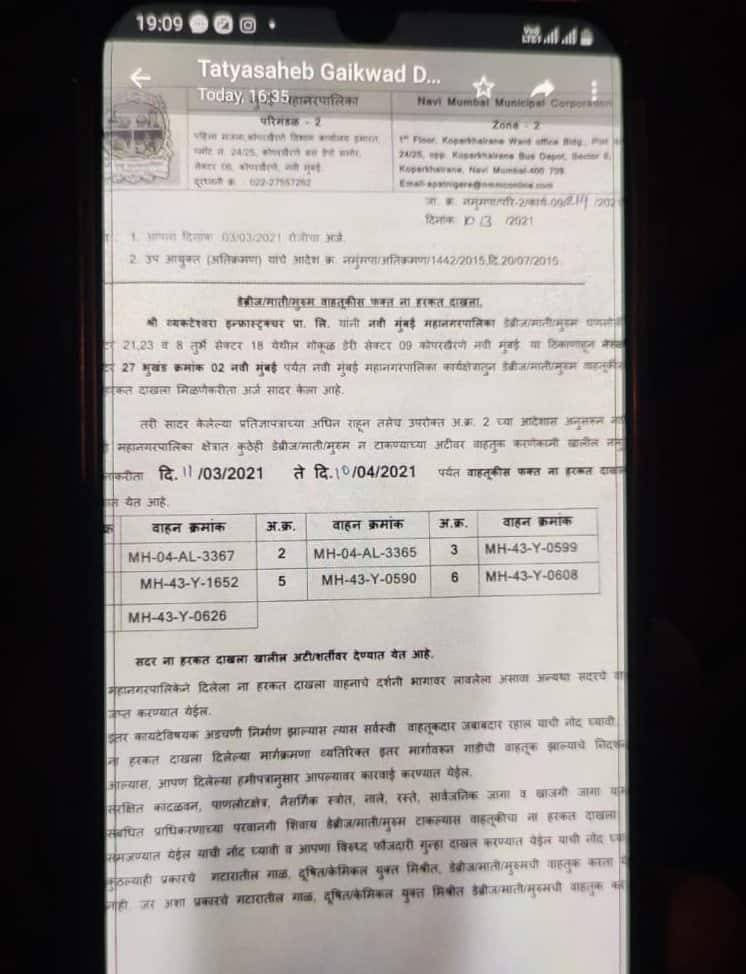
As per the permission letter / NOC, CIDCO has permission to lift debris upto Sector 27 Nerul on the condition that it should not be dumped within NMMC limits. If this is reported they would lose permission to operate and also be liable for prosecution.
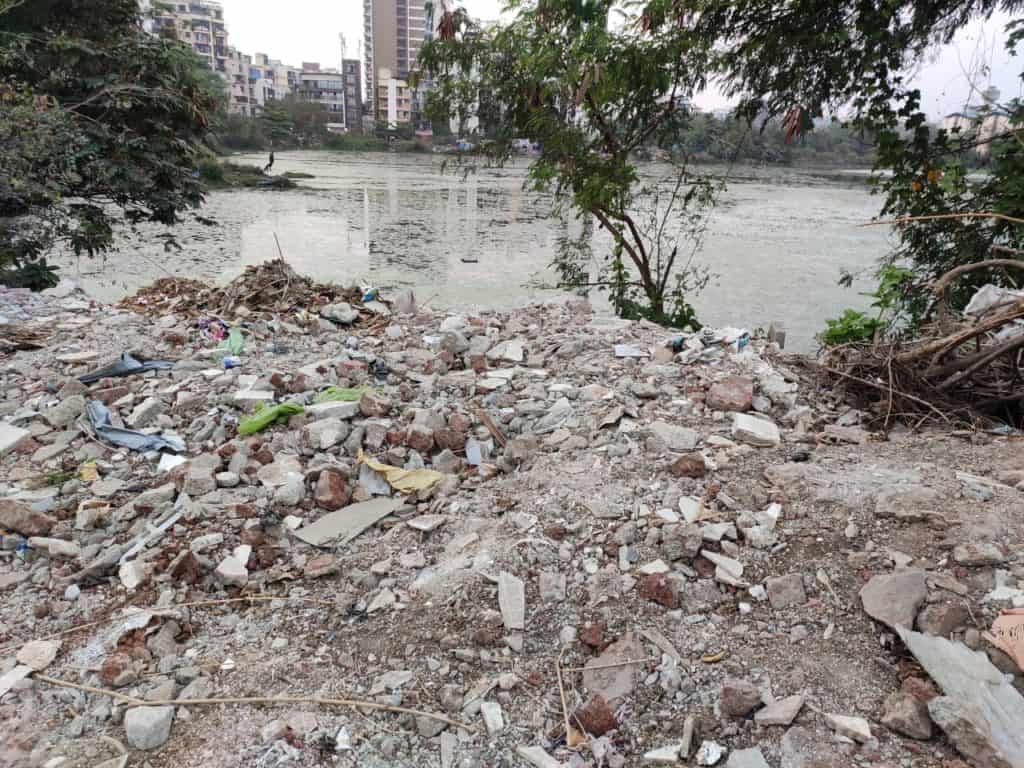
Our fears of losing another water body
As per a news report in Hindustan Times in Feb 2020, over the last 10 years, there has been a 99.5% drop in number of wetlands and 99.8% drop in wetland area for Thane district. We are afraid that this important “verified wetland” of Navi Mumbai will be destroyed by CIDCO. Looking at its track record of disregard for all environmental norms and laws, our fears are not unfounded, as incidents of the not so distant past reveal.
- In 2010, a similar attempt was made to destroy DPS Lake in Navi Mumbai. Residents needed to approach the Bombay High Court to save the lake by a Court Judgement.
- The MD of CIDCO, denied in writing the existence of Talawe and TS Chanakya Wetlands to Maharashtra Coastal Zone Management Authority (MCZMA) which resulted in approval being granted to private builder for construction of residential towers and golf course. Again the work was stopped by the High Court-appointed Wetlands Committee and the Bombay High Court stopped the destruction of these wetlands in the same judgment.
Currently, CIDCO is denying the status of this Lotus Lake (Darawe wetland) which has been verified by the Thane Tahsildar and it seems to be in a hurry to destroy it at the earliest. Plans reveal that CIDCO does not recognise the presence of the water body and proposes to set up a layout in its place in future.
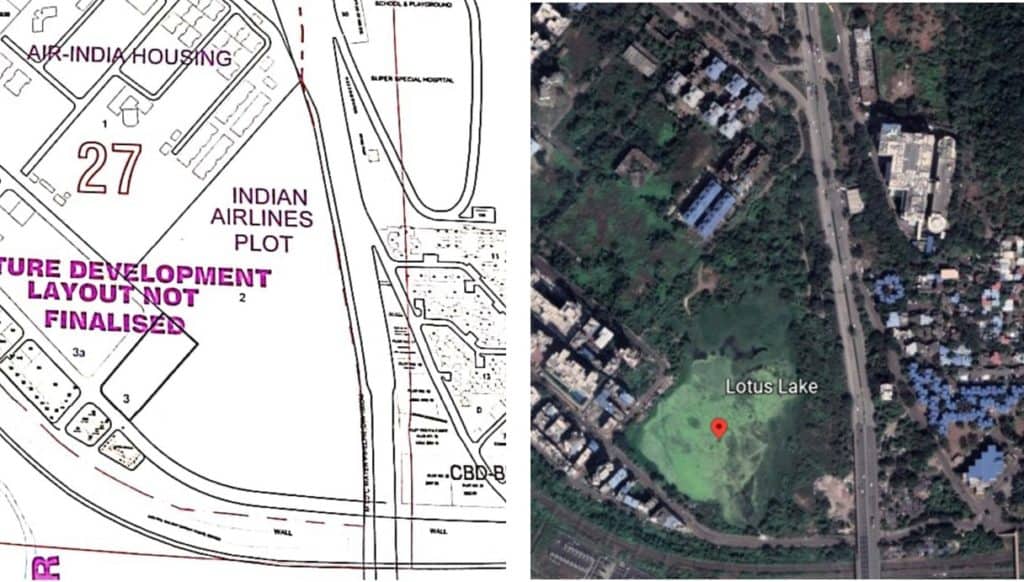
Prompt action
To our good fortune, the NMMC Commissioner, Mr. Abhijit Bangar, acted on our complaint of dumping very promptly. He visited the wetland himself, stopped the illegal dumping and has also withdrawn permission to CIDCO to transport and dump the debris.
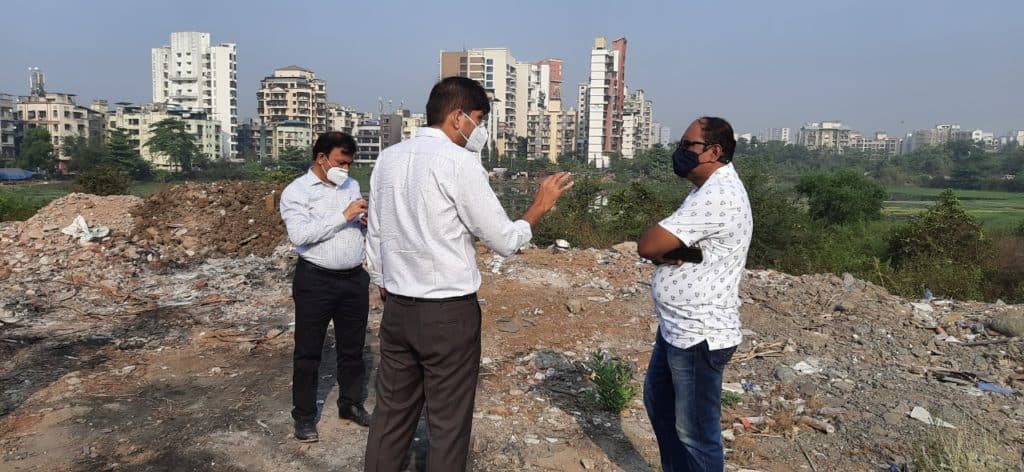
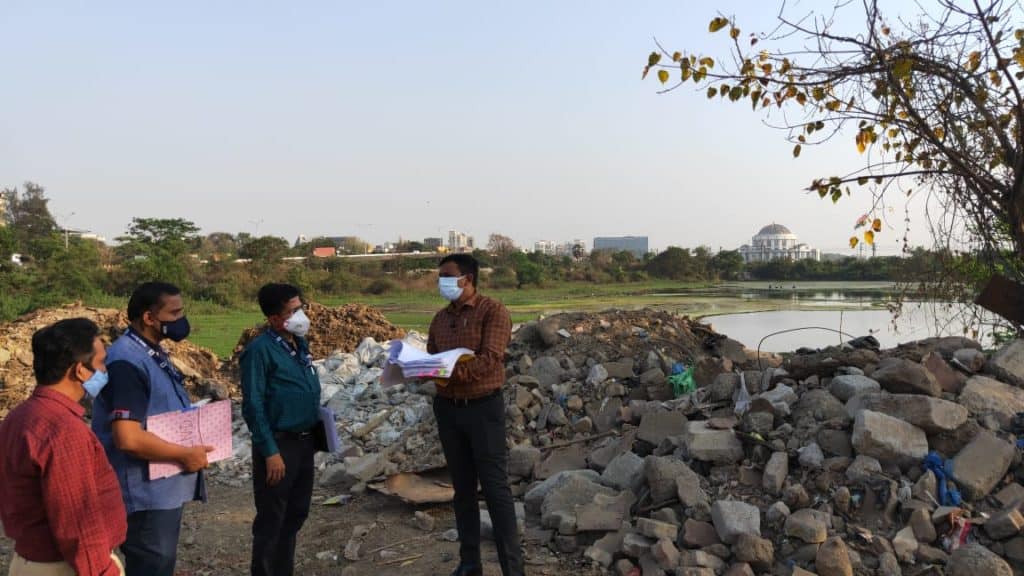
Thanks to the vigilance and proactiveness of residents and quick action by NMMC Commissioner Abhijit Bangar, we hope that Lotus Lake is really saved. We, the citizens of Navi Mumbai who care for our wetlands, demand an immediate site visit by the Wetland Committee in the presence of DCF Mangroves and Stalin Dayanand of Vanashakti to assess the damage to this wetland and order its restoration by removal of debris dumped. We also demand strict action against CIDCO officials responsible for this destruction.
Also read:
- The story of Taloja Hill: Determination can move mountains and grow forests
- Photo essay: Flamingo city in Navi Mumbai
- Photo Essay: Mangroves and their ecosystems
[Arathi Manay, Community Anchor at Citizen Matters, Mumbai, helped write the story.]
It is no longer shocking to find that the authorities themselves are often behind illegal activities by turning a blind eye. Thanks to alert local citizens, this lake, recognised officially as a wetland, has hopes of being saved.
It’s amazing beauty of Navi Mumbai, Only LotusLake in Navi Mumbai needs to preserve and protect from unwanted illegal dumpings and debris dumpers.
This lake is home of many birds and marine biodiversity.
Also very important to balance temperature of Navi Mumbai.
One Question always I am asking.
Why every time citizen fighting for Environment protection, what authority doing ?