Indian cities are growing, so are their waste problems. As landfills overflow and garbage blackspots spread, governments suggest waste-to-energy (WTE) plants as a solution. However, incinerators face strong opposition due to their health and environmental impact.
So, how do we manage waste sustainably? Reducing waste at source, improving segregation, and promoting local composting can make a significant impact, believes Sumana Narayanan, Deputy Director for Programs at Global Alliance for Incinerator Alternatives, an organisation fighting waste pollution.
An ecologist and environmental researcher, Sumana is an expert in advocacy, sustainable transport, solid waste management, and policy. In an interview with Citizen Matters, she outlines the steps to eliminate the burning of trash in WTE plants and suggests safer and sustainable waste management methods.
Alternatives for incinerators
Considering the impact of WTE plants on the environment and public health, what are some of the alternative sustainable solutions to manage municipal waste?
The fundamental issue lies in how we perceive waste as a disposal problem. Waste, in fact, is a resource that we are not optimising and utilising appropriately. The truly sustainable approach is to minimise waste generation and then to see how we utilise that waste optimally. To do that, we must first examine what our waste is made of. Across Asia, and particularly in India, 60–75% of solid waste is organic. So, if we correctly deal with that waste, then we have already solved more than 50% of the problem.
Organic waste can be composted or used as animal feed. Households and institutions should have systems for properly separating waste. Mixing of plastics, paper and organic waste should be avoided. So, source segregation of waste is a must. Once it is segregated, each stream of waste — whether paper, metal, or plastics — must be handled effectively.
Read more: Chennai’s source segregation woes: No time to waste
Minimising plastic waste generation
Since plastic waste ends up in incinerators, what are better ways to manage it?
Recycling is often presented in public discourse as the main solution. And everything now comes with the stamp saying it is recyclable. So, we feel good when we buy such items. But truly, even if you look at the recyclable plastics, the statistics tell us that only nine to ten per cent of all plastic produced anywhere in the world is recycled. The challenge is not merely a lack of recycling infrastructure in Asia. Even in Western countries, the recycling rates are poor.
Also, when you recycle, you have to add in what is called virgin plastic, which is fresh plastic. Fresh plastic must be produced and blended with recycled plastic for reuse. And typically, there are only so many times you can recycle plastic, as its quality diminishes and then at some point, it’s no longer recyclable. So, it’s not the best solution. It also requires more energy consumption and use. So, cutting the production, not recycling, is the ideal solution.
Zero-waste hierarchy
What is the zero-waste hierarchy? How could it help in improving waste mangement?
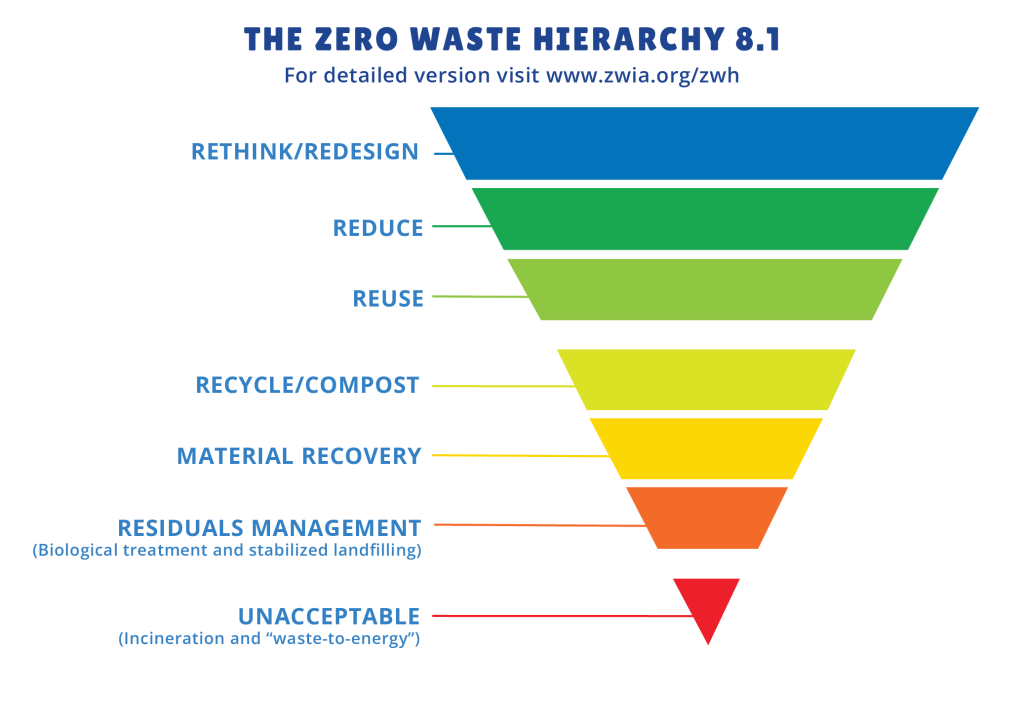
A zero-waste hierarchy is an inverted pyramid. You start with the most effective solutions at the top, then move down to less ideal ones, until you reach options that are no longer solutions at all—just poor choices, like incineration.
So, on the top would be animal feed, food diversion, reuse systems, refill systems, repurposing systems and the whole ecosystem of preserving the integrity of any product, and continuing to use it and extend its lifespan. Then comes composting and making use of waste in sustainable ways. And then comes recycling. And even within recycling, there are different categories. At the bottom would be the unacceptable processes, such as incineration. So, that’s how you would deal with plastics, metal, paper, e-waste or anything else. The zero-waste hierarchy must be followed.
How WTE could impact livelihoods of waste pickers
What is the role of waste pickers in waste management in our cities? And how could WTE plants sideline them?
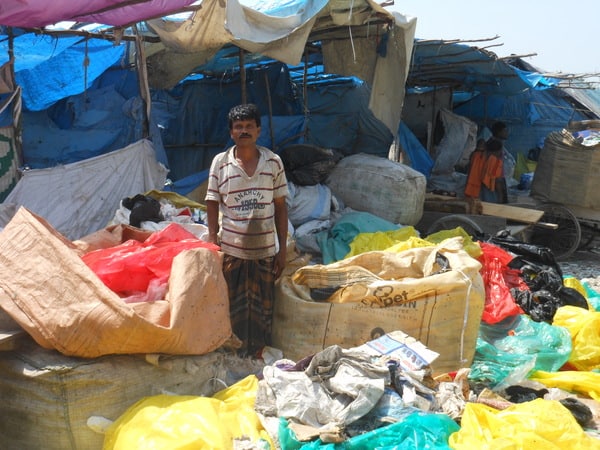
Waste pickers are an extremely marginalised, unseen community. For years, they have practised what is now termed circularity. They have been doing segregation and recycling of waste, ensuring that a large quantity of plastics, paper and glass, etc., do not reach the landfill. They have been ensuring reuse, repurposing and recycling.
Unfortunately, they are informal workers and not recognised. In India, such work is stigmatised. So, it’s an issue of social justice and equity for a community which is doing great work. The cost of their work is huge. They work under very poor conditions with no safety nets or social support.
After collecting and segregating, waste pickers send the waste to scrap shops. And then there’s a whole chain of people who reuse or recycle plastics and so on. All of them will be affected if we shift towards incineration. Incineration promotes an apparently simple approach—collecting, dumping, and burning everything. So, WTE systems eliminate all of these jobs and are neither circular nor sustainable. They destroy the livelihood of waste pickers and associated communities, locking cities into this costly and unnecessary infrastructure, when there are other inexpensive and effective ways to handle waste.
Read more: Why a waste-to-energy plant is not the answer to Chennai’s garbage problems
Legacy waste and decentralisation
WTE plants also burn legacy waste from landfills and dump yards. Since sustainable waste management begins with reducing waste generation, how should we handle the waste already piled up in landfills? Aren’t WTE plants one way to deal with it?
When WTE plants burn waste, either segregated or unsegregated, the result won’t be good. It will emit a lot of ash and residue, which are quite toxic. While dump yards exist and are problematic, that does not justify burning waste. There is no truly effective solution for legacy waste. It’s not resolving anything, and we will still have the same pollution problems. The problem is that we are also generating too much waste, and the overall global production of plastic is going up exponentially.
The only long-term solution is to reduce the amount of plastic waste we generate, and therefore its use as well. The responsibility cannot rest on consumers alone. It has to start from the top of the chain, from upstream, where the plastic is produced. Unless we do that, the legacy waste will always be a problem. We will always be in this negative loop and desperately trying to manage the plastic issue without success.

Decentralised waste management
How is decentralisation important for sustainable waste management and for eliminating WTE plants? How can the challenges, like inefficient functioning of waste processing units, be tackled?
Decentralisation is important because it helps reduce costs. Just waste collection, transportation and storage could cost a lot. This can be reduced in decentralised waste management. Also, it helps tweak the systems for the local context. The waste management model can be adjusted based on local requirements and continue to be sustainable and zero-waste as well.
In response to opposition to waste plants (like the recent protests against a waste plant in Lingadheeranahalli, Bengaluru), awareness, education, and stakeholder engagement are essential. There is a lot of stigma, caste bias and other underlying issues. But if we do composting or the handling of the waste locally, there won’t be a problem. For example, at the smallest level, you can compost inside your apartment building in your own flat.
Fundamentally, composting depends on three factors—aeration, moisture, and pH—which determine the outcome. Regular aeration and maintaining balanced moisture ensures success; composting is straightforward.
Future of waste management
The way forward, Sumana stresses, is not burning our waste but cutting it down at source. Segregation, composting, reuse, and decentralised systems are practical, low-cost, and sustainable. WTE plants, despite being pitched as solutions, only shift the problem while endangering health, livelihoods, and the environment. Real change lies upstream—reducing production, especially of plastics—and rethinking waste as a resource, not a burden.
This waste management chat is more tangled than a recycling machine on a Saturday morning! Who knew plastic could be so stubbornly unrecyclable? And incinerators – just burning our problems away while the waste pickers, our unsung heroes, get roasted by both the fire and stigma. Honestly, the zero-waste hierarchy sounds like a recipe for ultimate chores: reuse, repurpose, and then maybe just sigh and compost. Let’s face it, unless the big players start producing less plastic, we’re just chasing our own trash. Maybe the solution is simpler: if it’s not compostable or reusable, does it even deserve to exist? A fun thought experiment, at least!