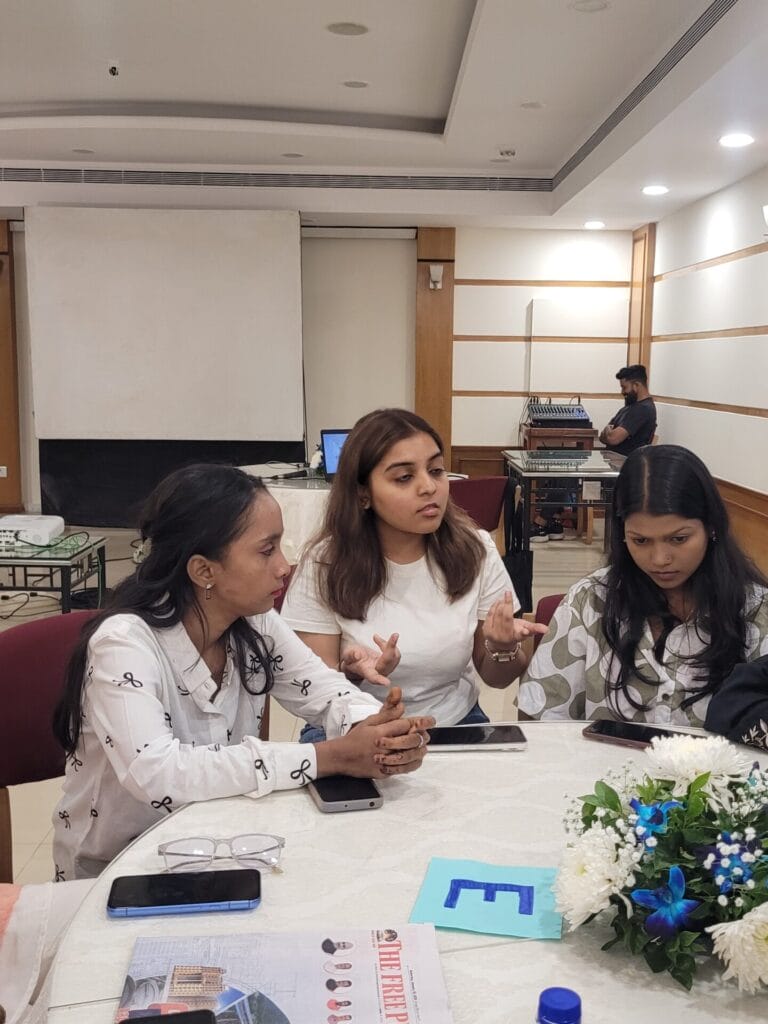
As Mumbai votes to elect its city corporators on January 15, many citizens’ groups and civil society organisations have voiced their demands for better civic infrastructure. They have also highlighted the frustrations of daily problems faced by residents due to the absence of a municipal council. Last weekend, over 50 people from across Mumbai gathered with one shared purpose: to reimagine what a truly inclusive, responsive city could look like.
Mumbaikars aged 18 to 60 deliberated on what was urgently needed for their city — better infrastructure, improved accessibility and good governance.
The event, called the WISE Voting Weekend, was organised by the youth-led organisation Blue Ribbon Movement in partnership with Apnalaya, Institute of Exceptional Children, Jhoom, Oorvani Foundation, and Talk Dharti to Me.
What happened
- Participants sat in structured group discussions, sharing their lived experiences, frustrations, and hopes for Mumbai.
- Together, they began drafting the WISE City Manifesto—a vision built around well-being, inclusivity, sustainability, entrepreneurship, and expression.
Based on the interactions, here are the demands put forward for the elected councillors in the citizen manifesto:
Well-being
- A city is only as healthy as its people, and we are not okay.
- Give us clean, drinking water in every home and not just in high-rise buildings. Keep the city clean, including those areas that don’t attract tourists.
- Less noise in the city.
- Take care of our elders.
- Fair distribution of ration through apps so that no family sleeps hungry.
- Extend working hours at Aapla Dawakhana. Publicise free health camps so that people know about them.
- Listen to us when we talk about our health and peace.
- If people are suffering, the city is failing.
- Take action against debt mafias.
- Protect our children from drug pushers near schools.
- Build spaces where communities can meet, celebrate and care for each other.
- If Mumbai is home, then let us treat it like family.
Read more: Voting in Mumbai: Complete guide to BMC elections and making your voice heard
Inclusivity
- We love this city. If we all make it run, it should welcome everyone and not just a few.
- Inclusion should show up in our diversity. Let it bloom.
- We want quality water, quality food, electricity, sanitation, and hygiene for all.
- Stop forcing redevelopment projects onto the poor. Stop pushing them to the bottom.
- Equality in schools. equality in access. Make public spaces for persons with disability accessible. Build safe breastfeeding booths, functioning sanitary pad stations at railway and bus stations.
- Protect street vendors from extortion rackets. Create pro-hawker policies. Everyone belongs in this city.
Sustainability
- We don’t want “smarter”. We want cleaner, safer, greener.
- Protect the Sanjay Gandhi National Park. No more pushing roads and buildings into forests. Protect our mangroves.
- Stop turning a deaf ear to the youth of the city demanding action.
- Implement rainwater harvesting in every society. There should be waste segregation centres in every ward, and Nirmalya bins. Impose strict fines for littering.
- Provide clean water at public spaces.
- Redevelopment cannot come at the cost of the planet. Use sustainable materials. Encourage cycling as a means of commuting. The BMC officials and Nagarsevaks must set the example.
- Ensure on-time grievance redressals. Organise community workshops that teach how to bring about change.
- If we can breathe here, we can belong here. Give us that chance.
- We care for our city; that is why we demand better.
Read more: Give us good roads, protect public spaces: Chandivali residents’ manifesto for BMC polls
Entrepreneurship and expression
- We call this place home, but home must let us speak.
- We want libraries that feel like shelter, not status.
- We want rehearsal rooms that do not cost a month’s food budget.
- We want corners where we can paint, streets to dance through.
- We want more meaningful graffiti, everywhere.
- We want community meet-ups, free workshops, spaces to explore art with equal access for everyone.
- We want respect and investment in folk arts.
- We want cultural ministers who know culture – not just big cars and parties.
- We want art that is not gate-kept by class.
- We want to be able to express ourselves without the fear of punishment, with equal opportunities to everyone to express themselves safely.
- A city that restricts its artists cannot be democratic.
Also read:
- Praja’s Citizen Manifesto calls for transparency, equity in Mumbai’s governance
- From slums to skyscrapers: How Mumbai’s L Ward faces climate stress
How might local citizen groups work on some of the topics taken up in the Charter?
I’m enquiring on behalf of a citizens action group in an eastern surburb of Mumbai; a group that has long collaborated with the local BMC ward (about 8 years).
However, current pollution levels require a more holistic approach.