Assembly elections in Tamil Nadu, Puducherry, and three other states are scheduled for 2026. Close on the heels of the Bihar elections, where the Election Commission of India (ECI) conducted a Special Intensive Revision (SIR), the ECI has now announced that all poll-bound states and union territories will undergo a similar revision exercise. Form distribution has already begun in the Chennai district, and according to the Greater Chennai Corporation (GCC), as of now, more than 40% residents have been covered in this exercise.
This makes it essential for every eligible voter in Tamil Nadu to verify their inclusion in the revised electoral rolls, even if they have been regular voters in the past. At the same time, it is equally important for citizens to ensure that the names of deceased family members are removed from the rolls. This should be done by submitting credible evidence, such as a death certificate, to the concerned Electoral Registration Officer(ERO)/Booth Level Officer (BLO). There has been some confusion regarding voter rolls and the submission of documents during the recent process.
So, here are some important points to know about the SIR exercise and what is expected of the voter:
What is SIR – Special Intensive Revision?
It is a large-scale, door-to-door verification drive conducted by the ECI to ensure accuracy of the electoral rolls. According to the ECI, the primary objective of this exercise is to produce an error-free voter list—one in which every eligible citizen finds his or her name correctly entered, and no ineligible or duplicate names are included.
Enumeration under SIR – process and timelines
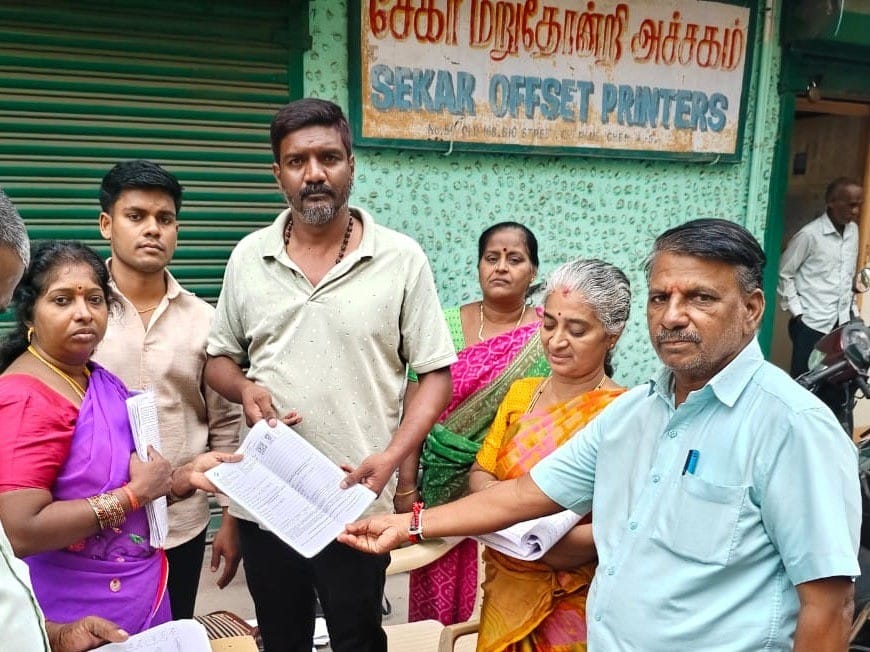
The ECI has generated an Enumeration Form (EF) based on the previous SIR and subsequent updates. These forms will be distributed by the BLO at the doorstep of each voter.
Distribution phase
During the distribution, every eligible voter is required to:
- Present their Voter ID card to the BLO.
- Receive the EF, quote their mobile number, and affix their signature in acknowledgement.
- Before handing over the form, the BLO will scan it using the ECI mobile application, which contains the list of all eligible voters in the area. Once the scan is successful, the app blinks blue, indicating:
– The form has been handed over, and
– The app has captured the date, time, and number of forms distributed.
This process enables daily updation of distribution status in the SIR database.
Filling the enumeration form
Voters will have 7 to 10 days to fill in their details. Each voter must provide:
- Aadhaar number
- Mobile number
- Father’s, mother’s, and spouse’s name (as applicable).
Collection phase
After the distribution is completed, the BLO will again visit every household to collect the filled-in EF forms.
During collection:
- The BLO will scan each filled-up form through the mobile app.
- Upon scanning, the app instantly captures and links the voter’s details to their Voter ID.
- Successful updation is indicated when the app blinks green, confirming:
1. The voter resides in the area, and
2. The data has been successfully updated in the master electoral database.
This digital process ensures clean and accurate electoral rolls, helping to eliminate duplication and prevent rigging or impersonation.
Read more: Explainer: All you need to know about voter registration
Publication of electoral rolls
The first draft electoral roll will be published on December 9th.
- Voters who have submitted their EF should verify that their names appear in the list.
- If their name appears correctly, their enrolment process is complete.
Voters who do not find their names in the list must contact the ERO of their constituency with the necessary supporting documents to claim correction or inclusion.
The ERO will examine such cases and take appropriate action. This phase is called the “Hearing and Verification“ period.
The final electoral roll will be published on February 7th, 2026.
Why SIR is required now?
In a highly populated country like ours, where migration and resettlement due to employment and other reasons are frequent, the revision of electoral rolls before every election becomes a necessity. Unfortunately, this practice was not consistently or diligently followed in the past, resulting in many eligible voters facing disappointment on election day when their names were missing from the rolls.
Equally concerning is the failure to delete the names of deceased persons on time, which has sometimes led to malpractices and inaccuracies—distorting both the percentage of votes polled and, in certain cases, even the election results.
The last comprehensive revision was conducted nearly two decades ago. Since then, the voting age has been reduced from 21 to 18 years, and alongside rapid urban expansion, there has been massive internal migration. These demographic and social changes make it all the more vital to update the rolls.
How SIR will function?
Every polling booth will have a maximum of 1,200 voters only. It will be manned by a BLO. The base document for updating the voter list is the list of 2002–2004. Voters whose names appear in older rolls will find their verification process simpler.
The responsibilities of BLO are:
- Distribute unique Enumeration forms (EF) to every voter/elector.
- Help the elector in matching/ linking with either their name or their relative’s name in the last revision.
- Verify all details like name, date and place of birth, address, father’s/guardian’s name, etc.
- Collect Form 6 & Declaration form for the inclusion of new electors, and help in matching/linking.
- Help the elector fill in the EF, collect it and submit it to the ERO.
- Make at least 3 Visits to the house of each elector.
- Identify dead or permanently shifted voters and voters who are registered at more than one place.
- Work closely with Booth Level Agents (BLA) appointed by recognised political parties.
- BLAs can also collect filled EFs from electors, certify up to 50 EFs/day and submit to BLO.
Duties of an Electoral Registration Officer (ERO)
Each constituency will have an ERO. The officer’s job is to,
- Coordinate with BLO for the updating of EF.
- Prepare the draft electoral rolls.
- Receive and decide on claims and objections.
- Prepare and publish the final electoral rolls.
- Issue notices to electors who could not be matched with the last SIR.
- Verify the indicative documents to ascertain the eligibility of voters.
- Conduct hearings to ascertain voters’ whereabouts before the last SIR.
- Update the electoral roll daily, corresponding to the verification of documents.
Along with the publication of the draft roll, a list of absent, shifted, deceased, and duplicate names not included will be available on the CEO’s website and at public offices. Voters are advised to verify their details. Claims and objections, if any, are to be filed with ERO or BLA.
The timetable for the election activities
| Activity | Expected Schedule |
| Printing of forms and training for BLO/ERO | October 28th to November 3rd, 2025 |
| Door-to-door enumeration phase | Nov 4th to Dec 3rd |
| Publication of draft electoral roll | Dec 9th |
| Claims and objection period | Dec 9th 2025 to Jan 8th 2026 |
| Notice phase (hearing and verification) | Dec 9th 2025 to Jan 31st 2026 |
| Final electoral roll publication | Feb 7th 2026 |
Voters to note
1. Except for the EF, no other document needs to be collected during the enumeration phase.
2. For verification, one or more of the following should be kept ready:
- Any identity card or pension payment issued to a pensioner or employee of the Central or State government.
- Any Identity card or certificate issued by the Indian government.
- Aadhaar card is not a valid proof of citizenship, but can be submitted for SIR.
- Birth certificate
- Passport
- Matriculations or education certificate.
- Permanent Residence certificate issued by the competent authority.
- Forest Rights certificate.
- OBC/SC/ST or any other caste certificate.
- National Register of Citizens (wherever applicable).
- Any land or house allotment certificate issued by the government.
- Family register prepared by local authorities.
3. The facility to fill EF online is also available. Here is the procedure to do the same:
Open the ECI website and,
Step 1: Upon opening the website, you will find the ‘services’ section, where ‘Special Intensive Revision (SIR) 2026’ will be displayed, and two options will be given, which are: Fill Enumeration Form and Search Your Name in Last SIR.
Step 2: Voters will need their EPIC number/ Registered mobile number /email ID to access the forms. In both online form and hard EF, the first section of the form will already have pre-printed information about the voter.
Step 3: Voters are advised to verify the details against the current voter ID card.
Step 4: Once verified, the voter will have to fill in the remaining sections of the form, put an e-signature before submission.
Any issues or complaints from voters may be submitted through this website.
The ECI is incorporating the lessons learned from the recent exercise in Bihar during the SIR exercise in other poll-bound states. Active participation and timely response from the public will play a crucial role in ensuring the success of the SIR.
veru nice and detailed lucidexplanation. Very useful
What are the public offices referred by you?
Otherwise perfect
Kuados
The Public offices are
Office of State Election commission ( SEC)
Offices of SEC in selected Districts .
Commissioner of the respective Municipal Corporation / Municipality
Plus the respective BLO and ERO who are responsible for the area.
The biggest confusion for people is in filling up. It should be explained with example.
Method to fill up the form is available in You tube in all languages. Camps were organised in the pooling booths to assist the citizens in filling up the form. Your BLO’s number is furnished in the form. Be in touch with BLO or volunteers like me to get additional support if required.
Hi, I would like to know how the NRIs submit the form.
If your name is in the voter list then you may submit online
Dear sir
please clearify on the subject below
my father and mother name were in 2003 electoral list and found in draft list 2026 as well. my name is in 2026 draft list with minor mistake as my father surname does not match with all other document such as my degree and addhar etc.Now my question are
1. will i have to submit correction application form in order to upadte correct surname and have to present any document .
2. As my father name is already in 2003 and drft list so he will have to present any other document as mentioned in election commission website?
thanks with best regards
it’s right action and very important
it’s a right action to finding elegaal residence in india without any legal documents under our policy and rules. thanks all the best.
I am an overseas citizen with indian passport. my name is missing from voters list. how do I do it to add my name?
Did you have a voter id in the past.? If not, in as much as you are a overseas citizen it is not possible to add your name. Eligibility is to be a citizen of India.
My BLO has submitted enumeration form with wrong phone number even though I provided correct phone number. What am I supposed to do now? In case of hearing, how will I get to know? I won’t get an SMS because BLO has given wrong phone number.
BLO submits only blank forms . Form is to be filled by you. BLO will not fill up. Unable to understand your question as to how a BLO is responsible for this wrong entry. Pl elaborate.
I have got two sets of EF forms forms from two BLO’s. Should I fill both sets of forms?
Fill up both forms. Paste Photo in one form. Submit to BLO the two forms. He will sign on the one without photo and return it to you. This is the acknowledgement copy. Retain it and use it in case if your name does not get uploaded in the portal on Dec 9th
I was resident of MP during 2003 and my name appeared in electoral roll and had EPIC Id . stayed in different states and have not voted. later moved myself to Maharashtra and got a new EPIC Id in 2022. if the EF from is to be submitted based on 2003 list then what is the process for state transfer. Any suggestion?
Can i have full details pl? Where are you residing now? SIR is under progress only in 12 states / UTs. If you are staying in a state where SIR is yet to be taken up, pl wait. If you are residing in a place where it is in progress, talk to your neighbours, take the phone no of BLO of your area, then talk to BLO to get your point addressed.
my Father’s name was In 2003 SIR in Rajasthan but now we currently lived in rajasthan And I am born here. so now where should ai fill the form in rajasthan or maharashtra? and what documents I’ll be need?
Question is not clear. We currently lived in Rajasthan means what? Maharashtra … how does it find place?
The details of deceased persons database can be extracted from the local municipal records. This database can be matched with the existing Voter list and such deceased person names can be deleted. A simple database formula or a program can be run to cleanup the Voter database. This cleaned up database can then be used for SIR exercise so as to get a near errorfree list. This could possibly be extended to compare with nationwide database to prevent duplicate voters in different cities/locations. Removal of duplicate voters will prevent a person voting in different cities considering different voting dates
ECI is competent to evolve and put methods and systems in the conduct of SIR without the need for it from Citizens. Pl follow the procedure to get included.
main apna SIR form bharne se reh gaya hu
to kya ye dobara hoga ya mera naam ab nhi judega??
rajasthan me
meri government job bhi hai to kya usme problem aa skti hai ?
or ab judwane kr liye kya Krna hoga
kyuki ab last date to nikal chuki hai
Why is the BLO asking for documents even though my name is available in the draft electoral rolls.