Saturday, 9th March 2013
With some 20 volunteers responding to our call to remove the drying aquatic weed from the lake bed, it was a most satisfying morning today!
Their enthusiasm was infectious and several people stopped jogging/walking to see what they were doing, then joined them to remove the drying Salvinia Molesta. Working with a rake, a spade or simply scooping up the weed with bare hands, they filled plastic bags, formed a line on the slope, handed each bag over the grill where others waited to cart them away. The dry Salvinia can be used for mulching or composting. We have opted to compost them by laying them along the boundary fence.
Despite working hard for over two hours, only a patch of ground has been cleared. With more of you joining us tomorrow (and on subsequent weekends) we should be able to accomplish our mission of clearing the lake bed and getting it ready for the monsoon.
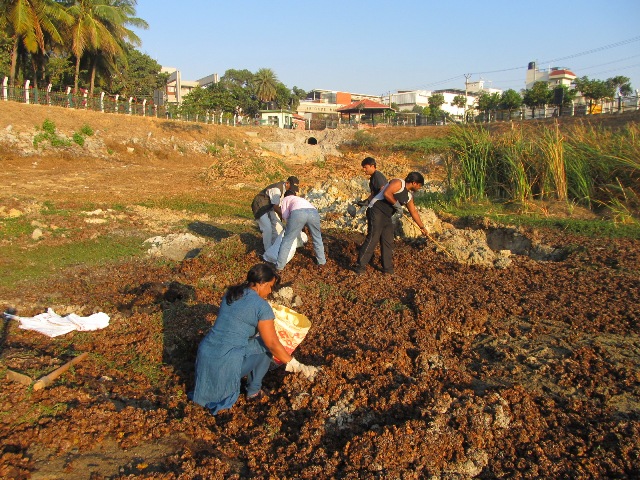 |
| Scooping the weed |
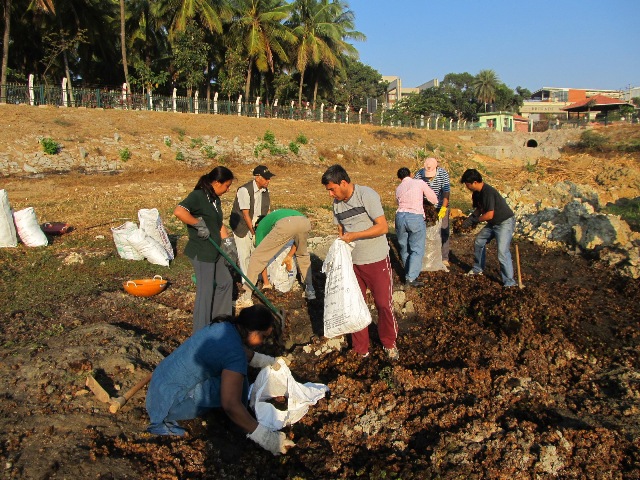 |
| More hands, less work |
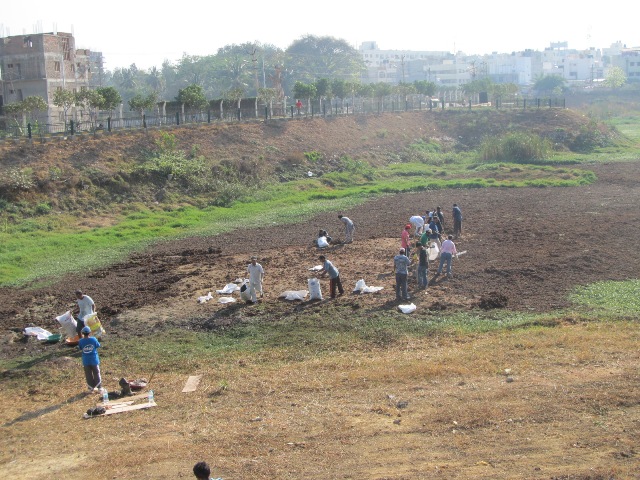 |
| Aerial view |
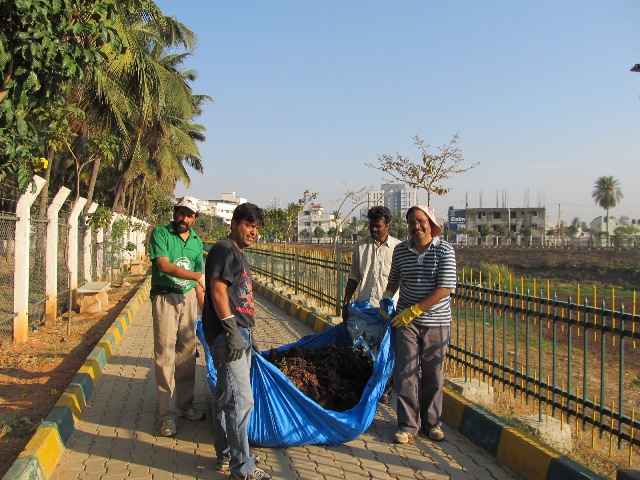 |
| Hauling the weed |
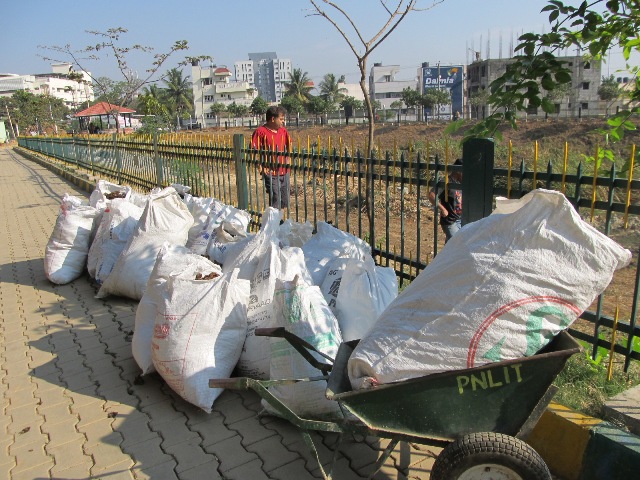 |
| Waiting to be carted |
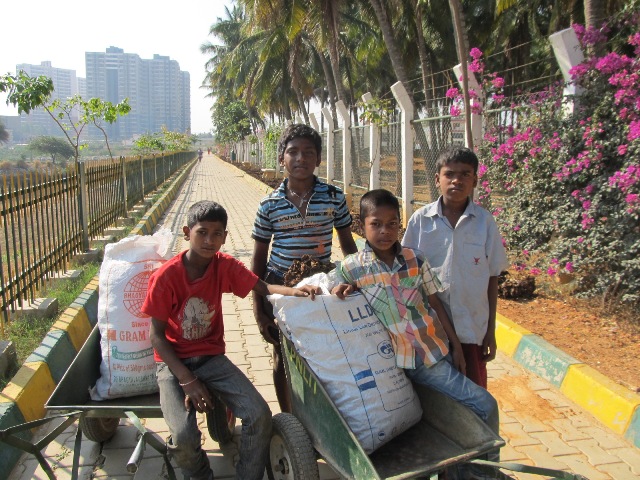 |
| Young helpers |
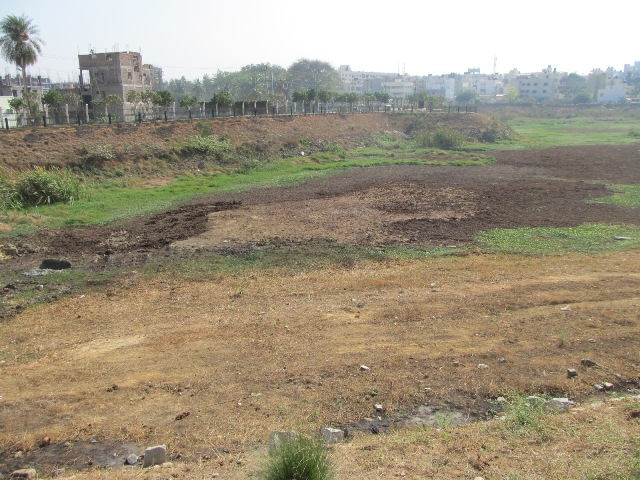 |
| Cleared patch |
Sunday, 10th March 2013
Another good morning at the lake today with some new volunteers joining us.
Y/day’s experienced hands were surprised to see fish in parts of the lake, below the weed. A few were dead but thankfully, most were alive. It was not possible to pull the weed out since the fish were coming with it so the kind souls made holes in the Salvinia for the fish to breathe. A couple of volunteers transferred the fish to the pools of water, carrying them in a bucket of water. It must have been a poignant moment for our volunteers renewed their effort to pull out more Salvinia and clean the ground.
It was a hot morning but all of us felt the satisfaction of having done a good job.
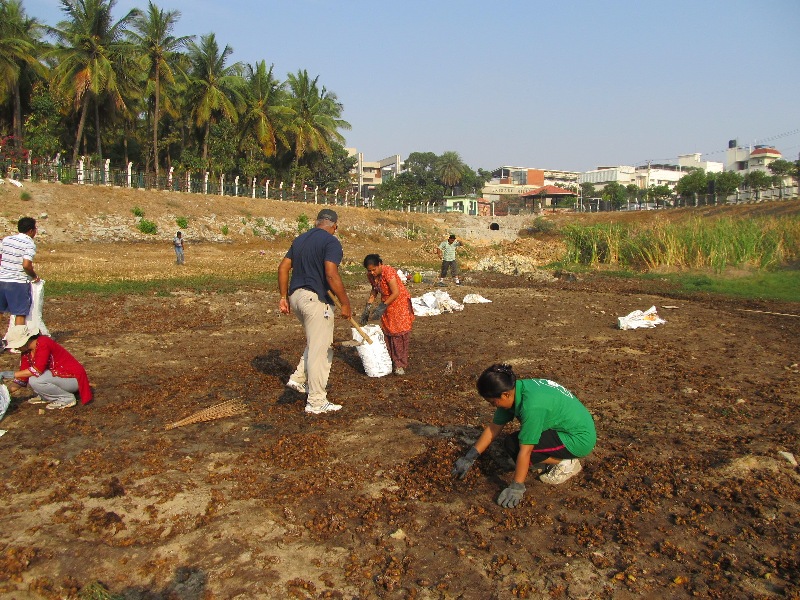 |
| Dedicated work |
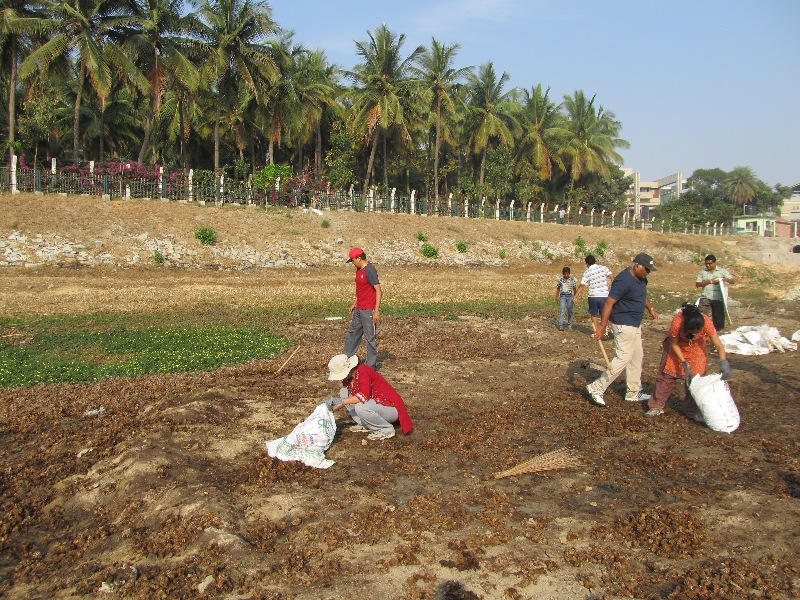 |
| Slow and steady |
Heart felt thanks to all volunteers. We look forward to having you over next weekend. Do share your experience in this forum and with your family and friends and get them over as well!
Pics: Usha Rajagopalan
⊕
Please let me know when the next activity is planned. I would like to volunteer for sure