Volunteers needed this weekend at Puttenahalli Lake

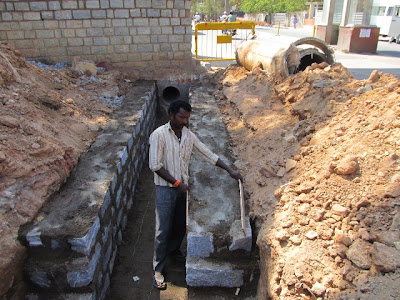
Work on the Diversion Channel is proceeding well and with a reasonably good monsoon this year we hope to divert lots more rain water into our Puttenahalli Lake. We may even see our wish fulfilled finally – the lake bed covered with water and not a bit of ground to be seen! 
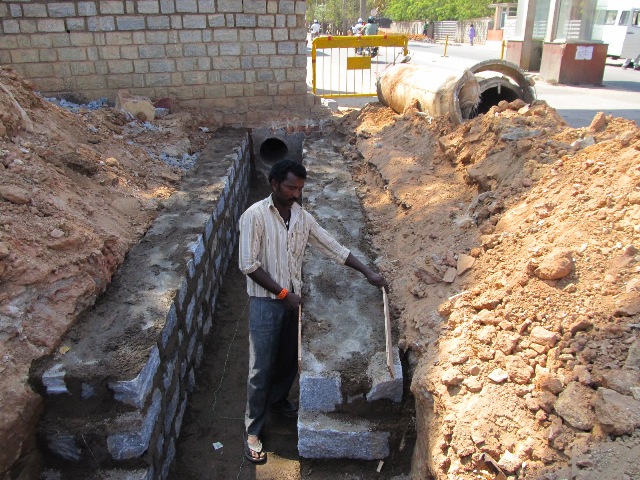

Diversion channel work in progress, Feb 2013 (Pics: Usha Rajagopalan)

Now, when the water level is at its lowest, is the right time to remove the invasive weed Salvinia Molesta from the lakebed. Will you help us get the lake ready for the monsoon? Help us get rid of the weed and bring the birds back to our lake? Help us get the lake ready for April showers?

Please volunteer your time and effort for just three hours this weekend!!

Dates: Sat. 9th and Sun. 10th March.
Time: 7 to 10 a.m.
Age: 16 years and above. There’s no risk involved but we would like to focus and not have to supervise children. 🙂

Volunteers will be required to wear comfortable shoes (not open sandals) and a hat. Gloves optional.

Email confirmation puttenahalli.lake@gmail.com will be very welcome but you can always drop in unannounced, pick up a rake and scoop out the weed this weekend!

References


Leave a Reply

Your email address will not be published. Required fields are marked *

Similar Story

Where are the pollinators in Bengaluru?

Despite the volumes of citizen-generated data on the city's biodiversity, pollinators who sustain the urban ecosystem do not seem to be getting their due attention.

Urban biodiversity is often discussed in terms of tree cover, lakes, or flagship species, but far less attention is paid to pollinators—the insects and birds that quietly sustain urban ecosystems. In Bengaluru, a rapidly urbanising city with a strong culture of citizen science, large volumes of biodiversity data are now being generated by the public. But what does this data tell us about pollinators in the city? This article draws from a data jam hosted by OpenCity in Bengaluru that explored pollinator observations using publicly available, citizen-generated datasets. By analysing long-term observation records and spatial data on land use and…

Similar Story

Beyond the parks and gardens, Bengaluru’s ‘wasteland’ ecosystems call for protection

Open Natural Ecosystems in Bengaluru harbour rich biodiversity. Take a look at what they hold and what we risk losing to unchecked development.

When we discuss urban nature, we often forget about real natural habitats. In Bengaluru, widely called the Garden City, most talks about urban nature focus on landscaped parks, roadside trees, and manicured gardens; in other words, artificial ecosystems designed for looks and human comfort. As lay citizens, we usually notice only such nature as we see around our homes, workplaces or other areas we generally pass by. While these places do have some ecological value, they mostly support a few highly adaptable species. This has strong negative implications for native flora and fauna that depend on open scrublands, grasslands, rocky…