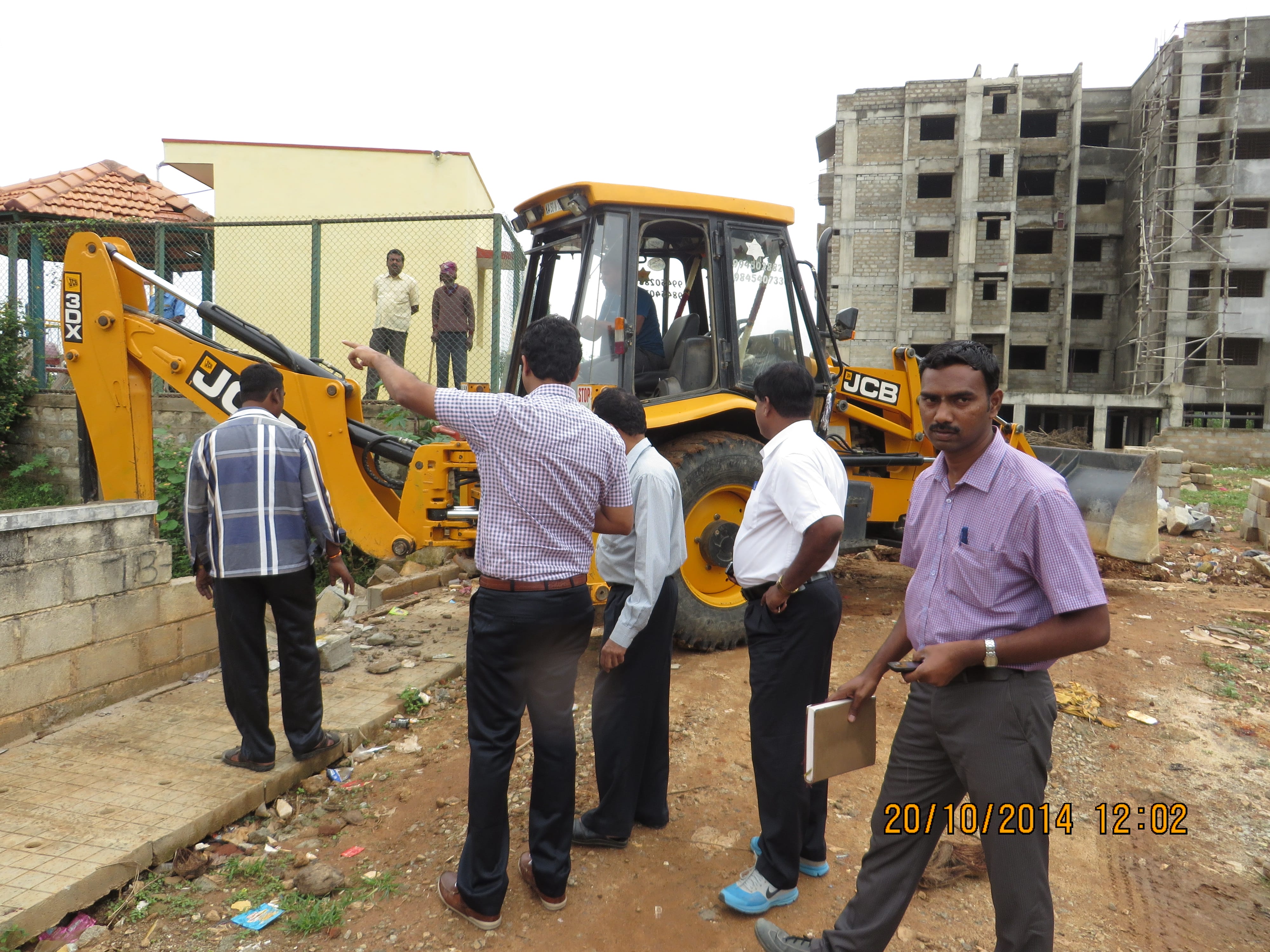
Portion of Allalasandra Lake encroachments cleared

Yesterday (20th October 2014), the BBMP, Revenue Department and BMTF with support from local Police cleared around 20% of the encroachments around the Allalasandra Lake. 
 
Around 4.1 acres of the 44 acres of lake was encroached. During this demolition drive over six illegal houses and compounds were demolished and close to 1 acre of lake area was recovered. 
 
Yelahanka United Environment Association (YUVA) had taken the lead by submitting complaint letters to Deputy Commissioner, BBMP and BMTF. BBMP and the Revenue Department had conducted a joint survey of the lake two months back and marked the lake area and BBMP had issued notice to over 50 unauthorised constructions around the lake.
 
Thasildar and BBMP has indicated that the balance encroachments would be removed within the next one month as notices have already been served to the encroachers around the lake.
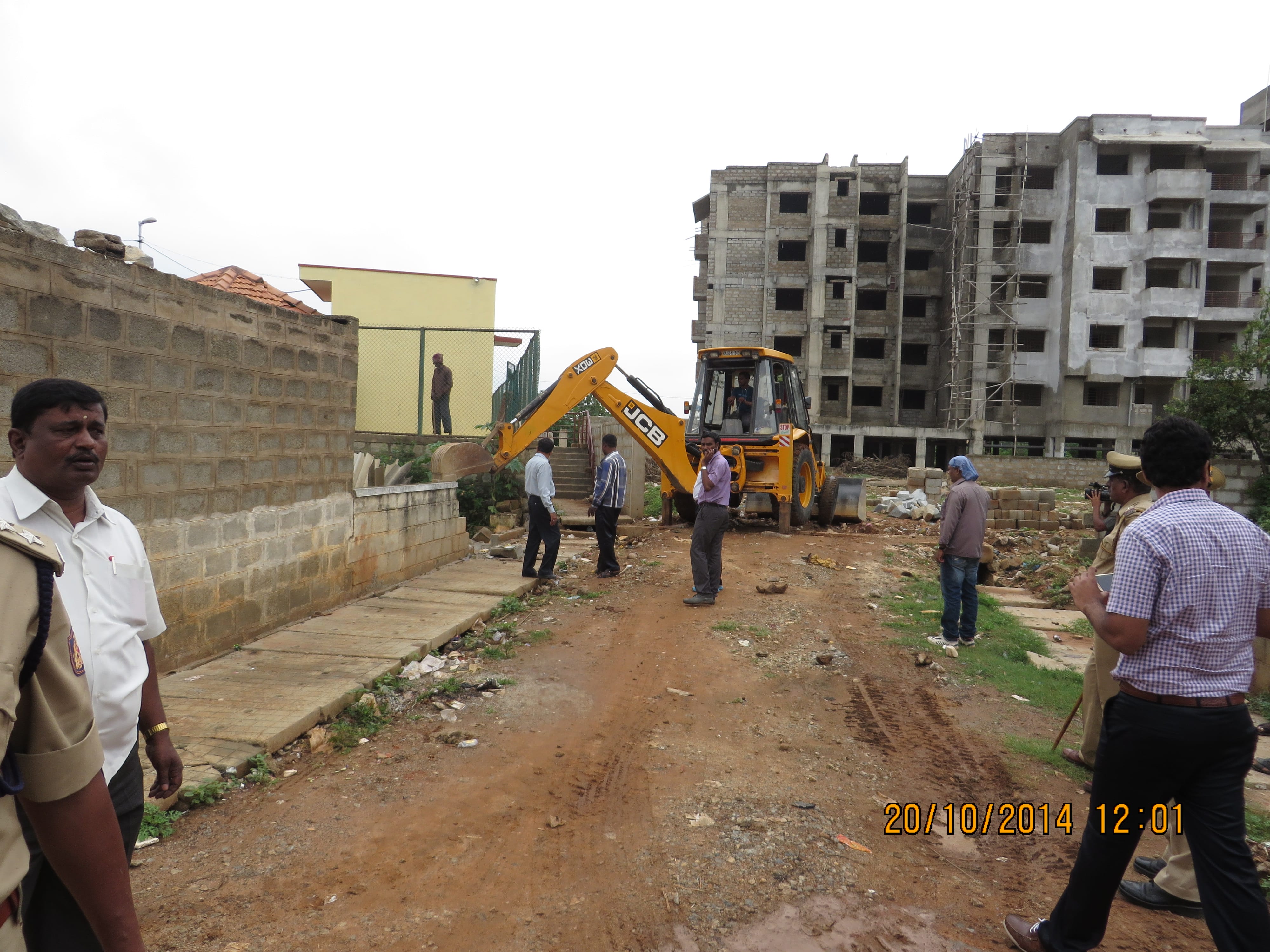
 

 Demolition in progress (pics: Jagadeesh Giri)


Leave a Reply

Your email address will not be published. Required fields are marked *

Similar Story

Bengaluru’s Peripheral Ring Road: Traffic relief or ecological disaster?

Even as landowners contest unfair compensation, other issues persist: emissions, large-scale tree felling, and the project's alignment through lake ecosystems.

Two decades after the Peripheral Ring Road (PRR) was announced, the project is far from completion. For farmers, it has meant years of uncertainty and mounting financial losses, while residents remain unsure about the usefulness of the long-pending road development. In an earlier article, we explored how the PRR project could lead to forced migration and threaten the livelihoods of farmers. In Part 2 of the series, we did a deep dive into the manipulation of compensation options that landowners strictly oppose. However, farmers and environmentalists raise different concerns: even if the road is built, will it truly ease traffic…

Similar Story

From Kuruvimedu to Besant Avenue, how Chennai breathes unequally

Ahead of the art exhibition ‘Pugai Padam’, this photo essay captures the contrasting realities of air and the lived experiences of air pollution in Chennai.

The chimneys of the NTECL Vallur Thermal Power Station, billowing smoke, loom over Kuruvimedu in Ponneri, Thiruvallur near Chennai. Wedged between the plant and its sprawling 300-acre ash pond, the hamlet lies under a blanket of kari (coal) and sambal (ash), coating its narrow streets, colourful homes, and trees. Kuruvimedu is hard to find on Google maps, just as its namesake bird. The main road leading to this place is flanked by factories and industrial complexes, its surface riddled with potholes that make every journey dangerous for motorists.  Home to mangroves, networks of canals, and fields, Kuruvimedu once buzzed with…