When Civic Mindedness Triumphed Over Apathy
 For all those times we have walked past a mound of garbage on the street and turned our nose up to declare: “ugh! What filth! Why isn’t anyone doing anything about it?”, a whole bunch of us decided to stop passing the buck and get into the swing of things ourselves. It was time for Clean Up on an epic scale.
It was pre-dawn, on a Sunday morning. Time usually spent in stockpiling on sleep and stubbornly resisting the family members’ perky efforts to rise and shine.
But this was not one of those Sundays. June 19 was the day Peter van Geit and the Chennai Trekking Club had declared as the day for Chennai Coastal Cleanup and I was standing at the assigned point, stomping in place, to keep the mosquitoes and mental cobwebs away. As the minutes trickled by, people started coming by in groups of twos and fours, on bikes, cars and even by walk. All seeming remarkably cheerful at that ungodly hour, especially when you think of the job they had in store for them in a short while.
Having decided to do my bit in cleaning up my own backyard, I, along with the other men and women, made my way to the Arupadai Veedu Murugan Temple, inside Kalakshetra colony in Besant Nagar.
There, a shocking sight met me.
Our little band of garbage warriors had swollen up exponentially with the arrival of the corporate volunteers who landed up by the bus load. Thanks to the talks and presentations conducted by the CTC to raise awareness amongst various companies in and around Chennai, each cleanup point had a sizeable number from the various organizations.
After a little pep talk by the core team, which included the rules of segregation and a pledge to not use single use plastics and reduce our wastage, the cleanup began in earnest.
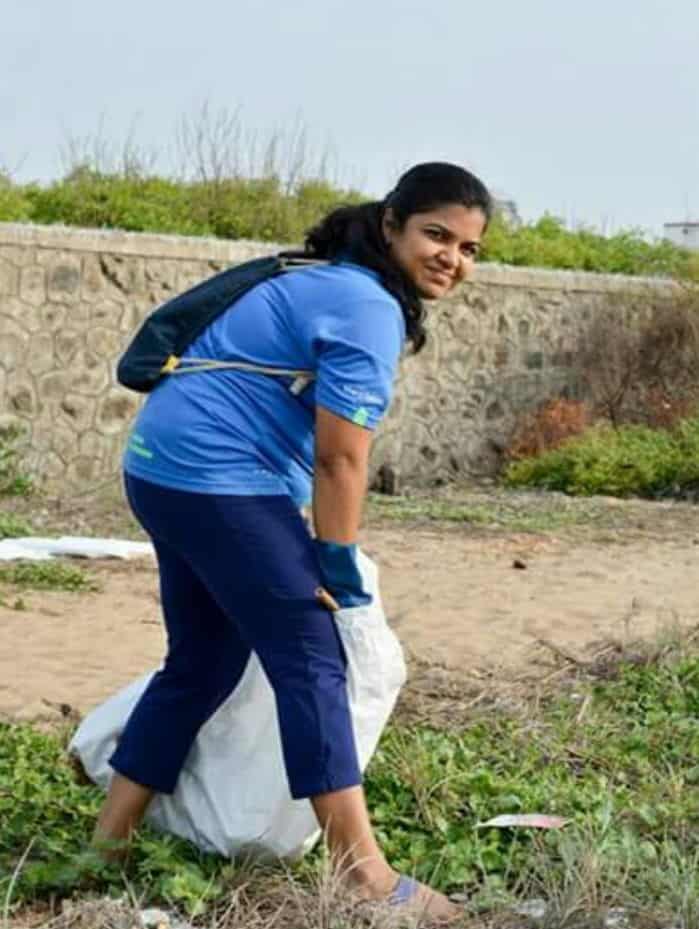
Armed with a bag (gunny sacks for glass, thick white bags for the other two categories) and a glove each (optimization of products, to use the CCC7 lingo!), volunteers branched out in pairs, in search of waste. Our instructions were clear: choose a category and collect ONLY that category. Segregation is key and mixing up the items will put the kibosh on segregation right at the start. Typically, there were quite a few ‘where should this thermacol go?’, ‘are chappals to go in the plastics bag or do they belong in Others?’ questions to be answered but pretty soon, we got into the swing of things.
It didn’t take long for the filled garbage bags to start mounting. Even as we walked through the filth – people had pooped EVERYWHERE! – the sheer volume of garbage was mind boggling. Through steady plodding, the garbage littering the beach was picked clean, piece by piece, segregated and split into the different bags and taken away to be put to better use. Hours after us volunteers skedaddled home, basking in the glow of a job well done, the core team of the CTC continued working in the hot sun, sifting and collating the bags and getting them ready to be hauled away.
Apart from providing an insight into how much stuff we amass and how irresponsible we are in getting rid of them, the day also raised a few existential questions: who are we really aiding? Are these people going to stop littering and strewing filth everywhere from now on? Why isn’t the Corporation doing this? Would they be doing their job if we aren’t doing it for them?
No one likes to tidy up behind some one else. If we followed basic rules of hygiene and cleanliness – not littering / spitting / defecating in public, throwing stuff away in bins – maybe the cleaning agencies wouldn’t have such a tough time of it. But segregating our household waste, reducing the amount of waste we put out and being more Earth-friendly, well, that’s a job for everyone.
(This experience is captured under the ‘Volunteer Social Experience Talk’ series covered by Citizen Matters Chennai)