“The road is broken, buses are overcrowded, traffic disrupts daily life, garbage piles up on the streets”—these are everyday complaints of citizens across Indian cities. In Bengaluru, these issues only seem to be worsening with passing time. Bengaluru’s built-up area grew by 85.19% between 2001 and 2020, resulting in commuters losing 168 hours (one week) annually to traffic congestion. As the city grows rapidly, governance systems, data frameworks, and citizen participation have failed to keep pace with its increasing complexity. What would it take to bridge this gap?
A report by Janaagraha, a non-profit working to improve the quality of lives in cities may hold some answers to this question. In March this year, Janaagraha released a report titled, “Shaping Urban India – By Design, Not By Default” which suggests five major shifts to kick-start city-system reforms in India.
The report suggests five major shifts to make our cities more livable,
- Significant investment in public transport and walkability
- Implementing city level action plans in cities and towns
- Adopt different planning and governance models for different types of cities
- Evolve and implement city-level data systems
- Upgrade urban local bodies into true city governments in a phased and time-bound manner
Citizen Matters interviewed Anita Kumar, Director – Policy & Insights and Srikara Prasad, Senior Associate – Urban Policy, the authors of the report to understand what these shifts would mean for Bengaluru and its citizens. The conversation focuses on what could catalyse or facilitate these measures to make Bengaluru more livable.
Public transport: Major infrastructure intervention
While four of the five shifts focus on governance, public transport stands out as a core infrastructure intervention. What makes the case for prioritising investments in public transport so compelling? How would you interpret this for Bengaluru?
Anita Kumar:
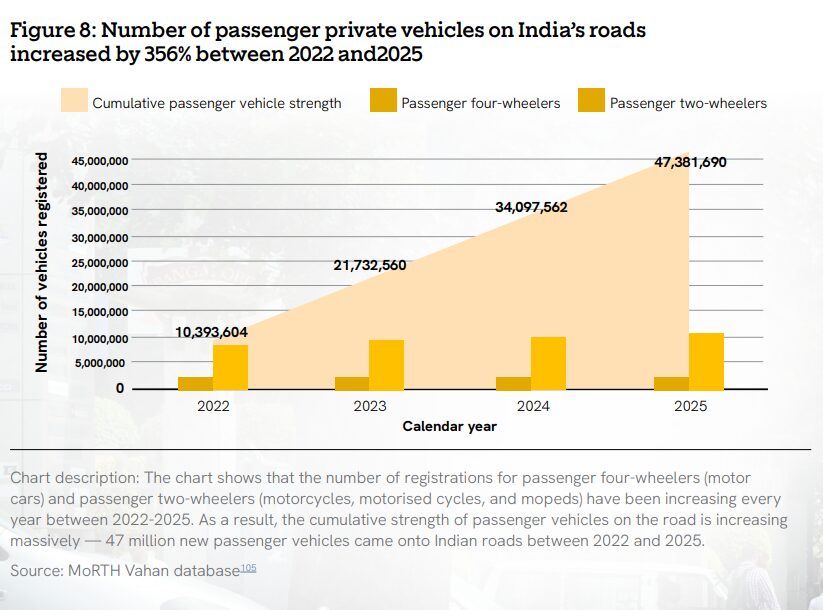
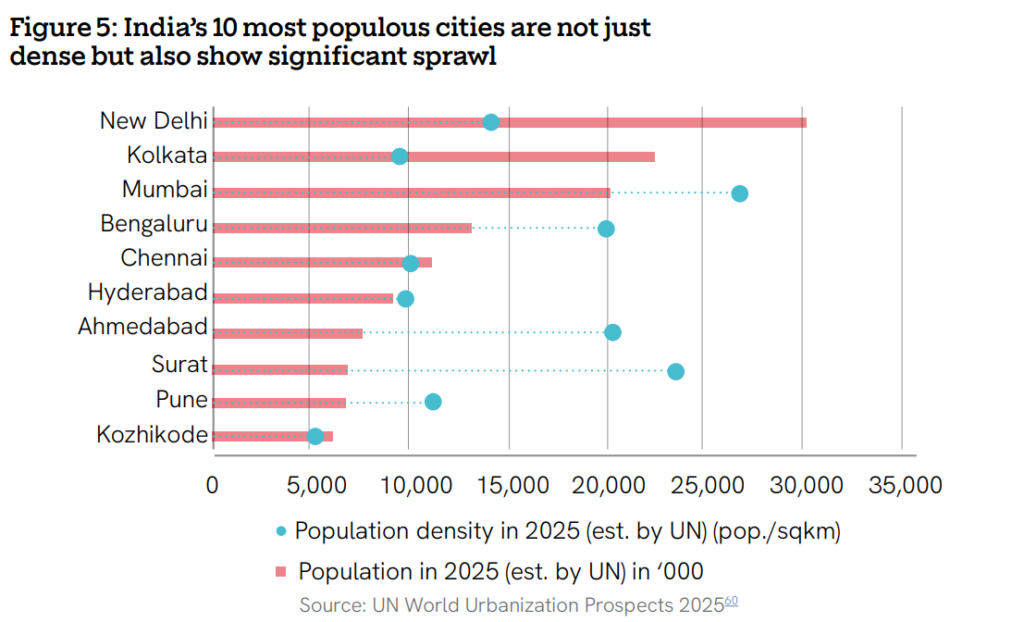
We deliberately heroed public transport and walkability because this one shift can snowball into many others. Bengaluru’s sprawl over the last decade has increased travel distances, forcing people to spend more time on roads. Roads occupy about 20% of the city area just like London and Tokyo. But Bengaluru has far more private vehicles, leading to severe congestion.
At the same time, public transport and walking shares have declined, and investments, especially in pedestrian infrastructure remain minimal. Metro is prioritised, but ridership is limited due to poor first- and last-mile connectivity. Walkability also links to health, pollution reduction, and overall quality of life, making it a foundational intervention.
Srikara:
Bengaluru, despite being a city with a good bus system, reliability and comfort remain concerns. For many daily wage workers who take a bus, uncertainty about reaching work on time or returning home with energy adds stress. The point is not just reducing congestion, but making everyday life easier. Prioritising buses and walkability is one of the simplest, most immediate wins for cities.
What’s working and what’s not
How prepared is the city to take on these shifts? What would it take to actually make them happen?
Anita Kumar:
There is a visible loss of hope among citizens—liveability concerns like traffic in Bengaluru or pollution in Delhi dominate how cities are perceived. But change is possible, and it hinges on empowering city governments. Today, governance is not at the level closest to citizens. Mayors lack authority, and accountability is weak without strong electoral mechanisms. While steps like increasing wards and proposing multiple corporations are positive, real power still sits with the state.
Globally, cities like London or Singapore show that empowered mayors drive planning, finance, and outcomes. Alongside this, industry must play a more active civic role, and citizen participation needs formal, institutional platforms.
Srikara:
Beyond governance reforms, it comes down to building a strong grassroots city structure and a clear citizen–government feedback loop. Without that, these shifts cannot translate into action.
Read more: Scorching streets: Understanding urban heat islands in Bengaluru’s market areas
Looking at examples like Bengaluru’s ward-level climate action plans, which of the five shifts are working in practice today, and where is the city falling short?
Srikara:
Ward-level climate action plans in Bengaluru are a strong example of what is working. They are being driven by a proactive climate action cell, supported by organisations, and built with citizen input. It shows that ground-up, local planning is possible and is even getting institutionalised to some extent. But the key gap is sustainability.
Will these efforts continue if leadership or priorities change? Similar grassroots interventions are not visible across sectors. These plans are an important proof of concept, but need to be scaled and embedded structurally.
Anita Kumar:
What we see today is fragmented progress by the government—bits and pieces working, but not coming together. The biggest gaps lie in institutional capacity, accountability, and data. There are significant vacancies in city-level governance, limiting delivery.
At the same time, city-level data remains inaccessible or absent, even as private companies use data effectively. Without aligning structures, incentives, and data systems, these shifts cannot be sustained or scaled.
Data and citizen participation – key drivers of change
In my reporting experience, too, I have sensed a gap between the emphasis on on-ground action and the role of data. So do you think cities underestimate how critical data is and its potential to improve governance outcomes?
Srikara:
Data is critical to move beyond outputs to outcomes. Even where reports include data points like money spent or kilometres of roads built, they do not focus on whether congestion has reduced or if mobility has improved. Without data that captures these outcomes, such insights remain inaccessible.
Cities like London show how integrated data systems can transform mobility and planning. Transparency also builds trust. When governments clearly show what has been achieved, it strengthens accountability and enables better reforms.
Anita Kumar:
There may be a perception among government officials that data is not immediately relevant, but that is not entirely true, especially when you demonstrate how it can make governance and citizens’ lives easier. The real issue is the lack of accessible, transparent data. Today, for a citizen, how public money is spent is a black box. You pay taxes, but cannot easily track outcomes—why a footpath is broken or waste is not collected.
This is also a challenge for policymakers, who lack visibility across fragmented systems, with multiple agencies operating in silos. What is needed is radical transparency, data that is open, intuitive, and easy to access, so both citizens and governments can make informed decisions.
Read more: Civic amenities and urban growth: Lessons from a design jam on Bengaluru BBMP Bye-laws
Lack of capacity is a key barrier to implementing these shifts. In that context, to what extent can stronger citizen participation help bridge this gap?
Anita Kumar:
There are clear limits. Core functions like city planning or master plans require technical expertise and accountability, and remain the responsibility of the state. Citizens cannot replace that machinery. But they can meaningfully share the load.
A key role is holding governments accountable by asking why roads are broken or waste is not collected, instead of normalising it. Beyond that, there is huge untapped capacity: people are willing to contribute time and skills, but lack structured platforms to do so. If systems, especially at the ward level, make participation easy and institutionalised, citizens can support implementation, improve civic behaviour, and strengthen outcomes.
Srikara:
The gap is often at the last mile, where policy meets the ground. That is where citizens can add real capacity. Through local knowledge, feedback, and small actions. Whether improving neighbourhood practices or highlighting issues, they help translate policy into outcomes. Participatory models show this can work, but need to be scaled.
What Bengaluru needs
What kind of thrust is needed at this point in Bengaluru to enable these reforms?
Anita Kumar:
The immediate priority is to restore democratic accountability in Bengaluru. City-level elections must happen on time. It has already been years without an empowered mayor, and getting elected leadership in place across the proposed corporations is a critical first step.
Beyond that, there needs to be a broader shift in how liveability is viewed. It cannot be seen as optional, it is central to economic growth. Businesses, especially in tech corridors, must go beyond narrow interests and contribute to city-wide improvements, not just private solutions. This requires moving beyond CSR as a checkbox and integrating city-building into business priorities.
Alongside this, continued citizen engagement will be key to pushing and sustaining these reforms.
The report highlights “formal citizen engagement as a governance imperative.” How can institutionalising this lead to more meaningful citizen participation in decision-making?
Srikara:
The key difference is whether participation is built into the system or left to chance. Today, governments may listen to RWAs or citizen groups, but their inputs often remain recommendations without obligation.
Institutionalising participation means embedding it into processes—linking citizen inputs to budgets, tracking implementation, and monitoring outcomes. It shifts participation from something optional or dependent on individual administrators to something by design. Examples like participatory systems in Rwanda show how citizen inputs can directly shape development agendas, backed by clear targets, data, and accountability.
Anita Kumar:
Mechanisms like area sabhas or city action plans can translate citizen needs into priorities, which are then balanced with resources and technical feasibility by the state. It also creates a feedback loop. Citizens can track what was promised and hold governments accountable. But for this to work, these platforms need funding, structure, and inclusivity, ensuring participation goes beyond a few voices and becomes truly representative.
Bridging the gender gap
The report highlights the gender gap and the need to make governance and mobility more inclusive. In practical terms, what does it mean to make public transport and walkability work for women? Where is Bengaluru currently falling short?
Anita Kumar:
Bengaluru does relatively well on safety compared to many Indian cities, but there is still a long way to go in making mobility truly work for women. Women’s travel patterns are more complex, with multiple stops like school pickups, errands, etc. making first- and last-mile connectivity critical. Even small gaps, like overcrowded buses, insufficient ladies’ coaches, lack of public toilets, or unsafe crossings, become major barriers.
The city is still largely designed with a male lens, ignoring women’s needs and time constraints. Walkability remains inconsistent—good in parts, but poor elsewhere due to lack of standardised design. Without gender budgeting and better street infrastructure, inclusivity remains limited.
Srikara:
What we call “gender-friendly” infrastructure is really about better design for everyone. Safe, well-lit footpaths, adequate space, and continuous walking infrastructure benefit all users. Today, basic issues like broken or missing footpaths or poor lighting make walking difficult and unsafe. Improving these is fundamental to making cities more inclusive.