Here’s what is different about autorickshaws in Bandra West

Even after months into the post-pandemic world, it is not easy for auto drivers to spend Rs 500-1000 on plastic separator "isolation" sheets.

In a few of the English movies I have seen, I recall seeing London Black Cabs, in which a firm partition isolates the driver from the passengers, with a small window for communication.

Even in the days of Sherlock Holmes and horse-drawn Hansom Cabs, we see that the passengers are separated from the driver – some sort of social distancing.

So, the idea of social distancing in small public transport vehicles is not really new.
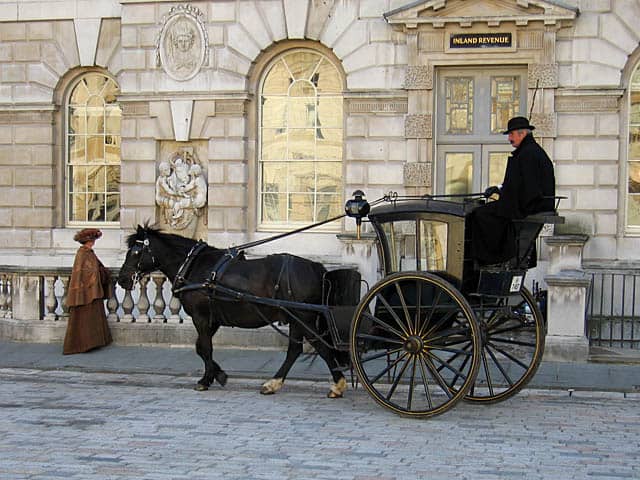
A Hansom Cab with driver on the sets of a Sherlock Holmes film (Photo: By Andrew Dunn – English Wikipedia)

In June, when the city of Mumbai started opening up after lockdown, auto and taxi unions advised drivers to install plastic separator sheets in their vehicles as a safety measure.

Everyone has the fear of catching COVID19, and given that drivers ferry many passengers daily, they are definitely at high risk. Still, having been out of work and with no income, Rs 500-1000 was not something many of them could spend on.
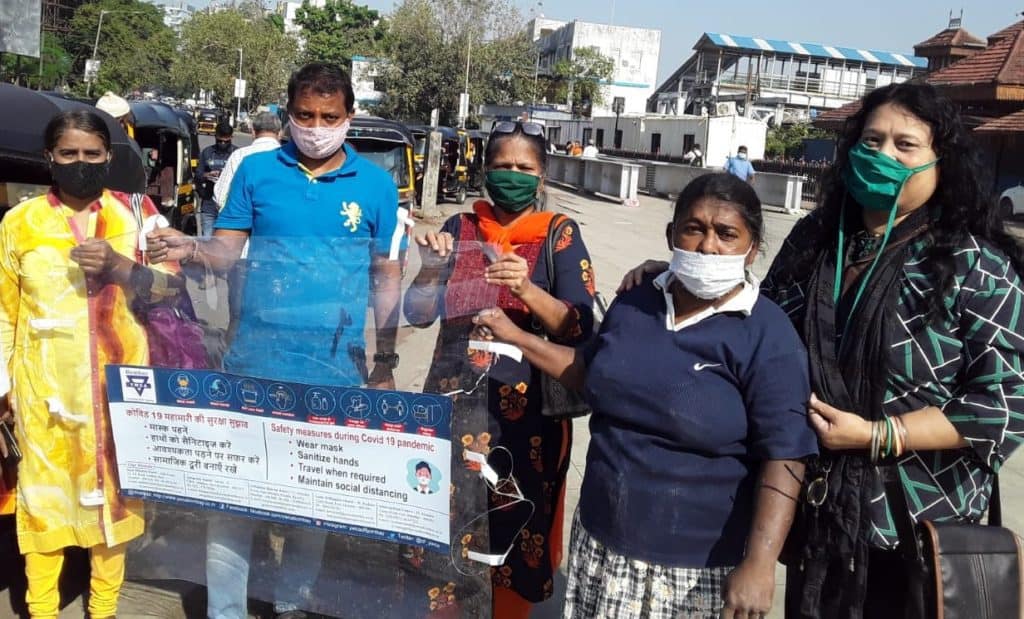
Volunteers at Bandra to install plastic separators (Photo: YWCA of Bombay)

Even now, after several months, most of the autos and taxis do not have separators between the driver and the passengers. So members of the Young Womens’ Christian Association (YWCA) of Bombay decided to step in.

Over the weekend, auto drivers at Bandra West Station were in for a surprise Christmas gift. The staff and a few members of YWCA fixed plastic separator “isolation” sheets in about 100 auto rickshaws.

Sponsored by YWCA, the transparent sheets are easy to install and clean, and have COVID awareness messages for the passengers to read.
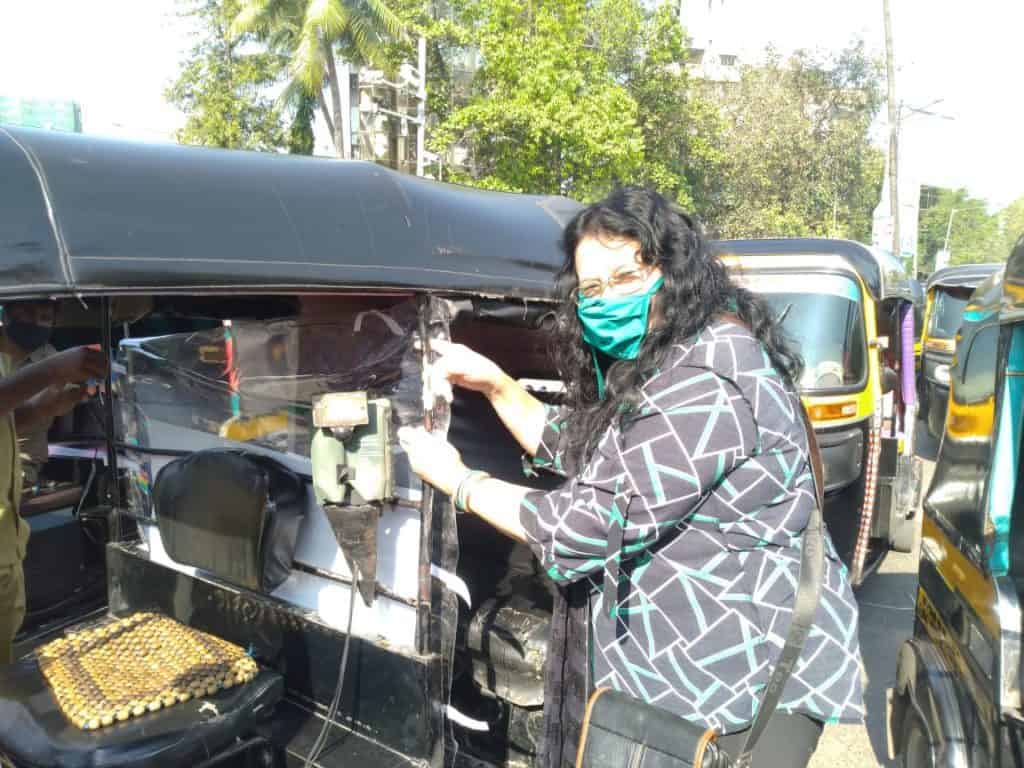
Installing the plastic separator (Photo: YWCA of Bombay)

We are grateful for this opportunity to help to protect the health of both auto drivers and passengers.

Now with the feeling of safety while riding in autos in Bandra West, please don’t forget to wear your masks.

Comments:

  1. Maria Fernandes says:

    Keep up the good work Jane…hats off to your entire team. God bless

  2. Michael Pereira says:

    Responsible citizens

  3. Richard paul says:

    Good job Jane & team you people rock

  4. Samiksha Fernandes says:

    Very good Christmas gift.keep it up.love u Mumbai

Leave a Reply

Your email address will not be published. Required fields are marked *

Similar Story

,

High transport costs, low support: The daily toll on commuters with disabilities

Disabled persons spend thousands monthly on commuting in Chennai and Bengaluru, as inaccessible transport and meagre pensions increase their woes.

TMN Deepak, a professor of social work who has a physical disability, commutes from Velachery to Loyola College in Chennai for work every day. He owns a wheelchair cum scooter that allows him to cover short distances comfortably, but he avoids public transport. “Instead, I have had to go for an automatic car, which has increased my overall spend, and I had to shell out an additional ₹2.5 lakh for modifications,” he says. Deepak's monthly petrol costs exceed ₹6,000. “I prefer not to use the bus because of inaccessibility,” he explains, highlighting how the lack of accessible public transport forces…

Similar Story

How OMR residents strive for better last-mile connectivity and improved public transport

Residents of Chennai’s OMR push for bus and metro links; FOMRRA’s survey highlights poor last-mile connectivity and urges MTC to expand services.

As commercial development along Old Mahabalipuram Road (OMR) has surged, reliable public transport has become essential. Yet, daily commuters, labourers, office workers, college and school students, and Resident Welfare Association (RWA) staff continue to grapple with limited access to Metropolitan Transport Corporation (MTC) buses. For many, reaching bus stops on the main road is a daunting task, especially since interior localities remain underserved and private operators like share autos rarely venture into these areas. The absence of adequate bus stops and the restricted MTC service forces residents into long, difficult journeys. The worst-affected by this lack of last-mile connectivity are…