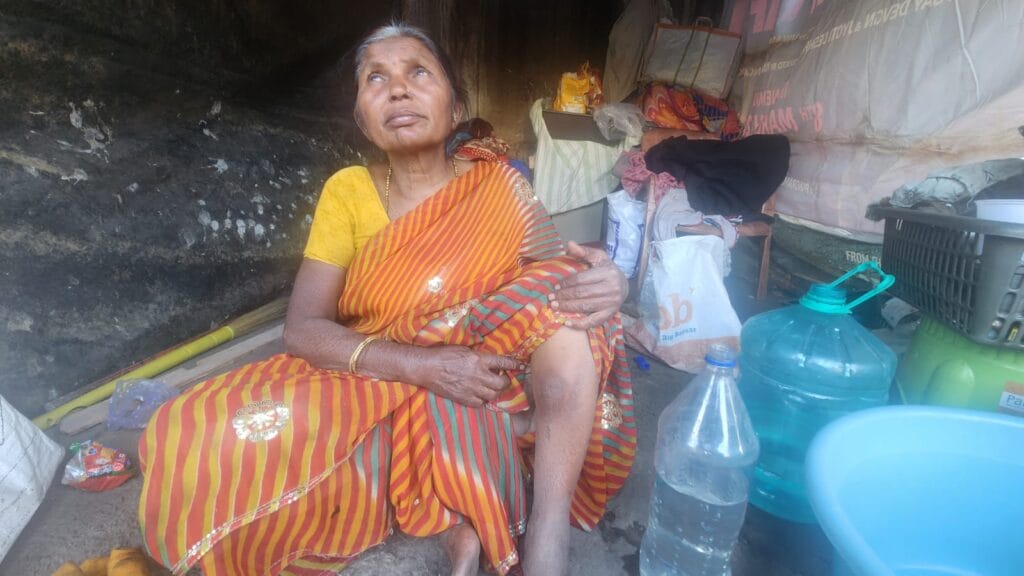
Over a fire of burning newspaper and cardboard, Madhuban Pawar, in her mid-60s, sits on the cold stone floor brewing tea. It is 11 pm, and her husband waits beside her for their only meal of the day: a single glucose biscuit and a glass of tea. In the wake of the December 2, 2025, demolition drive in Mumbai’s Borivali, a lone cooking utensil is all the Brihanmumbai Municipal Corporation (BMC) left her with.
Madhuban, like many from Borivali’s Chikuwadi, has inhabited the slums for over 20 years. “I work as a sanitation worker. During monsoons, our job is to clean the filthy gutters of Mumbai so that there is no waterlogging. Despite all the work we put in for the city, they are taking away our homes today. After the demolition of houses this December, during the chilly winter, all we have left are a few clothes. They even beat us when we tried to take our valuables,” she says, pointing at her left shin, swollen in the aftermath of the beatings.
The eviction drive
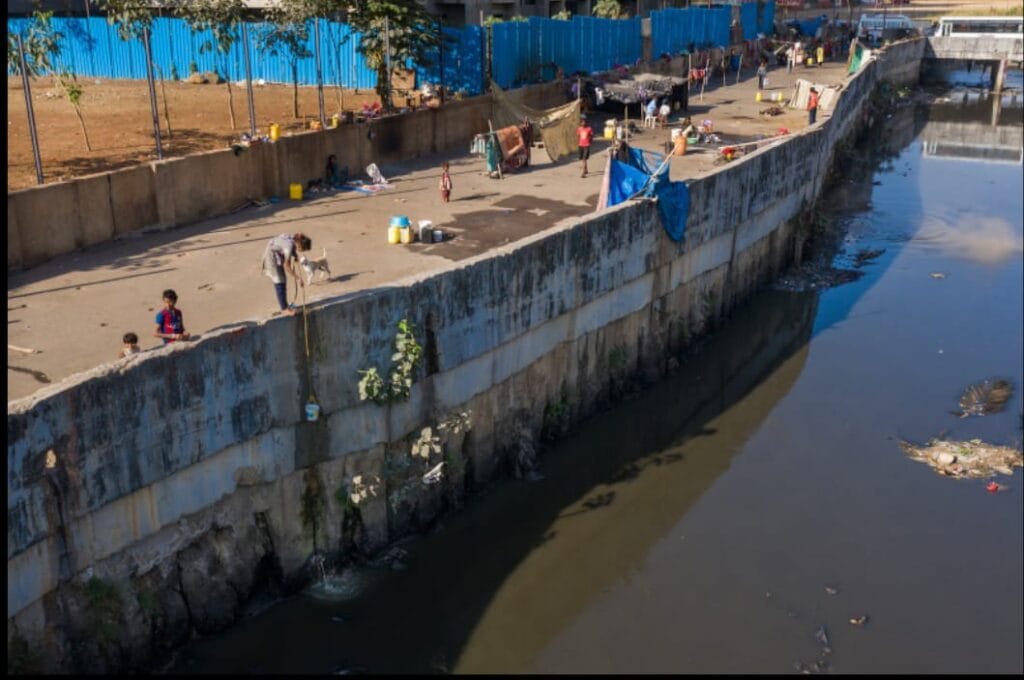
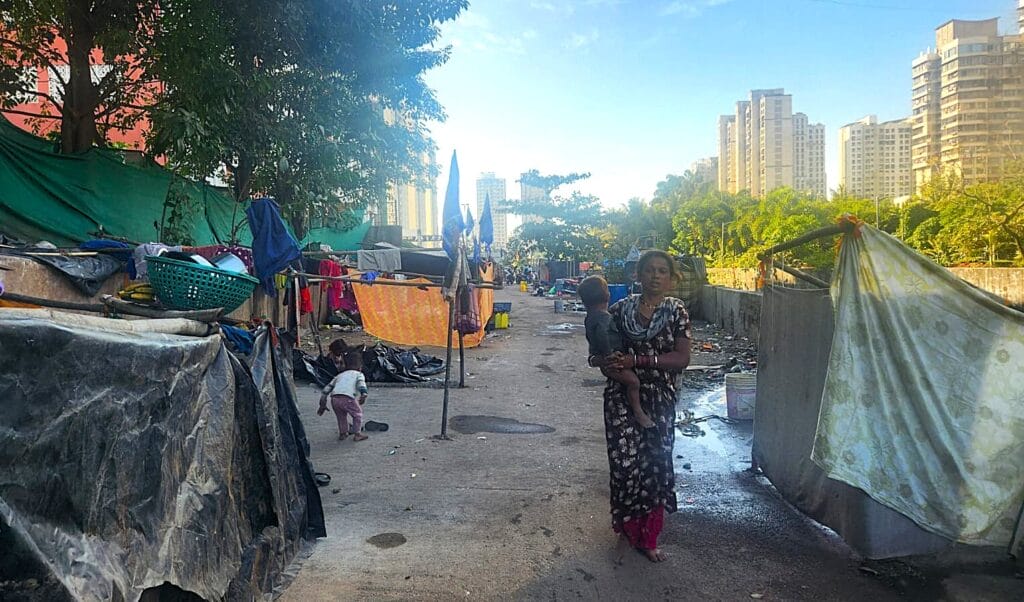
On December 2nd, the BMC carried out a series of demolition drives, claiming illegal occupation of government land. However, activists say that despite a Maharashtra government directive to protect homeless families during winter, the municipal body has been carrying out evictions.
Many residents of Chikuwadi belong to the Pardhi community and work as sanitation workers with the BMC or as masons and labourers at construction sites. Some of them are part of the informal workforce, earning a living by selling lemon-chilli hangings, toys, flowers and garlands at traffic signals. Residents say the evictions have forced them to leave behind important documents, medicines and other items.
During the demolition drive, most of the dwellers’ belongings were burnt, including important legal documents, medicine prescriptions, school books, bags, and clothes. Without land or housing rights, and with frequent disruptions from the police and civic authorities, their future remains uncertain.
Demolition, discrimination, denied dignity
On that fateful day, Chandabai Kale, 50, watched her house, built with her hard-earned money, being razed in Chikuwadi. Two decades ago, she had arrived here after marriage, and it was in this area that she watched her children grow up. This space was rendered livable by the residents, she recalls. “This entire area was a filthy marsh, and we cleaned it with our hands. When it was dirty, the BMC didn’t come. Now that it is all clean, they want us to leave. They told us that they would come to demolish, but we never thought they would not even let us take our things,” notes the 50-year-old sanitation worker.
Like Madhuban, Chandabai’s utensils and food rations were taken away. “We requested them to at least let us take our valuables, but they didn’t listen,” she says. Chandabai and a few other slum dwellers have started building their houses, after this drive.
Harassment has been a constant reality for many individuals like Madhuban and Chandabai in Chikuwadi, stemming from the stigma attached to the Pardhi community. Once branded as a “criminal tribe” under the British-era Criminal Tribes Act of 1871, the community was officially denotified after the Act was repealed in 1952. Yet, the Pardhi people continue to live under the shadow of a criminal tag that refuses to go away.
Made invisible by the government, society
The Renke Commission (officially known as the National Commission for Denotified, Nomadic and Semi-Nomadic Tribes), set up under the chairmanship of Balkrishna Sidram Renke by the Ministry of Social Justice and Empowerment, submitted its report in 2008. The report observed that communities like the Pardhis had almost become ‘invisible’, and recommended that they be provided with welfare measures.
However, the Pardhi community’s condition has not improved, and they still face discrimination. “They were not treated well in the villages, as they were from the lower class and falsely blamed as thieves. They came to Mumbai in search of livelihood,” explains Jagdish Patankar of Paani Haq Samiti and a coordinator at the Centre for Promoting Democracy. He notes the demolition drives are just one example of how these communities are “exploited for cheap labour, but no facilities are given to them for a decent life.”
Also Read: The fight over Jai Bhim Nagar: Whose land is it, anyway?
The Pani Haq Samiti has been working to help the community secure basic rights of shelter, food, and clean water. The samiti has been instrumental in helping them with their legal documents, such as Aadhaar and ration cards.
Toll on health and education
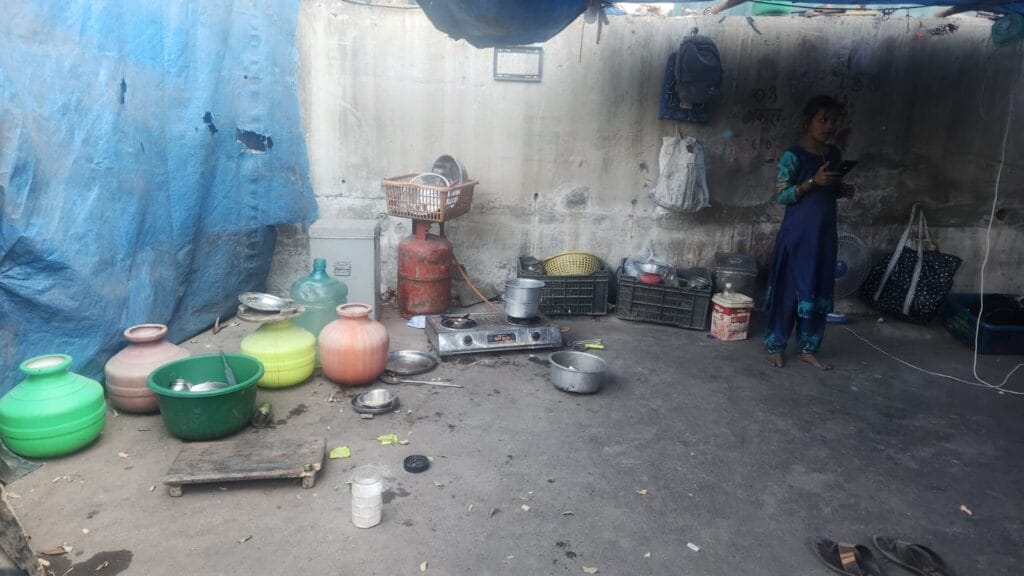
Meanwhile, the BMC’s actions have adversely impacted children, senior citizens, and patients. For instance, a resident, Bhagyashree Kale’s father-in-law, a cancer patient, was unable to access a doctor after his medical reports were taken away by BMC. Delay in treatment and staying out in the cold have worsened his condition. Doctors recommend that he go to his village, as the illness is beyond treatment.
With no shelter or home, Jyoti Pawar’s 15-day-old niece was out in the chilly weather and had to be taken to the hospital.
Children in this area attend the local BMC schools. But following the demolition, they were left without uniforms or books. Take the case of Akash Kale, who is unable to attend his 9th grade classes, as the drive took away his school books.
Read more: School, interrupted: The toll of mid-academic year evictions on children in Chennai
Why did the demolition happen?
The demolition drive was carried out to vacate the space for parking arrangements, says Jagdish. Meanwhile, ward officer Praful Tambe, reasons that the slums were illegal and the demolitions were carried out due to unhygienic conditions.
He says, “See the condition of the place where they are living; there are rats there. The people living there are more prone to plague or other diseases. You need to consider both the health perspective and the community’s perspective as well. Suppose people are not taking care of their health, so we need to take care of their health. We need to remove people from unhygienic and unsanitised conditions.” These words ring hollow as no efforts have been made for their rehabilitation.
Often, communities in these areas are referred to as encroachers or invaders within the city’s boundaries. Several government schemes tailored for marginalised communities also do not reach them. The question of treating them as humans and with dignity remains unanswered.
On behalf of evicted residents, Pani Haq Samiti activists have put out three demands:
- Stop the eviction of street and slum dwellers.
- Allot homes and shelter under the Pradhan Mantri Awas Yojana.
- Provide access to basic facilities like clean drinking water, according to the Renke Commission recommendations.