Bengaluru is a mess! Traffic is horrendous. Garbage is not picked up and lakes are polluted. Unplanned development is affecting the quality of life.
‘I pay my taxes – why am I not getting services?!’
But are you going to be voting on May 10th? No? Why not?
‘C’mon, one vote does not matter!‘
This is a myth that needs to be busted especially in Bengaluru. In our city, the winning margins are very thin!
Bengaluru’s story of low turnout
Over eight Bengaluru constituencies have a deplorable turnout of less than 50% last time, which is in the bottom third of all constituencies of Bengaluru. This is a key reason why no one pays attention to any of our civic demands. While there could be issues related to the quality of voter rolls, the low winning margins mean that each one of us can make a difference.
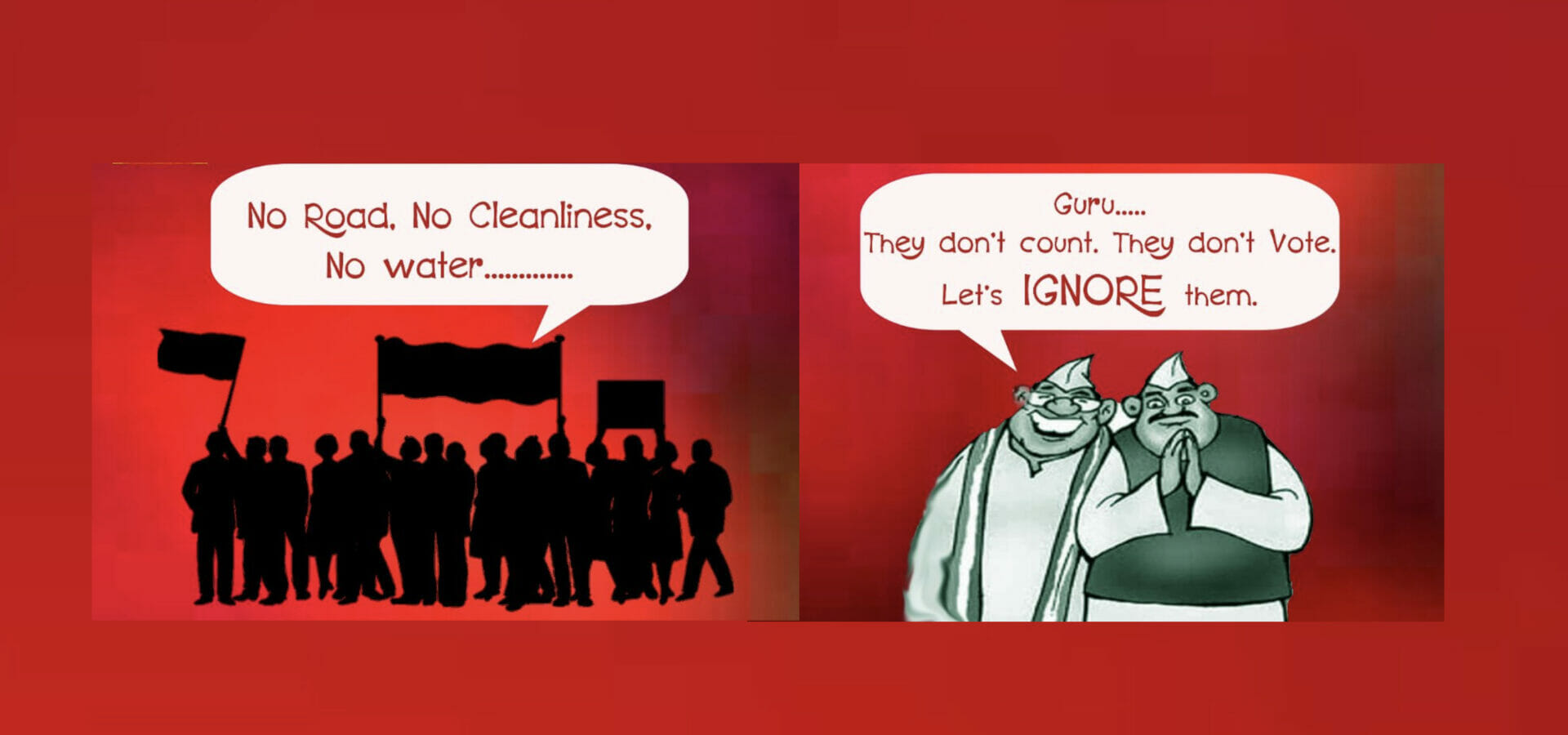
In our first–past-the-post electoral system, the more people who vote, the more the legitimacy of the elected representative. Else he/she is chosen by a majority of people who vote, but not necessarily the majority of citizens residing in the constituency. Data shows the people voting for the winning candidate and the runner-up is typically almost equal – the margin is razor thin going below even 1% in some cases! That means in a block of 100 voters if just one more person showed up a different candidate might WIN!
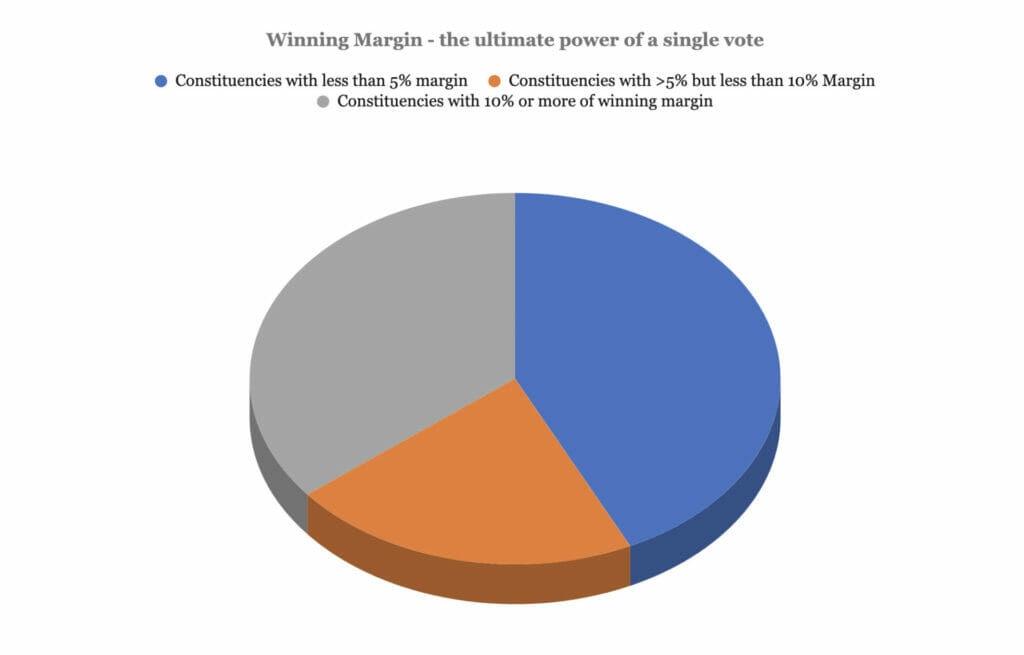
12 out of 28 Assembly Constituencies in Bengaluru had a less than 5% winning margin. In the following constituencies, ensuring between 1 and 5 more people coming out to vote in 100 could have made a difference:
| AC Name | 2018 Winning margin % | |
| 1 | 167 Vijayanagar | 0.89% |
| 2 | 152 Byatarayanapura | 1.29% |
| 3 | 173 Jayanagar | 1.42% |
| 4 | 153 Yeshwanthapura | 2.26% |
| 5 | 155 Dasarahalli | 2.37% |
| 6 | 177 Anekal | 2.40% |
| 7 | 174 Mahadevapura | 3.52% |
| 8 | 169 Chickpet | 3.55% |
| 9 | 166 Govindarajanagar | 3.88% |
It is not a question of who you vote for, but that you vote. If you are unhappy with the candidates in the running, you can choose NOTA (None of the above) so that your vote is not misused.
Read more: Voting on May 10th? Here’s what you need to know
Does “winnability” matter?
Many people believe it is important to cast their vote for a “winning candidate” so that the vote does not go to waste. But it is important to understand the winning candidate whoever it is, pays attention to who else got the votes that he/she might have got!
In these cases even a NOTA is important – because, in the view of the contestant, that person can be “won over”. This makes them responsive to your demands and work in the best interest of the public – as long as they are “voting public”. The people they will ignore – no matter how much they pay in taxes or how much noise they make – are those who will not come out to vote.
Elected officials make decisions that affect your daily life
The truth is that voting is a crucial aspect of democracy, and by participating in it, you can help shape the future of your country and community. Our elected representatives make decisions that can impact your daily life, from your taxes to the quality of your local schools, community healthcare, infrastructure development etc. Your vote helps to determine which candidates will hold these positions of power.
Voting is the foundation of a democratic society. It is a way to hold elected officials accountable for their actions and ensure that they are acting in the best interests of the public. By choosing to not vote, you are relinquishing your right to be heard and allowing others to decide your future for you. If more people participate in elections, there will be a higher likelihood that elected officials will be more responsive to the needs and wants of their constituents.
Honouring the legacy of freedom fighters
Additionally, voting is a way to honour the sacrifices of those who have fought for you to be in a position today to vote in an independent country. By voting, you are honouring their legacy and contributing to the strengthening of democracy.
In conclusion, voting is a fundamental right and responsibility that every citizen should take seriously. So, get out and vote, and make your voice heard!