Residents of slums decide to boycott civic polls
Residents of slums in Perungudi and K.K. Nagar have decided to boycott the urban local body polls on Februrary 19th. Residents express a lack of faith in the elections and frustration with officials, as they have failed to bring any kind of effective civic amenities to their neighbourhoods.
According to a member of the Kallukuttai Slum resident Welfare Association, residents have been living in the area for over 40 years. They have taken part in numerous elections, yet there has been no change. There are still no drains, drinking water facilities or roads in their area. The Resident Welfare Association (composed of more than 100 families) announced that it will not be voting on Saturday’s election. Kallukutai Slum comes under ward 194 of Perungudi Zone.
Ambedkar Nagar is another slum, located in K.K. Nagar, where residents (around 2000 famlies) have decided to boycott the elections. Failure to provide patta and drinking water by the local MLA, after the state legislative elections, has greatly disillusioned residents. In addition, candidates were also not allowed to to campaign in their locality, according to a resident.
Source: The Times of India
Read more: Chennai Metro in figures: How does it compare with Mumbai or Delhi Metro?
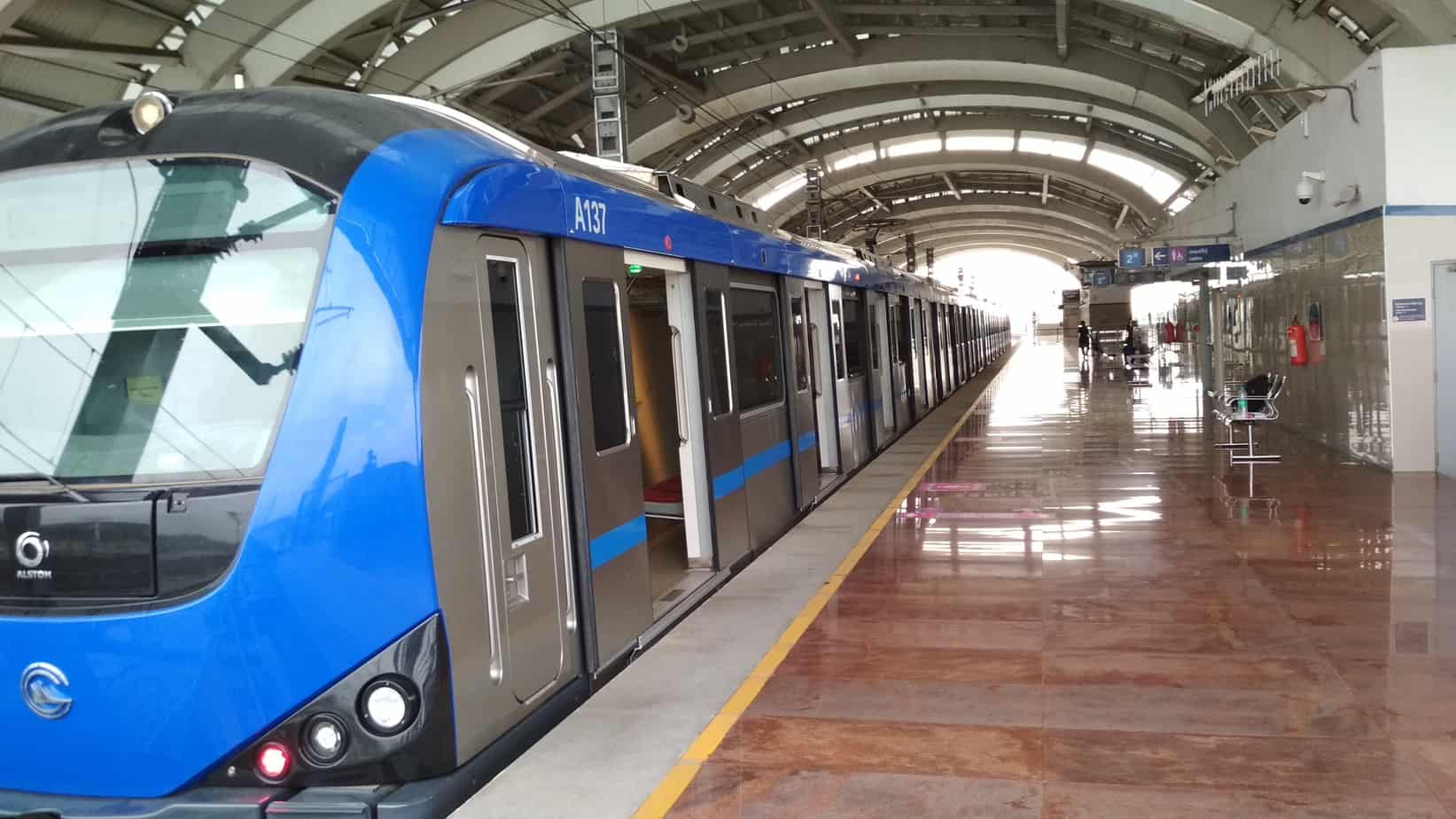
Leakages in underground Metro stations owing to shoddy construction
Water seepage can be seen at a number of underground metro stations in the city such as LIC, Thousand Lights and High Court. Puddles of stagnant water can be seen by steps, walkways and close to the walls. While leakages are not surprising during the rainy season, their occurence during non-rainy seasons is all the more concerning.
A key cause for these leaks is the hasty manner in which these stations have been built to prevent further delays in metro projects (often already behind schedule by several years). Many of these projects have seen numerous phases in construction, for example the station at Anna Salai was given to a different contractor midway through the project.
Many have pointed to the haphazard phases in construction as reason for the leakages. According to a Chennai Metro Rail Limited (CMRL) official, around 100 spots with water seepage were identified in the underground metro stations and tunnels during the rains last year. Only 50% of these leaks have been fixed since then.
Source: The Times of India
Air Pollution in Chennai 5 times higher than WHO standards
According to a report published by NGO Greenpeace International, the air pollution in the city has surpassed the World Health Organisation’s permissible limits by far.
The report showed how the quantity of particulate matter less than 10-micron size, also known as PM10, has increased by 3 to 4 times in the city’s atmosphere. Chennai’s average PM2.5 micron size was found to be 27 micrograms/meter cubed, which is 5 times the WHO limit of 5 micrograms/meter cubed.
The study was carried out between November 2020 and November 2021.
Source: India Today
Read more: Chennai air quality: City sees 94% spike in NO2 pollution
Beautification of Adyar in the works
Beautification work in Adyar is set to be undertaken on Thiru Vi Ka and Kotturpuram Bridges. This will be done as part of the City River Restoration Project. The project will cover 2.50 km between the two bridges.
As part of the project, planting of tree saplings and formation of bunds will be carried out. The work had been stalled due to the model code of conduct in place for the civic polls. It is set to resume once the polls are completed. The project will also see the construction of a park near the Kotturpuram MRTS station along with two playgrounds. The project is estimated to cost Rs 11 crore.
Source: The Hindu
Kilpauk Medical College hospital to be expanded
An expansion project of the Kilpauk Medical College is set to be completed this year. The project is being executed by the Public Works Department (PWD). The estimated cost of the project is Rs 149.54 crores.
The expansion will add a new block to the hospital spanning six floors. It will cover 2.49 lakh sq ft. The new block will house 13 hybrid operation theatres, an intensive care facility, set up for emergency care and a burns unit. The new block will also have 410 beds. Cardiology, urology, nephrology and a poison unit will be present in the new block. The project is supported by the Japanese International Cooperation Agency.
Source: The Hindu
[Compiled by Savitha Ganesh and Aruna Natarajan]