A citizen-led, local initiative in Kotturpuram is creating ripples of inspiration across Chennai. Determined to make their surroundings better, the children and youngsters at Kotturpuram Housing Board cleaned the litter in the area and decorated the walls with colourful murals.
A week ago, the passageway at Block H of Kotturpuram Housing Board resembled a mini dump yard with bags full of domestic waste strewn all around. The stench was so unbearable that locals would cover their noses while passing the area. Today, the locality is the talk of the town, with officials from the Corporation and Slum Development Board visiting the locality to witness the transformation. Citizens across the city want to follow the model to make their neighbourhoods clean.
“I am happy to see the enthusiasm among the residents of neighbouring blocks, who want to replicate the model. It proves that change is contagious. Chennai Corporation will engage with multiple stakeholders to support the housing board residents on their waste management drive,” said Dr Alby John, Regional Deputy Commissioner, Greater Chennai Corporation.
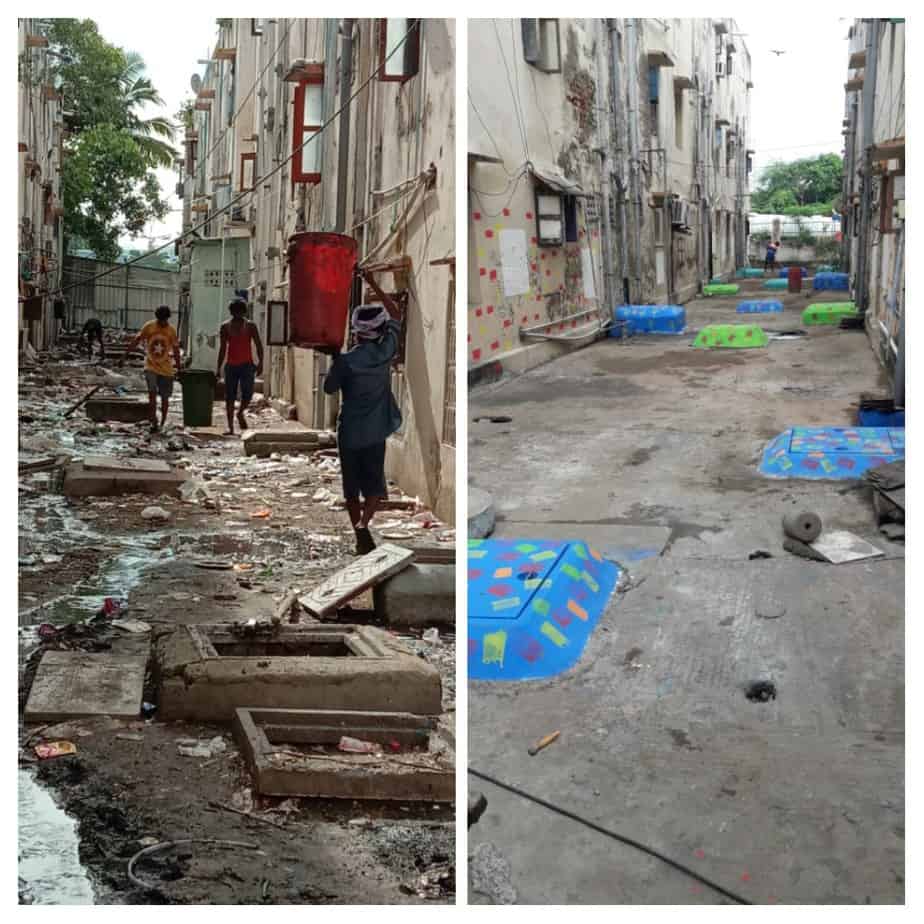
Before and after the beautification.
Perseverance pays off
For years, citizens in this housing colony had resorted to the short cut of dumping their waste at this passageway, instead of walking a few yards to the dustbin. As a result, the area actually reinforced the stereotypes of unhygienic housing boards. To change this perception, and also the conditions of living, a few like-minded residents teamed up with Chennai Corporation.
“A few months ago, we cleared the garbage in the passageway and sensitised the residents against dumping. But within days, it would be littered again,” said R Gavaskar, a resident and a conservancy worker.
This time, the strategy was different. A meeting with the residents was held at the dirty passageway to show them the ground situation. “Residents who littered the space felt guilty; they understood how difficult it is for the conservancy workers to clean the waste,” said Vasanth, Conservancy Supervisor.
After residents promised not to litter the space, children of the area joined hands with the conservancy staff to clean the space again. Soon, the children, with the help of parents, had painted the walls. “It is a win-win situation. Today children are using the space to play games such as carrom and cricket. Parents, who witnessed their hard work and see the possibilities of the space, are mending their ways,” said Gavaskar.
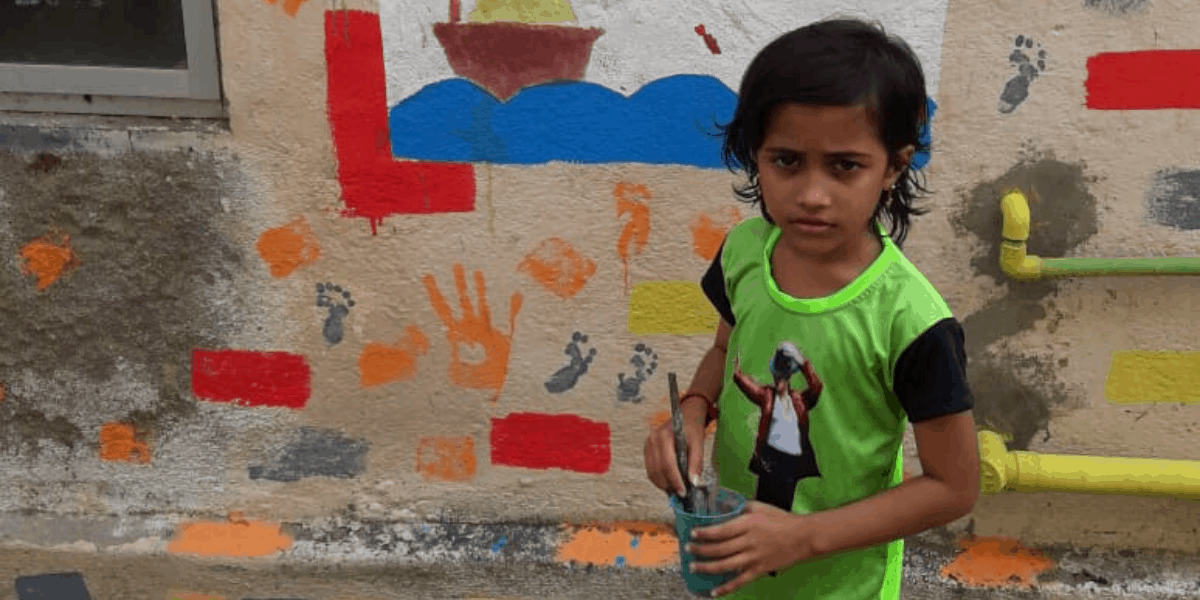
A girl paints the wall at the Kotturpuram Housing Board.

Children play carrom in the beautified passageway
Sourcing funds was a challenge. But again, crowdsourcing worked. Few painters contributed paints, labourers helped in clearing the garbage and some helped financially. Thus, this self-driven community engagement turned out to be a fruitful and exemplary social experiment, and now will hopefully pave the way for more such efforts by other low-income groups.
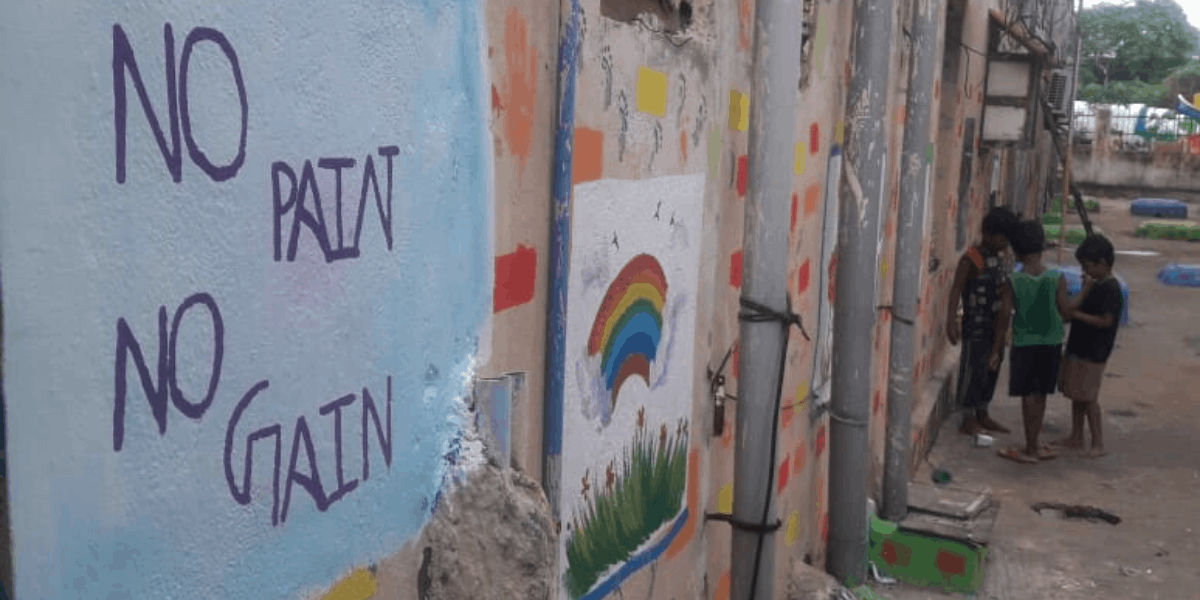
(The community has no funds to provide equipment for other sports such as Badminton. They request citizens to contribute to their cause. Citizens interested to pitch in can call Gavaskar at +91 79044 48494)
Great work by the local citizens and to make the momentum to continue it is very important to sustain the maintenance over longer period which is quite difficult in developing countries like India. Anyone who visited any of the shopping mall like RA, Phoenix could easily understand how the cleanliness is being maintained with the same Chennai citizens while we are not able to replicate the same in any of the public place like beaches, common parks etc. It is the self discipline that makes the difference. All the best and keep it up your great contribution.