Birds captured after the rains

Thanks to the rain and the treated water, the level has gone up at the lake. Unfortunately though, the notoriously difficult to control alligator weed is also growing lushly. We hope when the level increases even more, the weeds will be submerged and rot. Well, we may be unhappy about the weed spreading but the birds are very happy about it. The number of birds frequently the lake has increased. 
 
For the past few months, Madhurima Das, a “resident birder” from the neighbourhood has been regularly doing a weekend census of the birds at the lake, and taking pictures as well. Today she was happy to have captured a few candid moments. Pictures below.
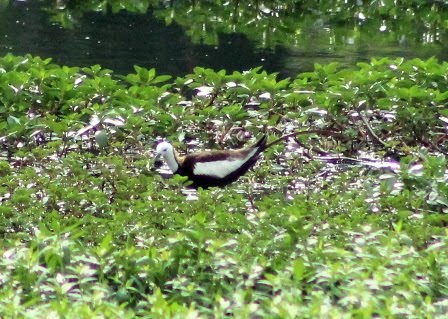
 
Pheasant-tailed Jacana in breeding plumage
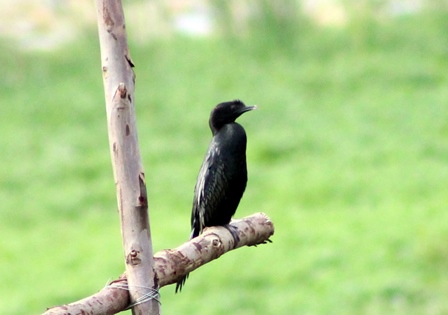
 
Little Cormorant 

 
Great Cormorants that flew past for a recce perhaps!
 
White-throated Kingfisher with catch
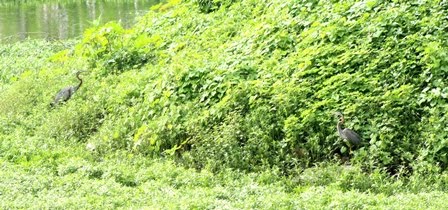
 
Spot the two Purple Herons? 
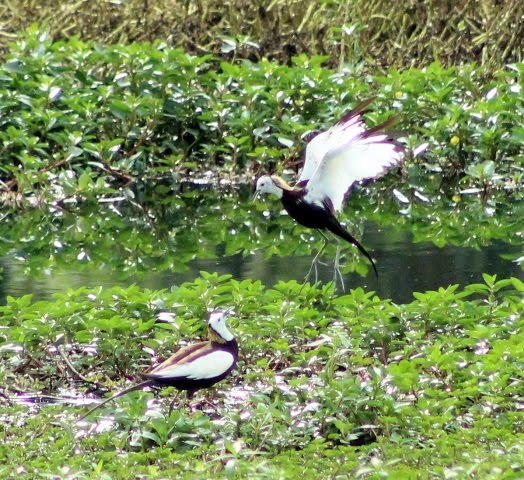
 
Pheasant-tailed Jacanas in a mating dance perhaps …. 
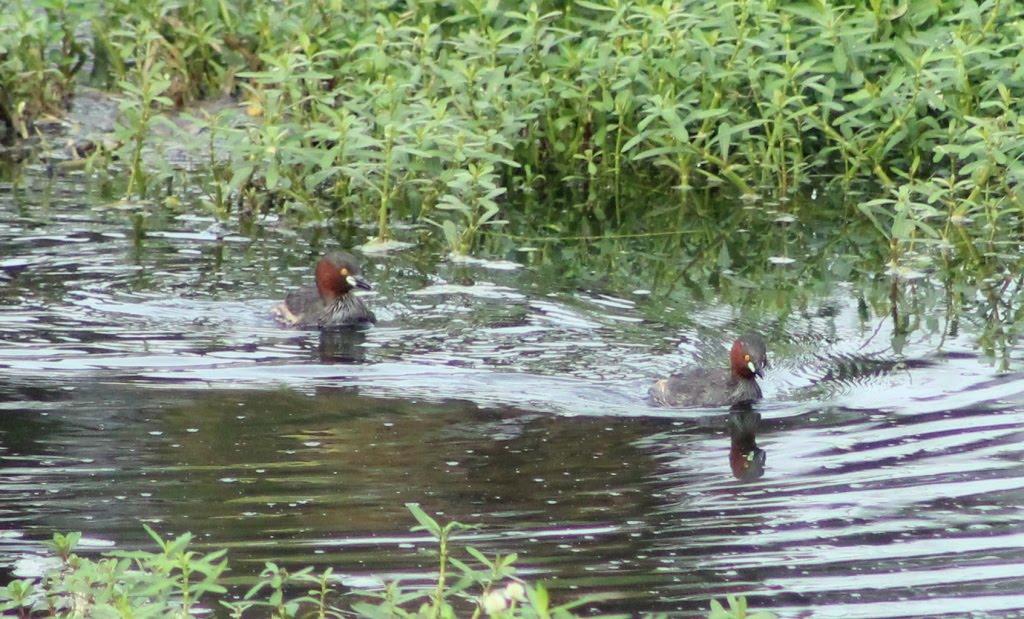
 
Little Grebes – they had laid three eggs but lost two to predators. Way of the wild!
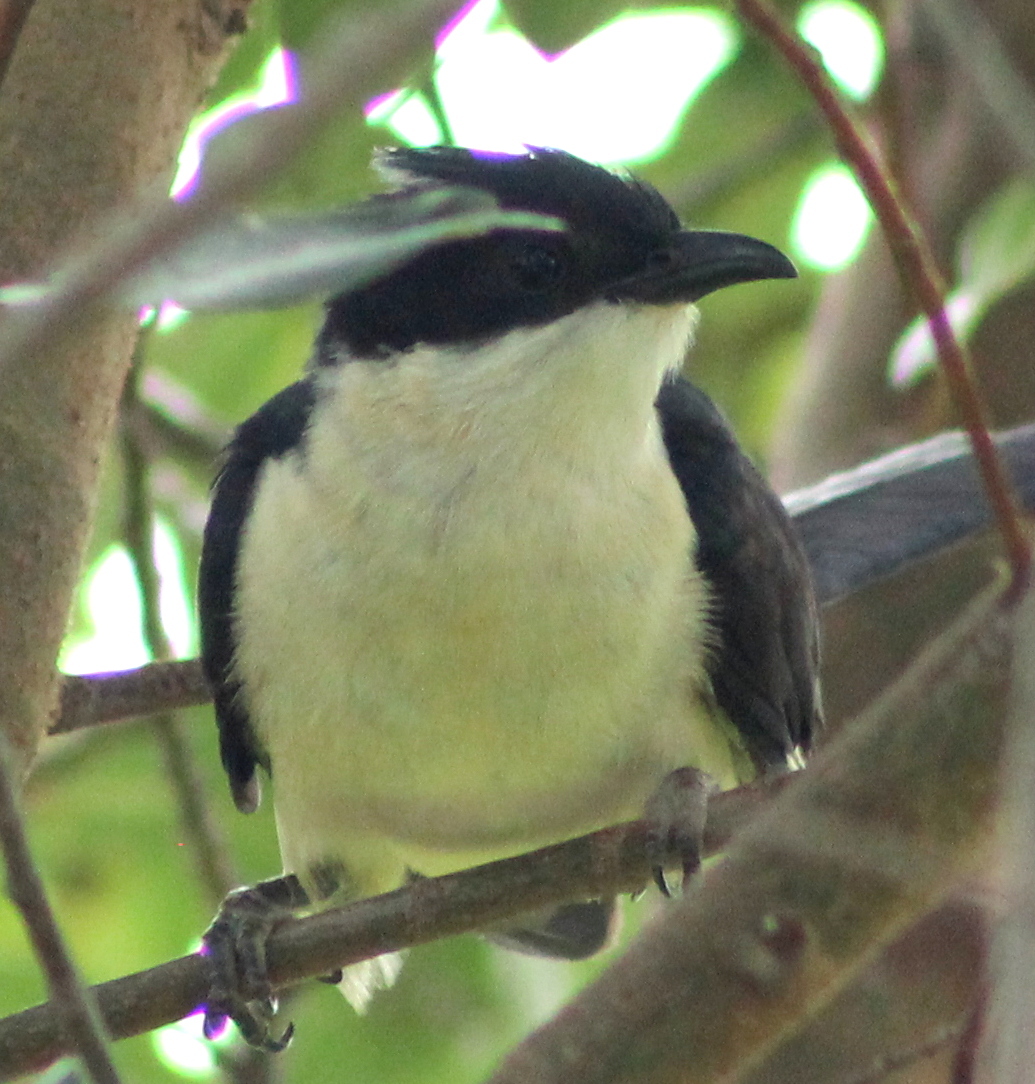
 
A first time visitor to our lake – Jacobin Cuckoo, considered to be a harbinger of the monsoon! 
 
Pics: Madhurima Das
Captions: Usha Rajagopalan 

Leave a Reply

Your email address will not be published. Required fields are marked *

Similar Story

Inside Chennai’s AQI: Why hyperlocal monitoring of air quality is crucial

Official data masks Chennai's toxic air. Citizen Matters travelled with the IITM team to map variations in air quality. Watch the video to know more.

Across cities, official Air Quality Index (AQI) readings often overlook local hotspots. Chennai has eight Continuous Ambient Air Quality Monitoring Stations (CAAQMS) that function 24/7 throughout the year. But this isn’t enough to map particulate matter. Air changes every few metres, as researchers from the Indian Institute of Technology-Madras tell us. Seasonal variation, construction, vehicular movement, and proximity to industries also change the air we breathe, In 2022, over 17 lakh people died in India due to air pollution (PM 2.5), according to a Lancet study. With better hyper-local air data and public awareness, citizens and policymakers can target pollution…

Similar Story

Mumbaikars are fighting for their mangroves. Here’s how you can join them

Mumbai is about to face a monumental loss—its mangroves are being cut to build the coastal road. Citizens, however, have not given up the fight to save them.

​“What happens when we remove this natural infrastructure of the city? What happens if it floods? What happens if the air quality (index) goes really high?” asks Pooja Domadia, a member of the Save Mumbai Mangroves campaign. These are questions that many Mumbaikars have as work begins on the Versova-Bhayandar Coastal Road, which is set to affect 45,000 mangrove trees. In March this year, the Supreme Court dismissed a petition challenging the Bombay High Court order to greenlight the cutting of mangroves for the project. Is the SC decision a fatal blow to the movement? The BMC has already begun…