The garbage amongst us

Not so early in the morning, I look down from my third floor apartment. There’s a lady sweeping the dead-end road. I know her, though I don’t know her name. She wears the official BBMP coat and she collects garbage from each of the apartment building. Sometimes I see her, while walking, from a car and smile and wave at her. She smiles back. A beautiful, cheery smile, but with an edge of self-consciousness. As if unused to be smiled at. As if unacknowledged as a human by those who live in apartments.
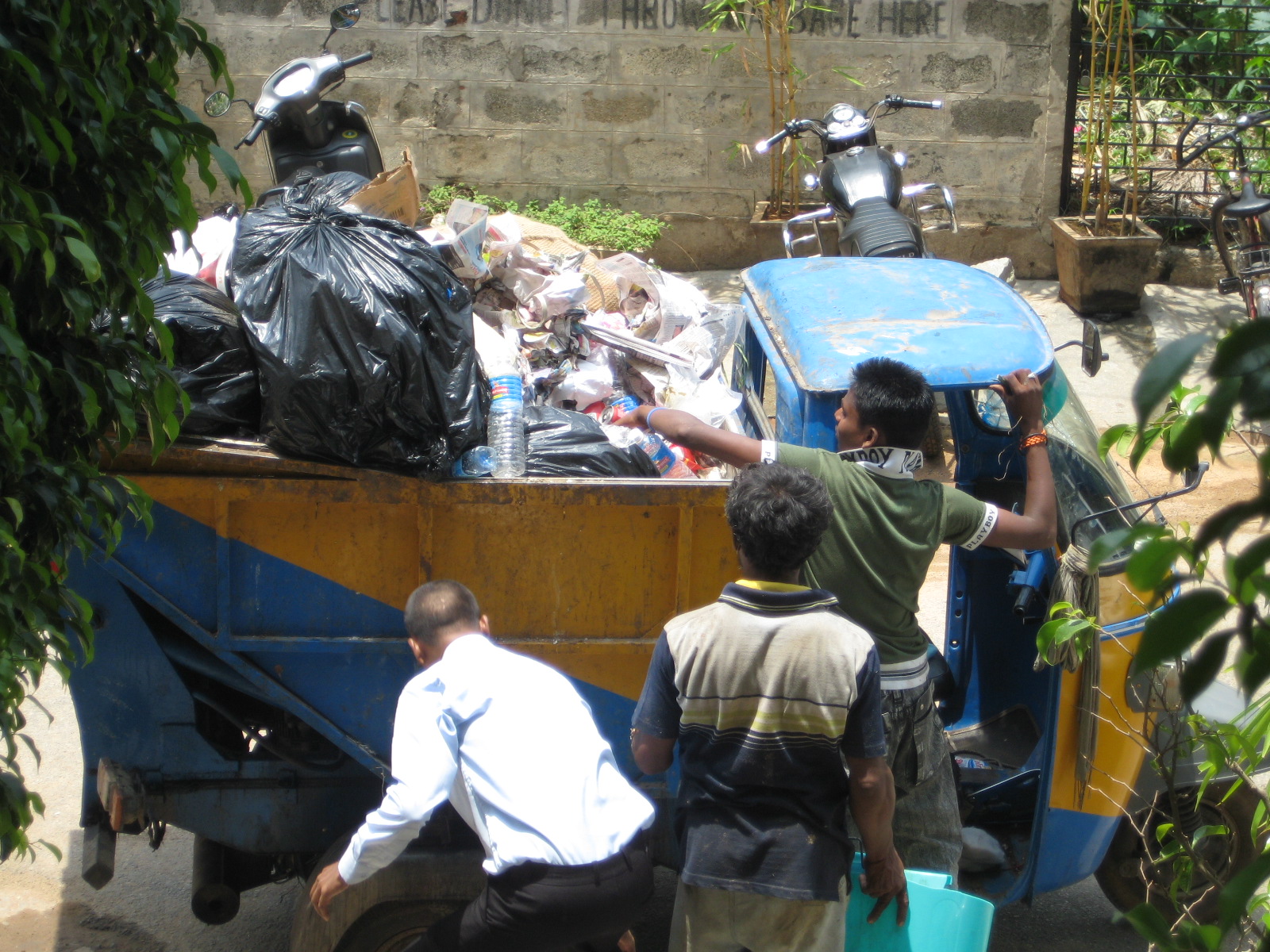
(Pic for representation only. Can’t find the one I clicked)

Then there’s another from BBMP, I see from my third floor apartment. He comes on the open garbage truck, a small one to pick up garbage from the apartment building opposite mine (there are 24 flats there). The building has three long drums which are filled upto the brim with all kinds of icky stuff—polythene bags full of kitchen waste, toilet paper, condoms, leftover curry gone bad and dust. He puts his naked hands into this middle class garbage and efficiently separates the non-biodegradable, the tetra packs, mulchy polythene bags, Styrofoam cups and recyclable waste.

A middle class man who lives in the apartment sees him and makes a face full of disgust. A lady with a little child, walks by, crinkling her nose at the awful smell. And I, clean and distant from the scene, on my third floor balcony, wonder how someone who deals with other people’s shit, can smile so beautifully.

Leave a Reply

Your email address will not be published. Required fields are marked *

Similar Story

The wild in the city: What citizen scientists tell us about Bengaluru’s biodiversity

Spatial and temporal biodiversity patterns, as observed by citizen scientists in the city during 2016-2025, were studied at a datajam in December 2025.

Imagine you’re out on a morning walk, phone in hand, when you spot a butterfly you’ve never seen before. You snap a photo, log it into a citizen science app, and voila! You’ve just contributed to crucial biodiversity monitoring. This isn’t just a hobby; it’s part of a global movement where ordinary people collect, record, and sometimes analyse data about plants, animals, and ecosystems. Citizen science stretches the reach of ecological research. Every observation adds to unique longitudinal datasets that reveal phenology — periodic events in the life cycle of a species — along with species distribution shifts and population…

Similar Story

Air quality management is a governance problem, not just an environmental one

Despite massive funding, Indian cities face weak governance, poor data, and limited capacity, as air pollution continues to worsen.

Indian cities are struggling to breathe. Air pollution is a year-round governance challenge. In 2024, 35 of the 50 most polluted cities globally were in India, with PM2.5 concentrations above 66.4 μg/m3. This is at least 13 times the World Health Organization (WHO) guidelines and at least 1.6 times the National Ambient Air Quality Standards (NAAQS) in India. Citizens continue to bear the brunt of worsening air quality, and urban local governments (ULGs) are at the forefront of the problem, being primarily accountable for their citizens' first mile. While they do have a role to play in addressing this threat,…