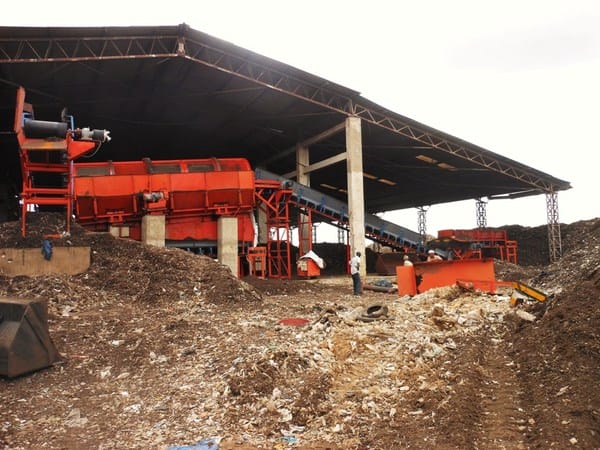
KCDC all set to process waste with new machines. Pic: Nikita Malusare
With garbage segregation norms not being adhered to by most residents in the city, landfills are the norm. Even in cases where the segregation is properly done, there is little infrastructure that can handle the end-to-end processing of the waste. The segregated waste is sometimes getting mixed on its way to landfills. Lack of scientific processing of such waste is adding to the problem.
Karnataka Compost Development Corporation (KCDC) might have been established with a good intention of converting organic waste into compost. It would have been situated on the city’s outskirts when it started. But then, as the city expanded and authorities permitted citizens to reside right next to this plant and within the prohibited buffer limits from this plant, it has become a nightmare for people in the locality.
The plant was supposed to accept only wet or organic waste and convert it into compost. But the reality is very different. Piles of lakhs of tonnes of mixed garbage lie in this compound causing irreversible damage to the water and earth alike. Garbage has been lying for years without being processed.
While the plant was closed and not operated for a few years, various apartments and hundreds if not thousands of families have been permitted to settle in this area. Builders convinced buyers into believing that KCDC was shut down, never to reopen. BBMP officials permitted dozens of apartments and residential buildings in the buffer zone around the KCDC plant.
In the last few years, our protests and requests have gone unheard. Citizens have tried to reach out to political parties, MLAs, corporators and Human Rights Commission, but none responded positively. The only answer we get is “The matter is in the court” and that they can do little about it now.
Chequered history of KCDC
KCDC was established in 1975, to help Bangalore city compost its waste. The model was to accept only segregated wet waste and compost it, and sell it to the farmers. Due to bad management, the plant was shut down around 2008. The plant re-opened in mid-2013, and re-started composting.
The methods employed here for composting are two-fold: aerobic composting and vermicomposting. While vermicomposting has a limited capacity that cannot be disturbed, mishandling of aerobic method of composting is causing the stench, due to rotten food material in the unsegregated garbage. Though the plant is supposed to accept only segregated waste, BBMP has been historically unable to provide the plant with pure segregated waste, reasons being many.
The residents, in the leadership of MLA Satish Reddy, had protested against the mishandling of the KCDC. The High Court and BBMP have repeatedly stressed that the buyers of the apartments should have known the impacts of having a waste processing firm nearby. Now the citizens of the area want to start a citizens’ movement against KCDC.
But then is the system not concerned about the health and well-being of its citizens? Are the authorities not at fault for having permitted such a large human habitation around the KCDC plant? How can the citizens be blamed for the mistakes and false promises of both builders and the involved government authorities?
We definitely do not want the KCDC plant in the locality. It is not just causing unbearable stink all through the day, but also is causing health hazards. Mosquitoes and flies are causing diseases. The water and air are completely polluted. The residents around KCDC have no option but to keep their windows and doors closed. We really do not know the long term consequences on the health and lives of the citizens – especially on the children.
We, the residents of Somasundarapalya neighbourhood localities are now contemplating a citizen movement against KCDC, since no authority is coming to our rescue. It is our request to spread this cause and help large number of citizens participate in the movement so that the plant is closed and moved to a location where it is safe.
We currently have nearly 100 responses from people who say they are affected by this problem and are willing to join this movement. On the other hand, a number of other families think that if protest is carried out, the authorities will come back with a vengeance, demolish the buildings in the prohibited area since they are not as per authorized norms. Some fear the long-term health hazards and another set fears the loss of their cherished dream home. Either way there’s really no one who is helping the common citizen in getting them their rightful share of fresh air!
We in the region around the KCDC plant are also human beings, pay taxes on time and abide by the constitution like anyone else in the city. We do not want to be the scapegoats. If the city needs more processing units of the mixed garbage, then such infrastructure has to be made ready all around the city. The garbage from the entire city CANNOT be dumped in our backyard.
Link to confirm participation: http://goo.gl/forms/aChUvvfa4r
Facebook Page: Citizen Movement against KCDC
This is an article contributed by a citizen. To understand how citizen journalism works, click here.
Related Articles
Will the KCDC neighbourhood finally be free of smelly nights?
How is wet waste processed at the KCDC?
MLA backs citizens protesting against KCDC
Thank you CitizenMatters for helping the Citizens at large. Much appreciated.
Also, if you see this article from Hindu, it seems like even the authorities are not confident about the segregation across the city and their ability to accept only wet waste into this unit.
http://www.thehindu.com/todays-paper/tp-national/tp-karnataka/segregation-of-waste-at-source-is-the-key/article6501994.ece
The problem is created by everyone in the city. Very much. We cannot punish Mandur, Mavallipura, Somasandrapalya citizens alone for the fault of everyone. If needed, charge more money on a monthly basis like for electricity and water. But get the technology, scientific know-how, land and infrastructure in place to solve this problem forever. Moving it from one village to another and to another locality (centralized) isn’t the solution at all. It can earn votes but not healthy life to anyone around such dumpyards.
Hi All. We are planning for a Citizen Movement Against KCDC causing acute Stench, leading to Breathing issues and Diseases to one and all. The movement will be sometime in next week. All details will be posted soon once the date and time are finalized. Request support from all those in HSR layout, Somasandrapalya, Kudlu, Harlur Road, Hosapalya, etc, also since the problem would definitely increase from december when thousands of tonnes of garbage gets into KCDC. Thank you for your time.
Please join the group to participate @ https://groups.google.com/forum/?hl=en#!forum/citizen-movement—kcdc-affecting-health-and-environment
It was stinking today morning. It was really depressing to see office goers and school going children covering their nose and mouth, waiting for their buses to come at HSR layout. Such a nice & posh layout being sabotaged!!! Sad.
We are facing the same problem.We all should do something for this.