BBMP seeks help in each ward; increases fine on plastic ban violators

BBMP has put its foot down to make the implementation of plastic ban a success. However, ward level citizen volunteers are an essential ingredient in the success of plastic ban and scientific waste management.

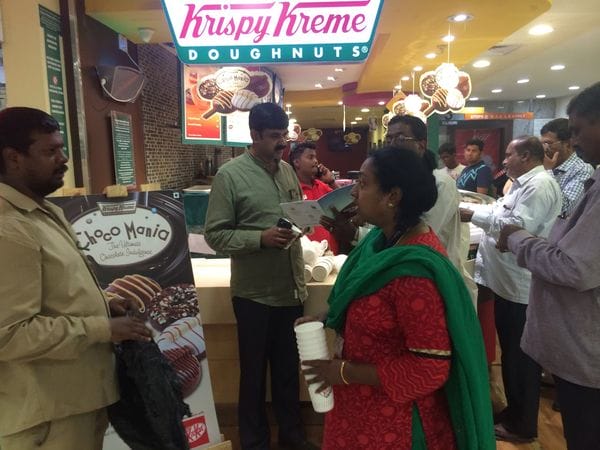
Joint Commissioner- East Yatish Kumar inspecting and penalising shops that violated plastic ban. Pic courtesy: SWM volunteers team

Bruhat Bengaluru Mahanagara Palike has put its foot once again to show that plastic ban is here to stay, unlike many earlier instances of plastic ban notifications that were ineffective. With the National Green Tribunal postponing the hearing of petition against plastic ban to July 15, 2016, BBMP has released a notification that orders heavy fine on violators. The revised fines are listed below:

Fines for manufacturing and sale of banned plastic items
Criteria Fine for first time offense Fine for second time offense
Manufacturing Rs 2,00,000 Rs 5,00,000
Storage Rs 1,00,000 Rs 2,00,000
Selling Rs 50,000 Rs 1,00,000
Commercial users Rs 25,000 Rs 50,000
Domestic users Rs 500 Rs 1000

The notification has also empowered the Joint Commissioners, BBMP Revenue Officers, all BBMP engineers to seize and fine the violators, along with health officers, thus giving more hands for the system to monitor violations. The entire notification can be seen here:

Leave a Reply

Your email address will not be published. Required fields are marked *

Similar Story

Chennai to lose thrice as many trees as originally estimated for Metro Phase II

Over 8,000 trees would be either felled or transplanted for the project. Meanwhile, over a third of the transplanted trees haven't survived.

‘Inconvenience today for a better tomorrow’ signs follow commuters across the city as work inches on for the 118-km Chennai Metro Phase II. Residents eagerly await three corridors that will connect Madhavaram to SIPCOT, Lighthouse to Poonamalle Bypass, and Madhavaram to Sholinganallur by 2028. But the project is resulting in an irreversible loss of green cover along the corridors, far more than was estimated at the time of its approval. A total of 8,029 trees would be affected, either felled or transplanted, for the project. Over 7,000 of these trees have been uprooted already. Though new trees are planted to…

Similar Story

A decade without a Master Plan: Who should be planning Bengaluru’s future?

Bengaluru’s future must focus on breaking free from outdated frameworks and embracing citizen-led, climate-resilient planning.

Nearly a decade ago, while I was working on the Revised Master Plan for Bengaluru (RMP 2031), a senior planner remarked: “Only the Bengaluru Development Authority (BDA) has the legal right to plan for Bengaluru.” Today, that assertion is unravelling in a tussle between the newly formed Greater Bengaluru Authority (GBA) and the BDA over who should plan for the city’s future. What is more troubling is that Bengaluru’s current master plan, the RMP 2015, is based on surveys from 2003, nearly two decades out of date. The Karnataka Town and Country Planning Act (KTCPA) of 1961 requires revision every…