An opportunity to work amidst the birds and the bees

Last week, Madhurima, who regularly tracks the birds at Puttenahalli Lake had lots of “good news” for us.

“We had a babies’ day out at the lake. First the Coots brought one of their babies out. A Brahminy Kite spotted it and dived towards it, but unsuccessfully. So no casualties. Later the Coots brought out both their babies. Then the White-throated Kingfishers brought out two juveniles and the Wagtails also presented,  what looked like a juvenile.  And then, an Ashy Prinia brought out a tiny little Ashy Prinia! It was so tiny that we could not see it with our naked eyes.”

The previous day, she had other exciting sightings. 
“When I walked into the lake premises today, I saw a pair of what I think are Black-winged Stilts flying out. Then I saw 2 Purple Herons, followed by a flock of 12 Scaly-breasted Munia and then the Oriental White-eye showed up with the missus. And that was not all, after coming home and zooming into the photos of some Little Grebes that I had taken, I realized that they weren’t Little Grebes at all. They were baby Coots. The Pheasant-tailed Jacanas are still here. Hopefully we will have some Jacana chicks soon.”


Bird babies at the lake (Pics: Madhurima Das)
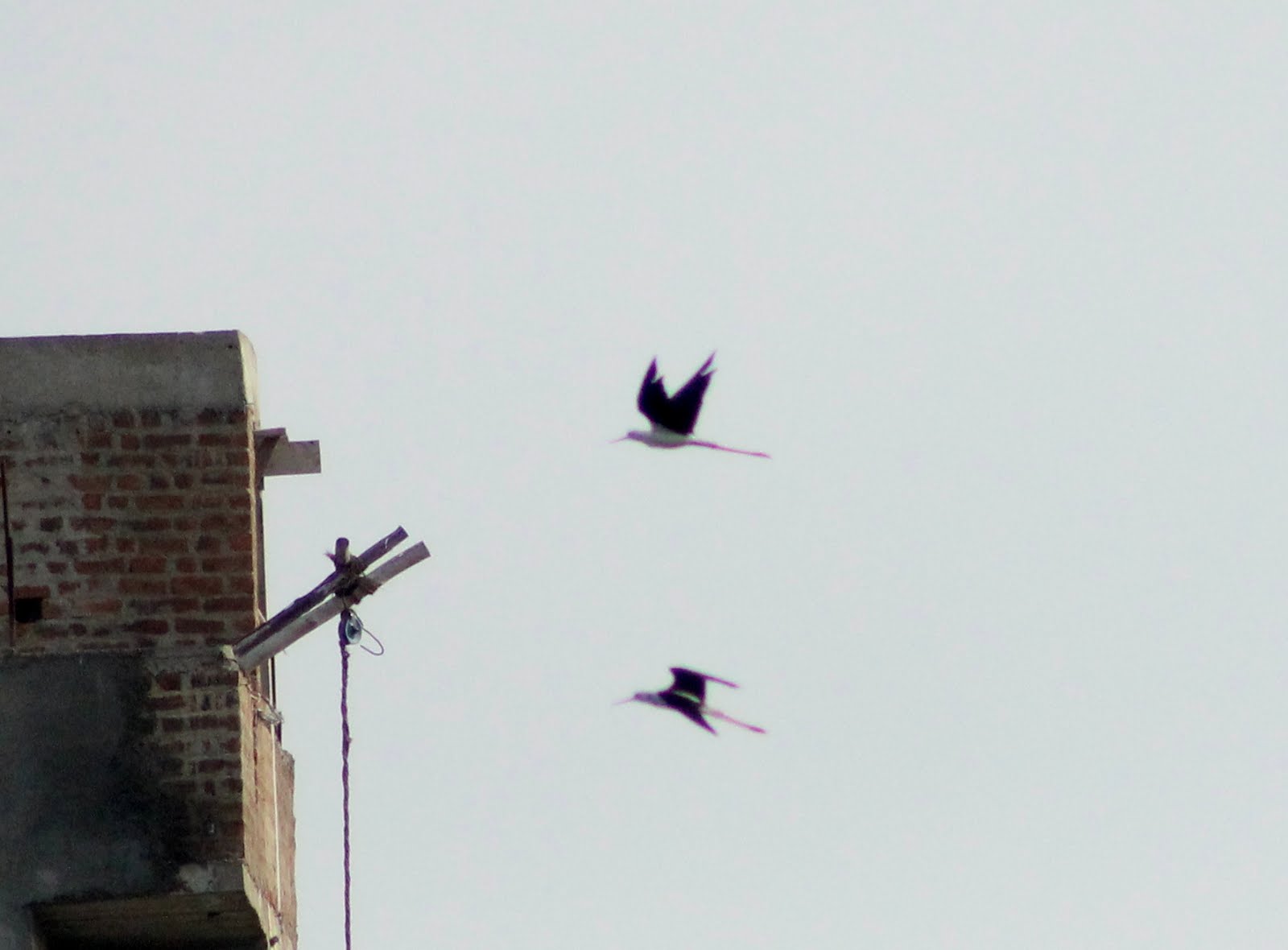

Black-winged stilts and Oriental White-eye (Pics: Madhurima Das) 

Are you interested in spending a few hours in such an environment and getting paid for it? PNLIT is looking for a Manager for Puttenahalli Lake, near MLR Convention Hall, J.P. Nagar. This is an exciting, unique and deeply fulfilling assignment. As Manager, you become a partner with the trustees to not just maintain the lake and its premises but to complete its transformation into a rich thriving eco-system – an achievable dream.  
 
Requirements – an open mind and love for nature with some fluency in spoken Kannada. The job would include, but would not be limited to the following: assign work to the staff, supervise them, follow up with officials, help with organizing events, run small errands as needed, work together with the trustees. 
 
The right candidate can expect a reasonable remuneration/ honorarium. To know more about PNLIT visit the website http://www.puttenahallilake.in. If you are interested in exploring this opportunity, drop a mail to puttenahalli.lake@gmail.com.


Leave a Reply

Your email address will not be published. Required fields are marked *

Similar Story

Where are the pollinators in Bengaluru?

Despite the volumes of citizen-generated data on the city's biodiversity, pollinators who sustain the urban ecosystem do not seem to be getting their due attention.

Urban biodiversity is often discussed in terms of tree cover, lakes, or flagship species, but far less attention is paid to pollinators—the insects and birds that quietly sustain urban ecosystems. In Bengaluru, a rapidly urbanising city with a strong culture of citizen science, large volumes of biodiversity data are now being generated by the public. But what does this data tell us about pollinators in the city? This article draws from a data jam hosted by OpenCity in Bengaluru that explored pollinator observations using publicly available, citizen-generated datasets. By analysing long-term observation records and spatial data on land use and…

Similar Story

Beyond the parks and gardens, Bengaluru’s ‘wasteland’ ecosystems call for protection

Open Natural Ecosystems in Bengaluru harbour rich biodiversity. Take a look at what they hold and what we risk losing to unchecked development.

When we discuss urban nature, we often forget about real natural habitats. In Bengaluru, widely called the Garden City, most talks about urban nature focus on landscaped parks, roadside trees, and manicured gardens; in other words, artificial ecosystems designed for looks and human comfort. As lay citizens, we usually notice only such nature as we see around our homes, workplaces or other areas we generally pass by. While these places do have some ecological value, they mostly support a few highly adaptable species. This has strong negative implications for native flora and fauna that depend on open scrublands, grasslands, rocky…