I was sitting in the balcony and gazing at a copper pod tree on a Sunday afternoon. A tailor bird was busy collecting nesting material. Some butterflies fluttered around looking for nectar. The resident squirrel came by to nibble a few grains from my balcony. The squirrel kept a watch on me, each time I moved, it went and hid itself behind the pots.
Though these are routine sightings, they keep me entertained and refresh me when I need a break from the countless chores at home. Yes, I do get pleasant surprises too when something very different happens in my garden.
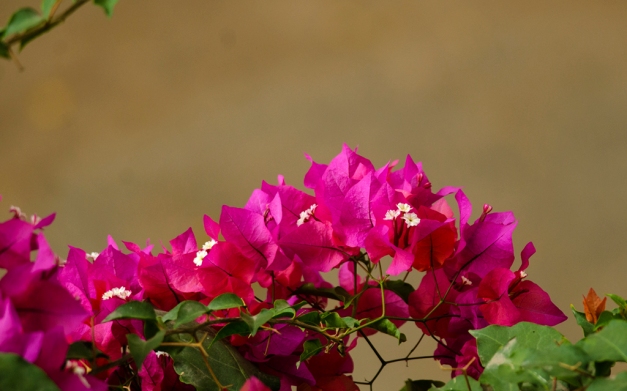
I noticed an insect which was constantly flying in and out of the balcony visiting a PVC pipe each time. I was wondering if it was the deadly hornets wasp as its underbelly was yellow. On a closer look, the colour of its underbelly was changing to green, yellow and magenta. I found that it was an insect carrying leaves and flowers. It was a leaf cutter bee. I had seen it on one of my trails but could not get a click. This time I was lucky as it was building its nest in my balcony.



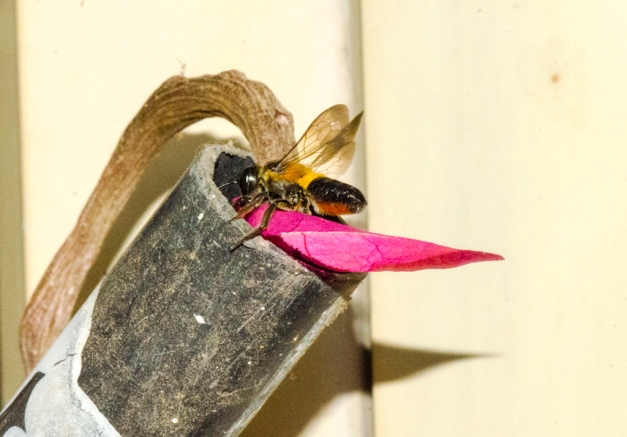
It is amazing to know about these bees. More information can be found in Santhosh’s blog . As I write this post, this bee is busy building its nest. I hope that the young bees complete their life cycle and emerge out of their nest.
Related Articles
Butterfly hunting in Lalbagh: Blatant violation of wildlife rules
Wildlife rescue…not black-and-white…
Whitefield residents learn about sharing space with wildlife
Another hazard to our urban wildlife: Bats and electrocution
Beautifully documented 😀
WAHANA FILTERTECH adalah perusahaan penyedia peralatan, distributor dan kontraktor pengolahan air bersih (WTP) dan pengolahan limbah (WWTP/STP) – http://www.wahanafiltertech.com
http://www.wahanafiltertech.com/2012/09/water-softener-tank.html
http://www.wahanafiltertech.com/2012/09/water-pressure-tank.html
http://www.wahanafiltertech.com/2012/10/water-demineralizer.html
http://www.wahanafiltertech.com/2012/09/ultraviolet-sterilizer.html
http://www.wahanafiltertech.com/2012/10/ultra-filtration.html
http://www.wahanafiltertech.com/2012/10/reverse-osmosis.html
http://www.wahanafiltertech.com/2012/09/pressure-sand-filter.html
http://www.wahanafiltertech.com/2012/09/pressure-carbon-filter.html
http://www.wahanafiltertech.com/2012/09/membrane-housing.html
http://www.wahanafiltertech.com/2012/09/membrane.html
http://www.wahanafiltertech.com/2012/09/filter-tank.html
http://www.wahanafiltertech.com/2012/09/filter-housing.html
http://www.wahanafiltertech.com/2012/09/dosing-tank.html
http://www.wahanafiltertech.com/2012/09/dosing-pump.html
http://www.wahanafiltertech.com/2012/09/cooling-tower.html
http://www.wahanafiltertech.com/2012/09/clarifier-lamella.html
http://www.wahanafiltertech.com/2012/09/cartridge-filter.html
http://www.wahanafiltertech.com/2012/09/brine-tank.html
http://www.wahanafiltertech.com/2012/10/silica-sand.html
http://www.wahanafiltertech.com/2012/10/manganese-greensand.html
http://www.wahanafiltertech.com/2012/10/mangan-zeolite.html
http://www.wahanafiltertech.com/2012/09/ion-exchange-resin.html
http://www.wahanafiltertech.com/2012/10/gravel.html
http://www.wahanafiltertech.com/2012/10/anthracite.html
http://www.wahanafiltertech.com/2012/09/activated-carbon.html