Co-authored by Angarika Guha and Senthil S
Amidst the shiny offices and gated complexes of a prominent IT corridor in the city lies Chinappa layout, Mahadevpura, home to close to 600 migrant workers from West Bengal, Bihar, Uttar Pradesh and Nepal. Scattered across the area, they live inside blue tarpaulin tents, small concrete sheds, inside godowns filled with plastic, scrap metal and tin, or between the bamboo poles in construction sites. Bricks, tiles, garbage, waste, scrap, cooking, cleaning, sifting, constructing, clearing – their work is crucial to the daily fabric of life in the city.
The lockdown caught them unawares. Daily wage workers earn between Rs 300-500 a day. That equals Rs 10,000-12,000 a month. Rs 2,000 is used for expenses in the city, the rest is sent home. Ever since the lockdown, their savings have been depleting. Work has come to a standstill; contractors are absconding, their phones switched off, and employers have refused to clear pending salaries. Food has become an immediate priority.
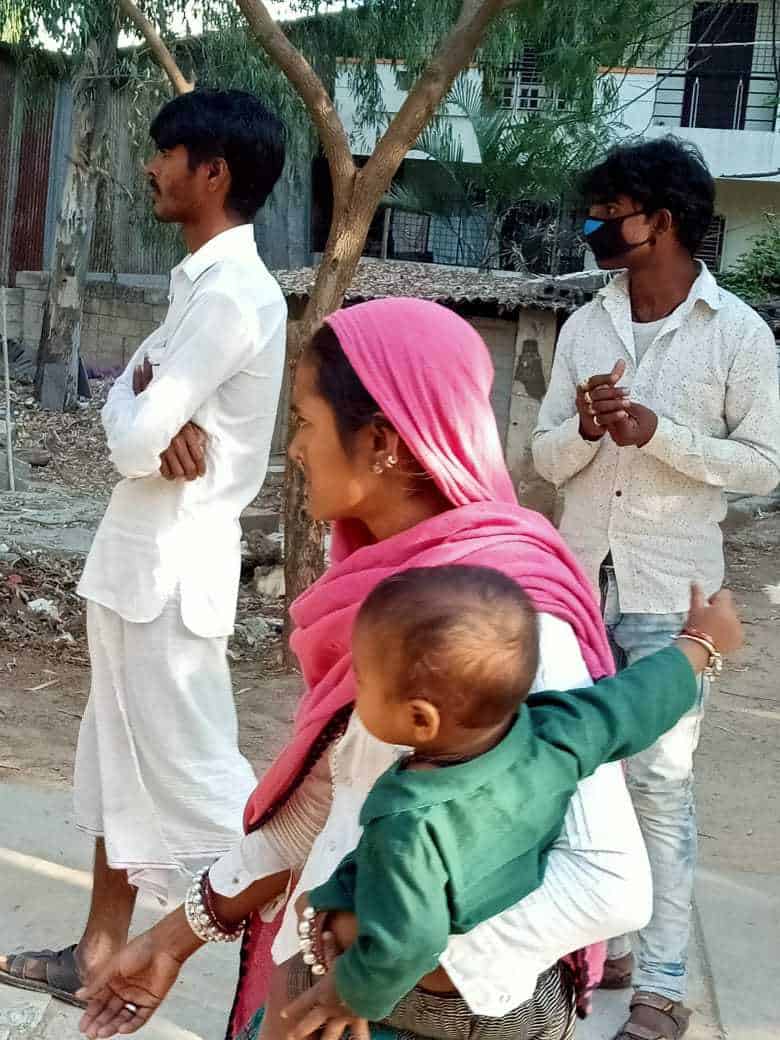
Migrant workers in Mahadevapura. Pic credit: Senthil S and Maraa.
In spite of the essential services they render for the city, the government stubbornly refuses to acknowledge the number of migrant workers. Supply and distribution chains have been erratic and unresponsive. Cooked food arriving via the BBMP has been stale. Ration was distributed one time but was found to be rotting. As a result, the workers have had to rely primarily on civil society/private entities for dry rations.
In the last 10 days, we have distributed emergency ration twice in the area with the help of Hasiru Dala and SOCHARA. In the meantime, having completed an independent survey, we submitted the details to the BBMP Assistant Engineer of ward 83 for review. We have been following up with him for a week.
Finally, three days ago, we accompanied a Revenue Inspector who was conducting a survey around the area. This was the fourth or fifth time workers were being asked to prepare lists, give identification, send photographs to verify their existence in the city. To no avail.
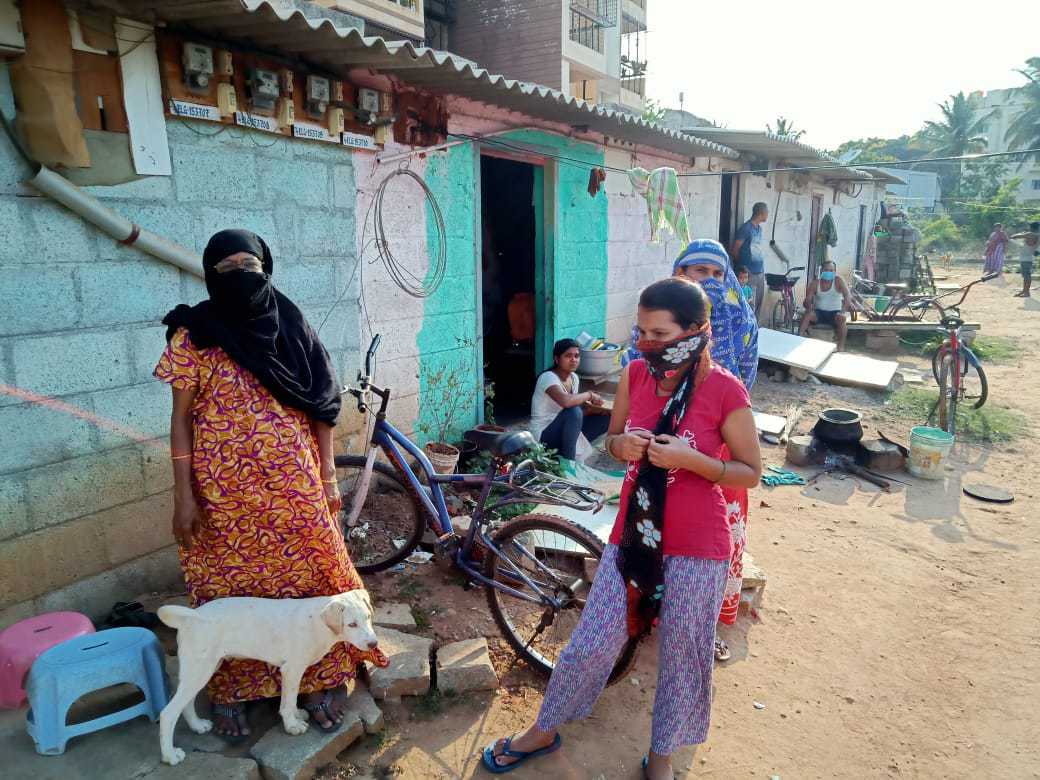
Pic credit: Senthil S and Maraa.
After taking down the workers’ names, contact numbers and Aadhar card numbers, they said there was no news of when dry ration stock would arrive. As a result, we are back to having to organise ration through groups such as Whitefield Rising, who have stepped in to supply cooked food and dry ration as a stopgap measure.
However, it is imperative for the government to take stock and ensure distribution of ration to these areas, as that is the only sustainable option for such a large number of workers.
~~~
We are migrant workers.
We build your cities, homes, malls, metros.
All the infrastructure that we will never use.
We come to the city, from far away places.
Untraceable, as we travel.
We live in colonies, in settlements, in areas unnoticed.
Invisible, and concealed from view.
We are not part of your unions.
Without warning, during this lockdown,
We find ourselves stuck in the city.
The city feels hollow and empty, without work.
Days pass in uncertainty, days pass in hunger, days pass in anger.
The city suddenly, has to confront our presence.
The city has to account for our labour.
The contractor switches off his phone, the owner goes back to his village.
The employer doesn’t pay due wage, the government has different priorities.
We wait.
We don’t require charity, nor benevolence, nor sympathy.
We are tired of the kindness of strangers.
We want to be paid for the work we did,
We want food that can fill our stomachs, not stale and old.
We value our dignity and our labour.
It is time that you did too.
~~~
[Part 2 of this series is a step-by-step guide on how citizens themselves can document migrant workers, so as to support relief distribution.]