Residents of Sancharnagar-MCECHS Layout in Ashwath Nagar, Thanisandra, are facing a prolonged civic crisis. What was once a well-regarded neighbourhood has now turned into a hazardous zone of dug‑up roads and broken footpaths. Exposed iron rods and makeshift wooden planks serving as temporary walkways pose constant danger to residents.
The same roads have been repeatedly dug up by multiple agencies. These include gas pipeline contractors, Cauvery water project teams, Bangalore Water Supply and Sewerage Board (BWSSB), Bangalore Electricity Supply Company Limited (BESCOM), and most recently, drainage and sewage contractors. The situation has persisted for months leading up to a year now. Despite multiple emails and escalations to the MLA’s office and concerned departments, no inspection has been conducted and no timeline has been communicated.
Residents feel that this is no longer a minor civic inconvenience but a public safety failure.
Repeated digging with no reinstatement
Deterioration of the road has been gradual but relentless, unfolding over more than a year.
- The first major disruption began last year when gas pipeline work was carried out across internal roads, leaving long trenches that were never fully reinstated.
- A few months later, Cauvery water pipeline work started, reopening the same stretches and further damaging the newly-laid surfaces.
- This was followed by BWSSB and BESCOM utility works.
- By mid‑year, another government agency undertook additional underground work.
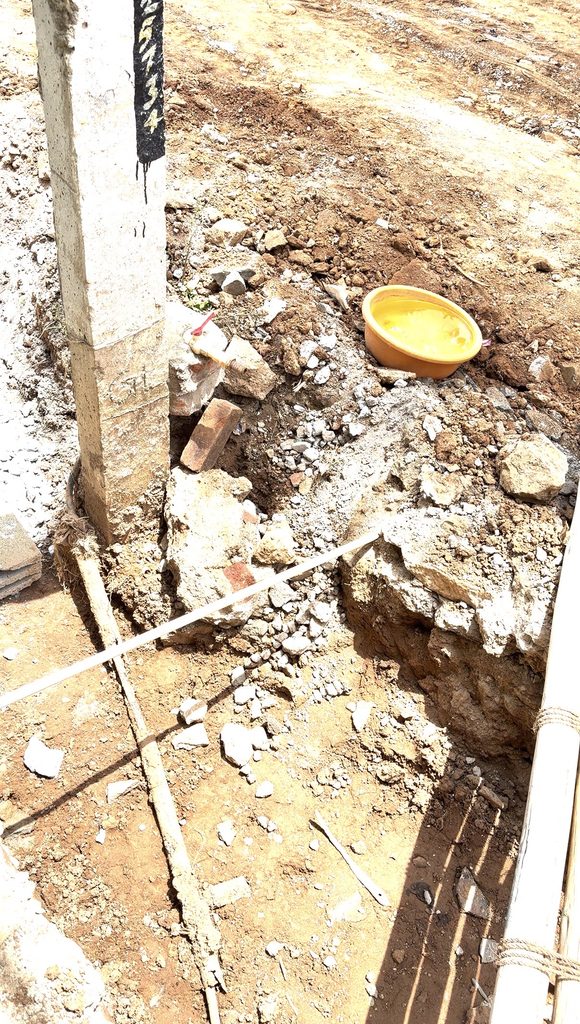
- The most recent phase — drainage and sewage construction — has caused the most severe damage, with both sides of the road dug up, entry slabs broken, and footpaths rendered unusable.
Residents say that at no point during this year‑long sequence of works was proper reinstatement done. Moreover, no agency provided advance intimation, leaving the neighbourhood in a continuous state of disruption and unsafe conditions.
Public safety, accountability, and credible government services
With entry slabs broken and trenches left exposed, residents have been forced to walk on wood logs tied together — the only way to reach their homes. Elderly residents struggle to balance on these temporary planks, and children risk slipping.
Sharp iron rods protrude from the ground. One neighbour suffered a serious injury when his bike slipped and an exposed rod pierced his leg. He had a narrow escape from what could have been a near-fatal accident.
Beyond the physical hazards, the situation has created a deeper sense of fear in the neighbourhood. With multiple agencies digging without coordination and no clear authority taking responsibility, people worry that even if someone is injured, they may have nowhere meaningful to file a complaint. In a city where civic safety issues are frequently trending, the system does not empower us to seek redress — leading to a perception that accountability is fragmented and democratic processes feel distant in everyday civic matters.
While politicians’ campaigns and departments announce new infrastructure and development projects, the “after‑service” — reinstatement, safety checks, and timely response — is missing. This gap between public expectations and actual service delivery is what fuels fear: not just that accidents may happen, but that when they do, the system may not protect them.
Read more: Urgent call for safety: Carmelaram-Gunjur Road a nightmare for residents
Damage to residents’ vehicles
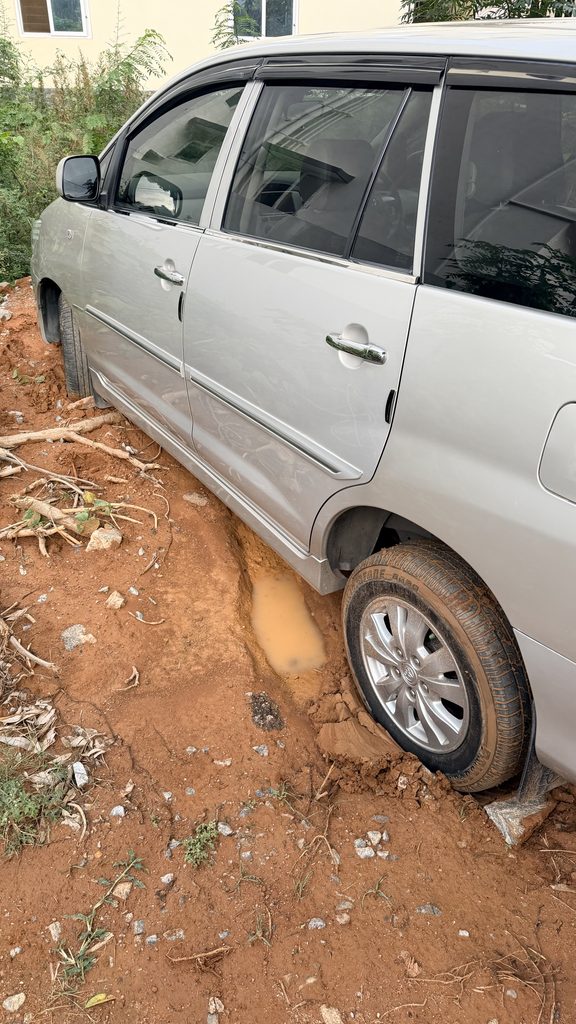
During one of the digging phases, a JCB began breaking the slabs in front of a resident’s house while he was away on official travel. Neighbours moved his car to a vacant plot for safety. Months later, rains loosened the soil, and the car is now stuck and immovable — a direct consequence of unplanned digging and lack of reinstatement.
With roads left broken for months and garbage accumulating along both sides, rodents have multiplied rapidly, damaging vehicles and creating health risks. In my own case, rats chewed through essential wiring in my car, leading to expensive repairs. Cockroaches and other pests feed on the scattered waste, raising concerns about disease transmission.
Stray dogs, disturbed by constant construction activity and the presence of rodents, have become increasingly aggressive; even delivery personnel hesitate to enter the neighbourhood for fear of being attacked. Parents say that children have repeatedly sighted snakes on the roads, especially near open trenches and piles of mud.
These incidents have deepened the sense of fear in the community: residents worry not only about unsafe roads, but about how the collapsing civic environment has allowed pests and animals to dominate public spaces.
Complaints unanswered, inspections not conducted
Even reaching the concerned authorities has been an exhausting process. The email addresses and phone numbers listed for the MLA and minister often redirect elsewhere, and the landline number shared by staff goes unanswered. After repeated attempts, I was finally able to speak to someone in the office, who initially said the email address was incorrect and that my complaint had not been received. Only after searching again did he locate the email, but the response offered was simply that “citizens need to have patience” — with no timeline, no written acknowledgement, and no follow‑up communication.
This interaction, likely with an office assistant, left residents feeling unheard. The system offers no clarity, no urgency, and no assurance that our concerns will be addressed.
A collapse of coordination between agencies
The core problem is the absence of coordination between these utilities:
- BWSSB
- BESCOM
- Gas pipeline contractors
- Cauvery water project teams
- Drainage and sewage contractors
- BBMP engineering division
Each agency digs independently, leaving behind trenches, debris, and broken roads. No single department takes responsibility for reinstatement, and no monitoring mechanism exists to ensure safe execution.
Residents demand structural reform
Here is what residents of the locality demand:
- Handing over reinstatement to a single private agency under strict regulation
- Penalties for contractors who leave roads damaged
- Mandatory advance intimation before any digging
- A coordinated plan across all departments
- Immediate inspection and restoration of all damaged stretches.
Without this, they fear the locality will continue to deteriorate, with safety risks increasing every day.
What this means for Thanisandra’s urban future
Thanisandra is one of Bengaluru’s fastest-growing corridors. Yet, the civic experience in Sancharnagar-MCECHS Layout shows how poor planning, fragmented execution, and lack of accountability can turn a well-regarded neighbourhood into a hazardous zone.
We are not asking for new infrastructure; only for basic reinstatement and safe access to our homes. Who should we address our complaints to? Who is accountable for our safety during these road works? And where is the responsibility of the government to its citizens? These questions need immediate answers.