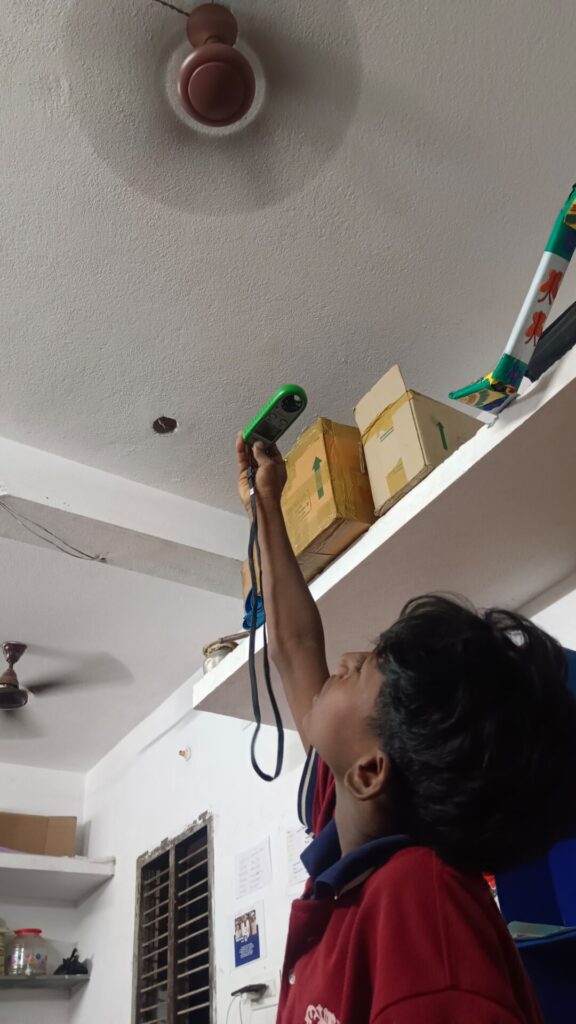
On hot summer afternoons in the western part of Chennai, while many adults retreat indoors, a group of children are out on the streets with thermo-hygrometers, fluke instruments, notebooks and pens. They record heat and humidity at different times of the day, surveying residents about their experiences and identifying how heat is distributed across their locality.
Trained through a joint initiative by the Chennai Climate Action Group (CCAG)’s Youth Climate Resilience Movement and the Pudiyador Learning Centre, children in Ramapuram are monitoring hyperlocal temperatures, mapping urban heat hotspots, and documenting how extreme weather impacts their community.
The exercise began after the centre’s caretaker told volunteers that the heat had become so intense that children were reluctant to step inside their houses even after 10 pm. When CCAG volunteers spoke to the children, they found that the heat was already changing their everyday lives. Some had started spending more time on their phones because they could no longer comfortably go outside to play.
“The concrete inside the house traps the heat. It feels heavier inside than outside. This summer was much hotter than last year. We couldn’t even come inside our homes even after 10 pm in the night,” says David, a Class 7 student from Ramapuram.
Vacations were particularly unbearable, as heat trapped between closely packed buildings increased the temperature and humidity within the four walls, adds David.
The process of learning to record heat impact
The young students were introduced to the science of heat, including how temperature affects the body, why humidity matters and why the temperature recorded by a thermometer may not always correspond to how hot it feels.
“The monitors have normal, alert and danger levels, and the children’s houses were repeatedly registering alert and danger conditions,” says Subashree K, a CCAG volunteer working with the children. “Through this, they are getting scientific evidence for why they are unable to go outside or even feel comfortable inside their houses after 10 pm.”
The children are also conducting surveys among residents to understand how people in their neighbourhood experience heat and cope with it. “We are trying to understand what development has done to us in the past 30–40 years. In the name of development, a lot has happened and the government is also unable to fix it,” says Prasanth J of CCAG.
Towards influencing policy
It’s a way for the youth to understand heat impact at the local level. “Those who are most vulnerable are often left out of policy conversations. Through this process, we are trying to make local climate leaders who can take their lived experiences into larger policy conversations,” he adds.
The exercise has also taught them how to approach authorities. The children met the then Additional Secretary of the Tamil Nadu Environment, Climate Change and Forests Department, Supriya Sahu and spoke about the conditions they face in school — inadequate fans and drinking water facilities, poor ventilation, physical education classes during periods of intense heat and poor restroom facilities. They also spoke about blisters caused by wearing black shoes in the heat.
“Since we are also affected, we started documenting the lives of people who work outdoors every day. We want to prepare a report and present it to the Tamil Nadu Environment Ministry,” says Sam, a class 11 student who comes to the Pudiyador tuition centre. The centre is an after-school learning space for underprivileged children that provides academic and nutritional support.
Heat trapped in concrete neighbourhoods
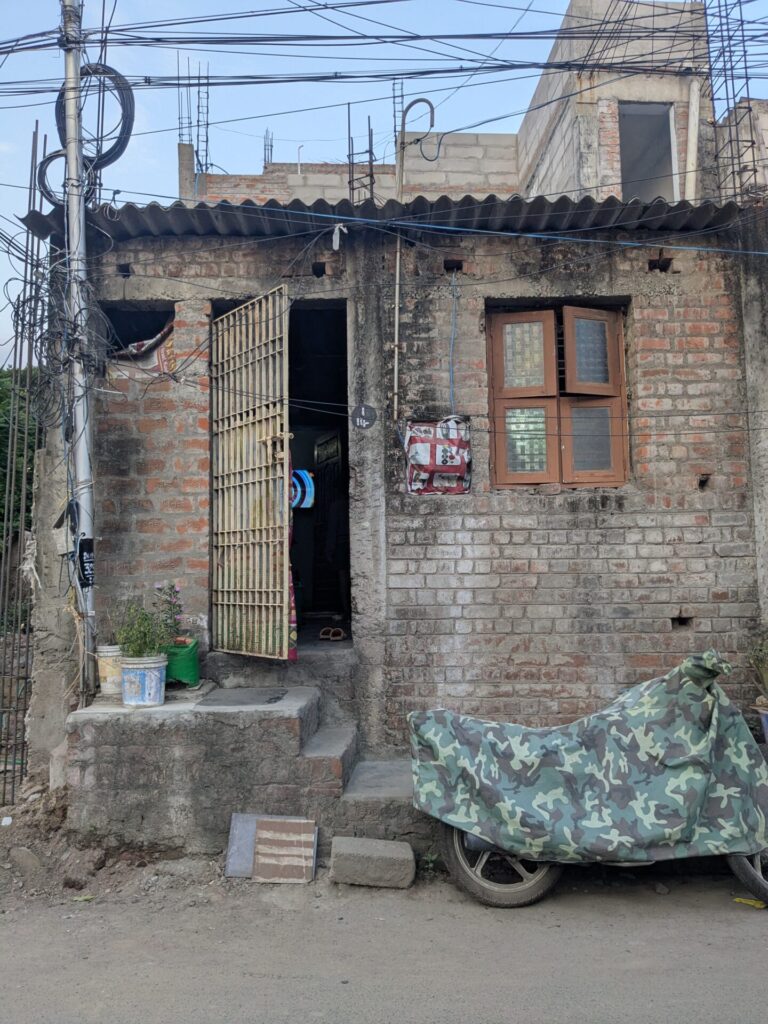
Much of Ramapuram consists of tightly packed concrete homes with narrow lanes and little tree cover. Buildings absorb heat through the day and continue radiating it long after sunset, making nights particularly uncomfortable.
“We have three table fans at home, but we still feel suffocated,” says Durga, a college student from the neighbourhood.
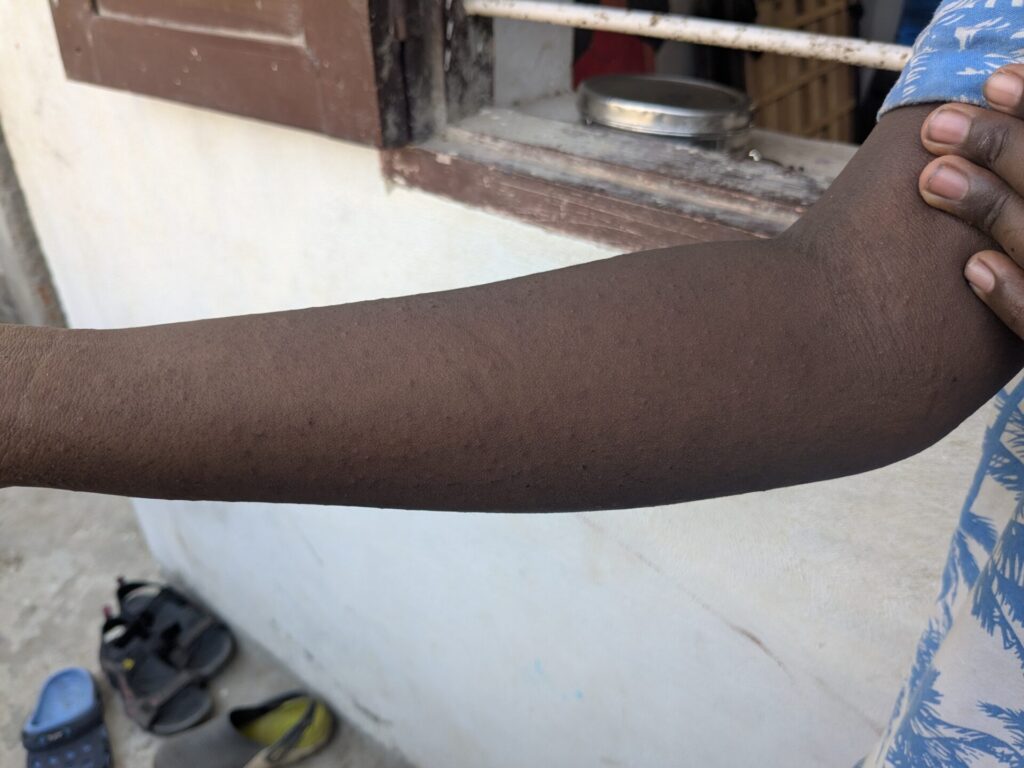
“This year the heat was unbearable. While we were playing, one of my friends suddenly felt dizzy and asked for water. We’d never experienced that before. Sometimes we get headaches while playing in the sun,” says Karthikeyan, a student from the same centre.
Poor waste management, including the burning of accumulated garbage, make neighbourhoods significantly hotter and less liveable. “Whenever the garbage is burnt, the heat becomes unbearable and we feel suffocated. Even if we sit on our balcony, we feel intense heat and keep sweating,” says David.
What the children found
Readings recorded by children at their homes at different times of the day remained relatively consistent through the night. Even around midnight, temperatures stayed between 33-34°C, while humidity remained between 66% and 72%.
The persistence of high humidity along with temperature constantly keeps their homes retaining significant heat and showing alert or danger levels according to heat index.

The Urban Heat Island (UHI) effect has been affecting cities for over a hundred years, says Saumya Dutta, people’s science activist and climate expert.
“Concrete buildings, asphalt roads and dense construction absorb solar radiation and keep releasing heat. UHI can increase temperatures by 3°C to 6°C. But that’s only one part of the problem. Cities themselves produce enormous amounts of heat and moisture through vehicles, cooking, industries and energy use, making already hot places even hotter,” she adds.
Read more: Summer is no fun: The silent toll of heat on children
A state warming faster
What the children are recording in one neighbourhood is part of a wider heat challenge across the State.
Tamil Nadu is among the states increasingly experiencing prolonged periods of heat stress. More than 59% of the state’s population regularly experiences temperatures above 35°C, while between 2011 and 2021, Tamil Nadu recorded an average of more than eight heatwave days every year. Heat stress has also intensified between March and August.
According to estimates, nearly 68% of Tamil Nadu’s population is exposed to strong heat stress for eight to nine hours a day during the summer months. Recognising the growing threat, Tamil Nadu introduced one of India’s earliest Heat Action Plans in 2019. In November 2024, it became the first state to officially classify heatwaves as a disaster.
In a recent development, Tamil Nadu has also been strengthening its institutional response to heat and other disasters. The State has allocated a ₹50-crore revolving fund to the Tamil Nadu Disaster Risk Reduction Agency for district-level preparedness, response and relief. Meanwhile, the Greater Chennai Corporation has signed an MoU with the Council on Energy, Environment and Water (CEEW) to establish a Project Management Unit to prepare plans for strengthening heat preparedness in Chennai’s vulnerable wards.
Yet, despite these policy advances, whether these plans adequately capture the lived experience of those most exposed to heat remains a question.
The missing voices in heat planning
Between 2000 and 2020, Chennai’s built-up area more than doubled. Compared to surrounding peri-urban regions, average nighttime land surface temperatures are now around 2°C higher inside the city. Children are among those most vulnerable to extreme heat, but their experiences are often absent from the way heat risk is assessed.
“When we developed India’s Heat Action Plans, we were primarily responding to deaths among outdoor workers and older people,” says Dr Vidhya Venugopal, climate expert and Professor of Environment and Occupational Health.
According to the World Health Organization (WHO), extreme heat can lead to dehydration, heat exhaustion, strokes and blood clot formation. Children are particularly vulnerable because of physiological factors and their limited ability to regulate body temperature.
“Children don’t appear in mortality data in the same way, but that doesn’t mean they aren’t vulnerable. Children sweat less efficiently, take longer to adapt to heat, and cannot independently decide to seek shade or drink water,” Dr Vidhya adds.
What current plans miss
The children’s observations point to a larger problem with the scale at which heat is understood.
Weather stations can tell us how hot a city is, but they cannot necessarily tell us how hot a particular classroom, house, playground or street feels. “The readings from one part of the city may not reflect what another neighbourhood is experiencing. If a cumulative average is taken, it may not represent the local conditions,” says Subashree.
The children are therefore experimenting with a more localised form of heat monitoring – combining temperature and humidity readings with surveys of residents. “If the government has to plan, it has to understand heat and climate vulnerabilities at the grassroots level first, rather than only from the policy level,” says Prasanth.
“We need to look at Heat Action Plans as city-planning documents and not as warning systems. Governments must stop treating every summer like a surprise,” says Dr Vidhya. She adds that this has become the new normal, so governments need to invest in trees, protect water bodies, scale up cool roofs and make heat resilience part of everyday planning, “instead of issuing advisories every April,” she adds.
Planning cities with children in mind
The children of Ramapuram suggest:
- Cool roofs: Replace asphalt sheets, which absorb and trap heat, with cooler roofing materials that reduce heat buildup inside homes.
- Water sheds: Set up water sheds near play areas and street corners so children can access drinking water and find relief from the heat.
- Better school facilities: Ensure adequate drinking water and clean, functional washrooms in schools to help children cope with heat.
Rather than proposing expensive standalone programmes, experts argue that governments should integrate heat resilience into existing urban planning and public health systems.
Among the immediate measures suggested are:
- Cool roofs for government schools and anganwadis. Pilot projects have shown indoor temperatures can reduce by around 5–7°C.
- Protecting remaining lakes and water bodies, which naturally cool neighbourhoods.
- Building shade along school routes, bus stops and playgrounds instead of limiting greening efforts to parks.
- Incorporating heat safety into school health programmes.
- Making heat resilience mandatory in approvals for new schools and housing.
- Mapping neighbourhoods where high temperatures, dense populations and children’s facilities overlap to prioritise investments.
- Including children and representatives from low-income communities in local climate planning committees.
And children themselves can be part of the planning process. “Kids will tell you things planners miss, such as which schoolyard has zero shade or which bus stop is a metal box in the sun,” says Dr Vidhya.
The lesson from Ramapuram is that climate adaptation is not only about forecasting temperatures. It is about understanding who experiences heat the most and ensuring they have a voice in shaping solutions.