Across Pallikaranai marshland, migratory birds can be spotted, searching for forage and water. Yet the wetland they depend on has steadily depleted. As Chennai has grown in an amoeba-like manner, ebbing with the promise of ‘development,’ the marsh has borne the brunt. In the 1990s, the marsh covered 2,450 hectares, nearly 70% of its original size. Today, barely 500 hectares remain.
In recent years, the marshland has often entered public discourse. In September 2025, Chennai Metropolitan Development Authority (CMDA), acting on an order from the southern bench of the National Green Tribunal, halted planning permission for development within the Pallikaranai swamp area and its one‑kilometre influence zone. The directive followed a case triggered by a June 2023 news report that highlighted a road being laid across the Perumbakkam marshland, a protected area.
Environmentalists welcomed the move as a step toward conservation. But residents, many of whom had earlier received CMDA approval to purchase land within this zone, say the circular has left them in limbo. Amid the lack of clarity and updates, confusion brews, exposing the larger tussle between development and conservation.
A wetland diminished
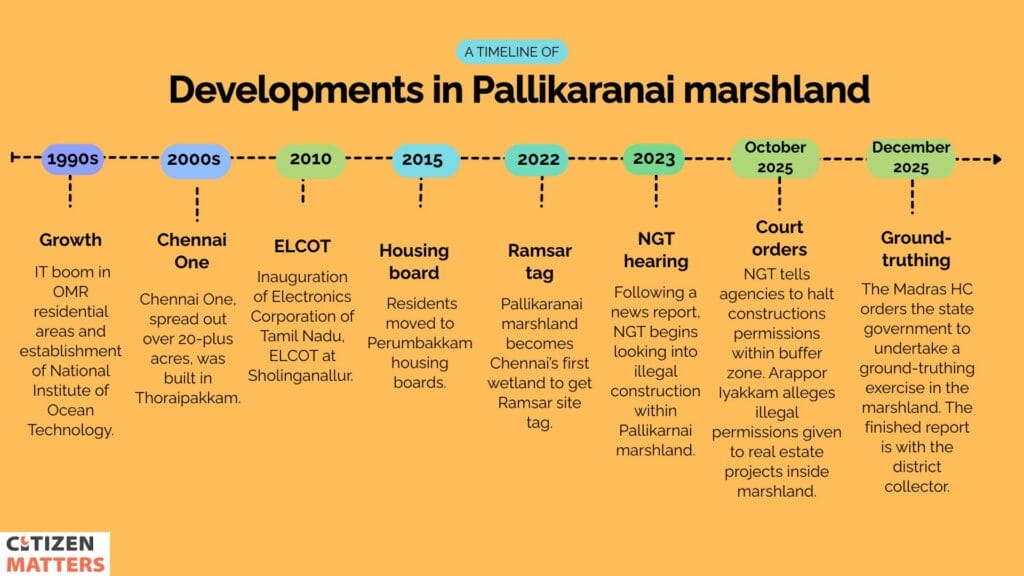
- The Pallikaranai wetland is a classic example of how concrete dreams consume natural ecologies. In 2022, around 3,081 acres of the marshland were declared a historical Ramsar site, noted as a vital wetland. Around 1,705 acres were handed over to the state forest department.
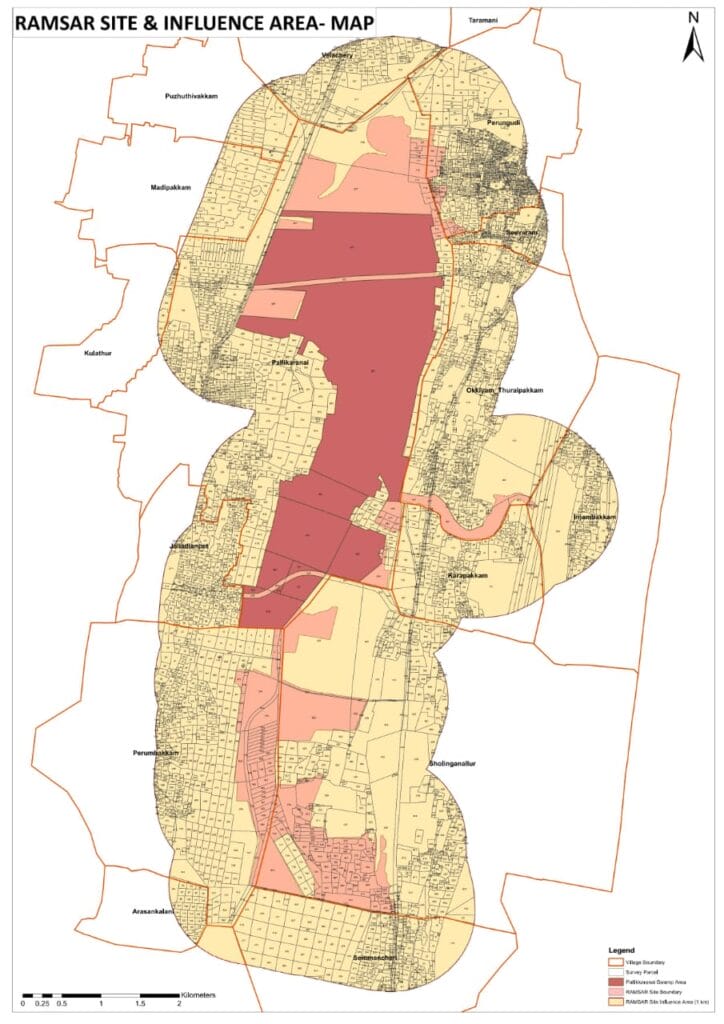
- According to the Ramsar site conventions, an influence zone is delineated outside the Pallikaranai marshland. It may be noted that the map used by the NGT, CMDA, and the State Wetland Authority for this order was prepared by the NGO, Care Earth Trust.
Residents grapple with losses
For resident groups, the issue is not just about new projects. They argue that even routine renovations and structural repairs now require permissions, adding to uncertainty and financial strain. Many demand the withdrawal of the CMDA circular and a clear demarcation of boundaries.
On January 31, 2026, over 300 residents from Perungudi and Thoraipakkam staged a protest on the 200-foot Radial Road, opposing restrictions on construction near Pallikaranai marshland. The Federation of Thoraipakkam Residents Welfare Association notes that approved housing was affected, and alleges that encroachments on the marshland had not been fully removed despite NGT directions.
The one‑kilometre buffer zone spans revenue villages including Madipakkam, Kulathur, Pallikaranai, Perumbakkam, Sholinganallur, Karapakkam, Injambakkam, Okkiyam Thoraipakkam, Seevaram, Perungudi, and Velachery. Residents allege that while government‑sanctioned encroachments and large real estate projects have been approved for decades, local communities are now being unfairly burdened.
Read more: Pallikaranai is struggling to survive, and so is life around it
Why are residents protesting the boundary?
Since the 2000s, areas like Old Mahabalipuram Road, Thoraipakkam, and Sholinganallur developed rapidly. In this backdrop, Julie (name changed) moved into a gated community in Thoraipakkam over 10 years ago. Back then, no government body informed her that she was moving into a wetland area, the homemaker notes. “We have patta, and lawyers present at the time of purchasing also approved this. There was proper CMDA approval, and now there’s suddenly a change of rules. This boundary does not make any sense,” she says.
The Confederation of Sholinganallur Constituency Residents Welfare Association has warned that the buffer zone move will disrupt the social fabric, affecting families who sought affordable housing or retirees seeking a peaceful life outside the city.
In the past, resident welfare association groups have banded together to preserve Pallikaranai, argues A Francis, President of Federation of Thoraipakkam Residents Welfare Associations. “This move will affect two lakh families. Why affect innocent citizens when a major portion of the land is given to NIOT, the dumpyard, and other private entities?”
“The government should have gotten recommendations and approvals from the people. It is the hard-earned money of the residents that is at stake. Now, they need to ensure residents and the environmental aspect will not be affected,” adds Radhakrishnan M, from the NGO Arappor Iyakkam.
Resident’s demands include:
- Withdrawal of the CMDA circular and allow renovations of homes.
- Removal of encroachments within the marshland boundaries and clearing the dumpyard. Prioritise conservation of the wetland.
- Implement a buffer zone within the marshland boundaries.
The great encroachment debate
Meanwhile, in 2025, Arappor Iyakkam alleged that state agencies illegally cleared environmental and construction approvals for a large high-value housing project within the Ramsar boundary. Based on this, the Madras High Court halted constructions and directed the State government to complete a ‘ground truthing’ exercise, which includes site inspections and mapping the marshland’s extent. While the ground-truthing exercise has been completed, the Chengalpattu Collectorate is yet to authenticate the report and place it before the Supreme Court.
A differential global positioning system survey found that 38% of Pallikaranai marsh is legally and illegally occupied by several public and private institutions. “While the Greater Chennai Corporation has 173.56 ha, the Electronics Corporation of Tamil Nadu Limited and the Railways occupy 163.25 ha and 46.92 ha respectively. An IT park also encroaches upon 5.85 ha in the wetland,” finds a news report.
In the name of ‘development’, green spaces have been occupied, and parcels of land have been sold to real estate agencies, highlight activists.“What has the government really done after the Ramsar site declaration? The responsibility is with them to protect the area,” says Radhakrishnan. He adds that clarity is crucial, and maps of the area need to be made public.
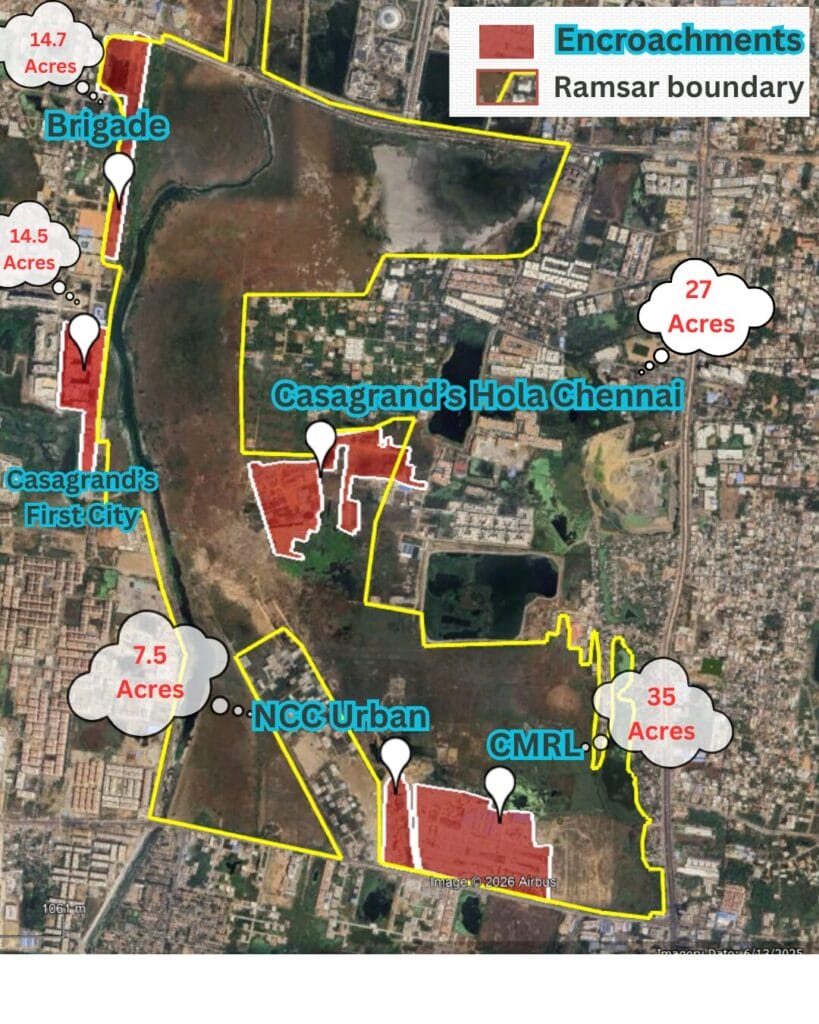
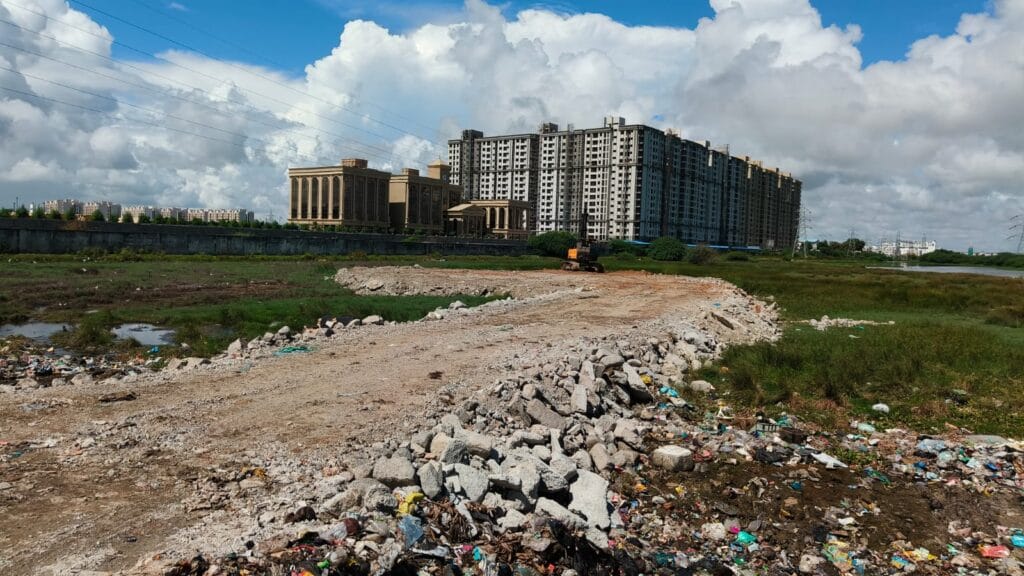
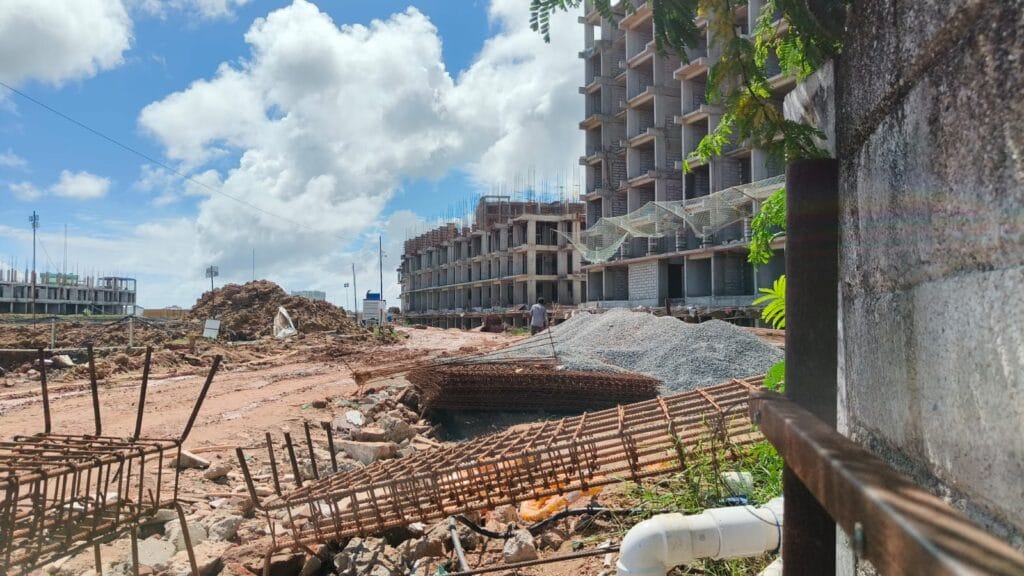
Raju K, an environmental researcher who has studied the marsh extensively, says construction by private entities is still ongoing within the boundaries of the marsh. “The land has been snatched by real estate businesses and IT corridors,” he alleges. Many government entities, such as Chennai Metro Rail Limited, are also in the mix.
Ecology, marginalised communities at risk
The marshland is crucial to Chennai’s water security and flooding. The ecosystem of the marshland also supports some 115 bird species, ten mammals, 21 reptiles, ten amphibians, 46 fish, nine molluscs, five crustaceans, and seven butterfly species, points out the Ramsar website.
Residents are the third layer of encroachers; both the legal and non-legal encroachers need to be questioned, says naturalist Deepak V of Suzhal Arivom, and adds that water does not forget its roots. Experts point out how this water returns to Perumbakkam, Semmencheri, Kannagi Nagar, and residents know too well the bitter truth of yearly floods.
Activists flag how the government has historically encroached on the area, and also set up a housing board here in Perumbakkam, Kannagi Nagar and Semmencheri despite experts flagging it to be an ecologically sensitive zone.
Also, an Information and Resource Centre for the Deprived Urban Communities (IRCDUC) report notes that since the early 2000s, over 43,000 resettlement tenements have been built in Kannagi Nagar, Ezhilnagar and Perumbakkam. Kannagi Nagar and Ezhilnagar were developed on a large tract of marshland that served as a buffer for floodwaters.
As the future of this boundary and influence zone will impact all, these communities need to be considered in this larger conservation plan, say activists.
Read more: Flooded lands, disappearing birds: Pallikaranai wetland tour highlights impact of shrinking lakes
Avoiding impending destruction
To revive the marshland, Raju points out that the buffer zone is important, but other guidelines must be drawn up too. “There should be development limitations in eco-sensitive areas, such as no red category industries. If development and encroachment continue, there will be irreversible damage,” he adds. Citing the example of the Tamil Nadu Combined Development and Building Rules 2019, the researcher adds that there’s a minimum setback (gap or boundary) for homes of at least one metre and asks why these boundaries are not considered for wetlands or eco-sensitive zones.
“The recommendations of Care Earth Trust need to be implemented; we need political will that should prioritise the environment over development. This boundary is important for the survival of everything for people and biodiversity,” says Deepak. In Pallkaranai, he recalls seeing 50,000+ birds. “We cannot put boundaries on birds, nature, or insects. They are used to moving, migrating, foraging, congregating, and roosting. For example, the Vedanthangal Bird Sanctuary has a 5 km boundary because birds cannot live within only the lake; there are feeding grounds around it, grasslands as well. Here, the trend of birds has seen a sharp decline.”
Any change in the Pallikaranai landscape, such as the eco park or proposed sponge park, will spell trouble, Deepak adds. He warns of mass desertification if revival is not prioritised.
Even if residents continue to stay in this land, there will be mosquitoes, reptiles, the issue of salination, and floods, Deepak points out. To avoid situations like this in the future, the environmentalist, in an earlier interview, had pointed out that buyers can check the land category through the government revenue records or verify it online with the Tamil Nadu Geographical Information System.
As residents demand the circular’s withdrawal, experts ask the government to:
- Constitute a committee to address historic encroachments, ecological concerns, and human habitation.
- Create a body focused solely on the Pallikaranai marshland
- Improve public awareness about wetlands, topography, and long-term consequences of encroachment
- Set up a grievance cell for residents.
A CMDA official Citizen Matters spoke to mentioned on condition of anonymity that the agency needed to comply with the NGT directives, and declined to comment further.
The plots and flats of about one lakh people are to be affected. the localities are approved for building construction for more than 4 decades. most of the place is filled up and 95 percent area is with buildings and roads. there is no marsh left in the approved localities, it is not going to serve purpose of influencing the left over marsh land. when 7 lakhs poor people are getting free pattas, people who spend lakhs of rupees for buying plots and flats should not lose the right to build or repair houses. previously relaxation was given in coastal area regulations and the western ghats forest buffer zone, relaxation may be given
Typical SOP. First encroach, then let the Authorities give permission, regularizations etc. GO passed All stakeholders happy, politician’s, bureaucracy happy as they get loaded.
The once the calamity strikes – the blame game starts. So what’s new!!!
Govt should lift ban atleast in MMDA, CMDA approved layouts irrespective of its nature. Individual patta plot owners. T.Nadu govt gave free patta plots in the same area few months back but public purchased plots ( as they are CMDA approved,) with their hard earned money.
i am a volunteer and i volunteer to clean water bodies. we are not rich elite and we could buy a flat only in velachery few decades back. It was our government tyat has given EC, patta and collecting tax and done nothing for us..leaving the hospital, mall, Chennai silks and so many stores come up. now we cannot sell our property ..our hard earned money is stuck. government never published any link we could check before buying this land years back. what does just marking help with..And even with all this convention they will let huge businesses buy the land and misuse anyways. Banks wont loan middle class buyers. the same banks gave us loan when we got the property and we cannot sue them or the officials. all this green talk makes no sense in India. always everything works for power and rich..nothing for middle class..poor ofcourse doesnt even get here to do this battle..they are kept with freebies.. and the rich and hifi people who watches birds and does photography as a hobby and have time and money to file cases with NGT have no idea about some middle class guy selling his land for his sons education or dads medical treatment.