“Delhi’s Air Quality Index (AQI) remains poor.”
“Flights cancelled due to smog in Delhi.”
The headlines mostly focus on Delhi’s toxic air, and the spotlight rarely shifts. However, another story often goes untold: the air in South Indian cities. The AQI readings in Bengaluru, Chennai, Hyderabad and others mostly fall in the “satisfactory” range. Yet, does that really mean the air is safe to breathe?
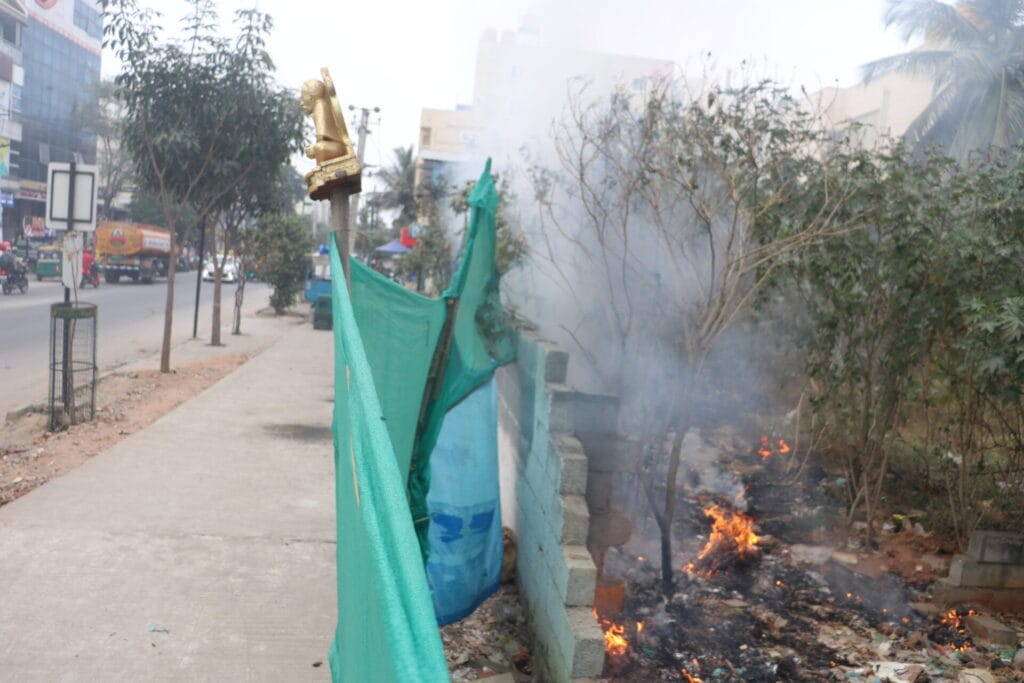
On a busy road in HSR Layout, Kanmani runs a tiffin centre from a pushcart. One evening, she began wrapping up earlier than usual. Just beside her shop, the air was thick with smoke. Garbage was being burnt nearby, and she knew customers would not come. “There are people nearby who dump plastic; they might have started the fire,” she says. This has been happening for the past few months. Cough has become more persistent for Kanmani. “The business is dull, and I am looking to take up some labour jobs,” she adds. The road dust and frequent garbage burnings have put her in a tight spot.
The AQI that pops up on our screens measures particulate matter and a handful of pollutants, but it misses the vulnerability factor. For someone like Kanmani, who spends half her day on the road, the air is anything but “satisfactory.” The smoke from burning plastic, the dust from traffic, and the constant exposure make South India’s supposedly cleaner air a silent hazard—one that slips under the radar because the numbers look better than Delhi’s.
Doctors explain the invisible harm
Exposure to toxic air for long periods can have serious health impacts, warns Dr Vijay Kumar Chennamchetty, a Hyderabad-based pulmonologist. “Lung attacks have become common,” he says. These include exacerbated asthma, Chronic Obstructive Pulmonary Disease (COPD)—a progressive group of lung conditions that block airflow and make breathing difficult—and Interstitial Lung Disease (ILD), a broad term covering more than 200 conditions that cause inflammation and scarring (fibrosis) of lung tissue. “Even coughs persist for weeks,” Dr Vijay points out.
Did you know?
Bengaluru is known as the Asthma capital of India due to the rising asthma cases every year.
Even an AQI more than 100 could be dangerous when the exposure is prolonged, causing various health consequences, adds Dr Jagadeesh Kumar, Pulmonology Respiratory Medicine Specialist at Apollo Hospitals, Bengaluru.
Particulate matter and other pollutants enter the systemic circulation and get deposited deep in the lungs and other vital organs. This can cause heart attacks, strokes and adverse pregnancy outcomes such as fetal malformations. “Poor air quality in Delhi could have immediate adverse effects, but chronic exposure to pollution like in south Indian cities can lead to long-term effects and even result in mortality,” says Dr Vijay.
Pulmonologists identify the most vulnerable groups as young children under five and elderly adults over 60–65. “People with existing lung conditions such as asthma, COPD, emphysema (a progressive lung disease, where the alveoli (air sacs) in the lungs are damaged) or ILD are especially at risk,” Dr Vijay explains. “Air pollution also affects systems beyond the lungs. There is growing evidence linking poor air quality to hormonal imbalances and other systemic health problems.”
Symptoms of diseases related to air pollution
- Asthma: Wheezing, shortness of breath, chest tightness, frequent coughing—especially at night or early morning.
- COPD (Chronic Obstructive Pulmonary Disease): Persistent cough, excess mucus, breathlessness during daily activities, frequent respiratory infections.
- Emphysema: Progressive shortness of breath, fatigue, difficulty exhaling, reduced exercise tolerance.
- ILD (Interstitial Lung Disease): Dry cough, breathlessness on exertion, chest discomfort, unexplained fatigue and weight loss.
- Other air-pollution–linked diseases (general): Eye and throat irritation, headaches, worsening of heart and lung conditions, reduced lung function.
What the numbers say
Beyond the health impact, the broader picture looks scary. A 2024 study found that the annual average levels of Particulate Matter 2.5 (PM2.5) and Particulate Matter 10 (PM10) exceeded the World Health Organization (WHO) safety standards at all monitoring stations in Bengaluru. The monthly average trend in Bengaluru city showed that PM2.5 levels are 5–6 times higher, and PM10 levels are 3–4.5 times higher than the WHO annual guidelines for all months.
Other South Indian cities like Chennai, Hyderabad and Kochi have also seen PM2.5 levels 6–7 times higher than WHO standards. It’s not just the high pollution levels that are concerning; an IIT-Bombay study examining air quality in Delhi, Mumbai, and Bengaluru found that the toxicity of the air is nearly identical across these cities. This toxicity refers to the oxidative potential, or the composition of the particulate matter that has the potential to cause cellular damage when inhaled. This highlights the need to rethink the way the system understands and disseminates information on air quality.
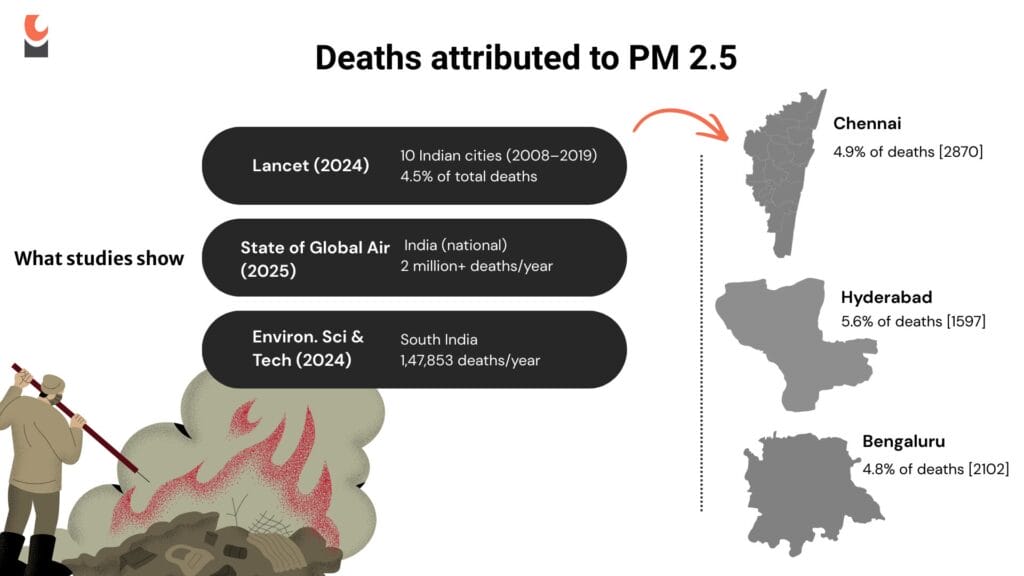
Studies by The Lancet, a medical research journal, the State of Global Air (SoGA) report 2025 and another study published in the Environmental Science and Technology Journal, all attribute quite a few deaths in urban centres in South India to air pollution.
Structural vulnerability
Street vendors like Kanmani, who are part of the informal workforce, are more vulnerable to the effects of climate change, heat and pollution. Take the case of the Graded Response Action Plan (GRAP) by the Delhi government.
“Every time a GRAP comes into effect, work-from-home orders are given, and schools are shut, but for informal workers or daily wagers, this is just not possible. For example, a sanitation worker is expected to be on the street during these times,” says Shweta Narayan, campaign lead of the Global Climate and Health Alliance.
She adds that policymakers often ignore this section of society, and links pollution to respiratory, cardiovascular and neurological problems.
Sources driving chronic exposure
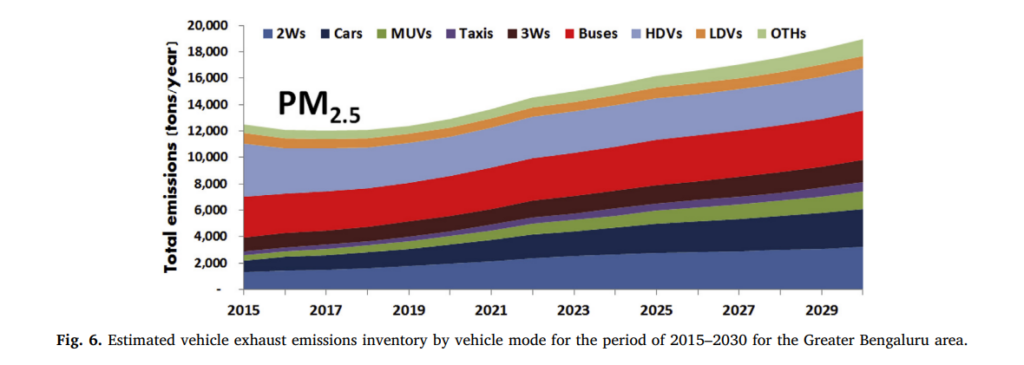
Steven Rebello, a Bengaluru resident who frequently travels out of the city, says, “Poorly maintained roads are a major but under-acknowledged contributor. Vehicles moving at high speed over exposed soil continuously resuspend dust into the air across neighbourhoods.” A study by UrbanEmissions.info, an air pollution information repository, estimates that in Bengaluru, the PM2.5 emissions from different kinds of vehicles are only going to increase.
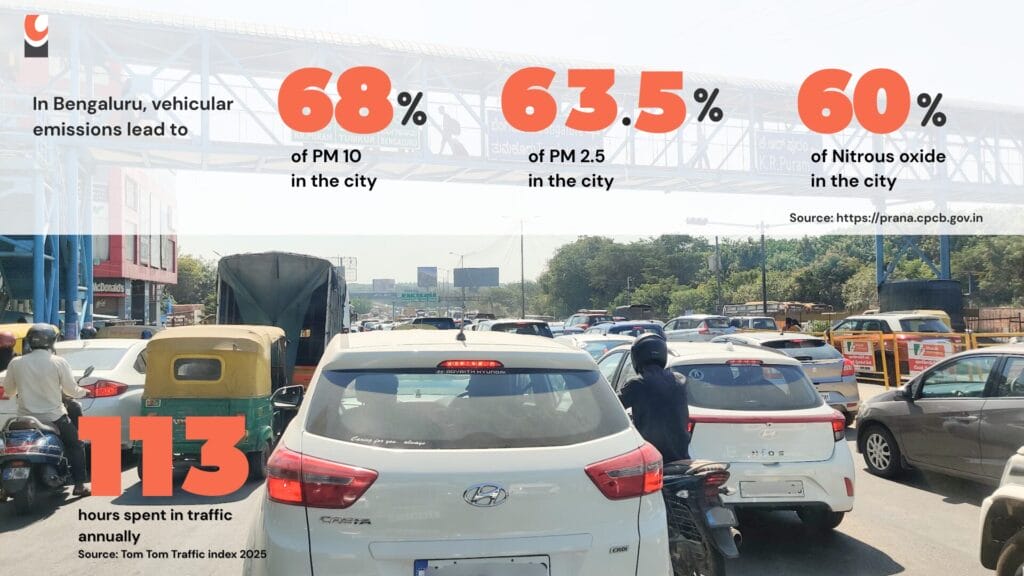
However, R Subramanian, air quality researcher, says, “While there is a positive shift towards cleaner vehicles, older, high-emission vehicles continue to pollute and must be strictly regulated and phased out through scrappage.”
Why monitoring fails
While Bengaluru has 14 Continuous Ambient Air Quality Monitoring Stations (CAAQMS), and Chennai has 11, these may not record hyperlocal spikes, especially from garbage burning and similar factors.
The impact is evident: while crowds celebrated the New Year across Delhi, Bhuvanesh P spent his night in a hospital after contracting a lung infection. The designer left with a discharge report that chalked up this infection to air and smog. Days later, he landed in Chennai during Bhogi and found the air just as suffocating. “Usually when I travel back to the city, my cough stops, but this time it hasn’t,” says Bhuvanesh. On a 16-km ride from the airport in Meenambakkam to western Chennai, the air was smoke-filled. Several flights were cancelled, owing to a lack of visibility.
Residents reported similar conditions in areas like Pallavaram. Koyambedu and Royapuram. In South Chennai, near East Coast Road, Senalda Ronald visited the beach only to find it unusually foggy. “The smell of burning plastic hit me, and I realised it was because of the mass burning during Bhogi. The smell remained in the air all day,” says the working professional. The city saw high levels of PM10 and PM2.5, with Tondairpet recording the highest PM10 of 257 µg/m3 and PM2.5 of 110 µg/m3.
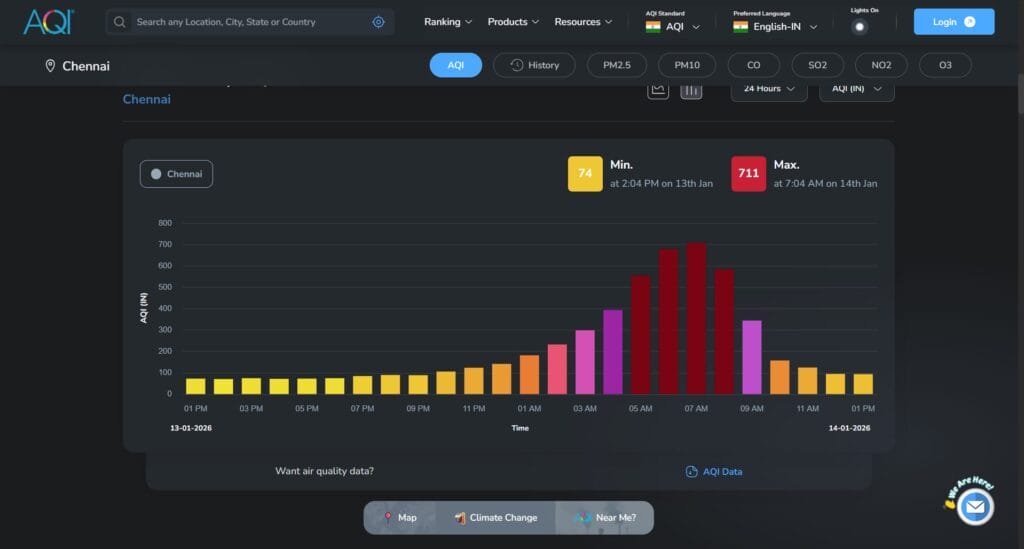
While the tiffin vendor in Bengaluru, Kanmani, had to shut her shop early due to smoke from garbage burning, none of the CAAQMS captured the episode. Such hyperlocal pollution often goes unrecorded. “Despite having an adequate number of CAAQMS, far more attention is needed to track hyperlocal pollution sources such as garbage burning,” says Subramanian. Low cost censors are a possible solution. What this means and what must change
By ignoring the health impacts of long-term exposure to ‘moderate’ air, rising vehicular emissions, weak hyperlocal monitoring, and media focus on North India, the reality of unsafe air in South Indian cities is masked. We must move beyond headline AQI figures and acknowledge the chronic health risks, especially for vulnerable groups.
How citizens can act
- Wear masks and try to avoid continuous exposure to traffic and related pollution.
- Set up low-cost sensors to understand the ambient air quality at a hyper-local level.
- Avoid burning of garbage and report such incidents via, Swaccha Bengaluru Mobile App, call helpline 080-22660000 or WhatsApp number 9448197197.
- Switch to public transport to reduce vehicular pollution.
[With inputs from Chennai by Archita Raghu, Senior Reporter, Citizen Matters.]