Privatised trash, public cost: Is Chennai’s waste model failing the city?

This video reveals how Chennai's waste management contracts raise red flags: rising costs, lack of transparency, weak oversight, and little public say.

As Chennai moves rapidly towards privatising its waste management, serious questions are emerging, not only about the impact on workers, but also on the city’s finances and transparency.

In the first part of this series, we saw how privatisation of waste management affects the workers. In this second part of our series, we investigate whether privatisation truly makes economic sense for the city. Today, 13 of Chennai’s 15 zones are managed by private companies, including Ramky Group and Urbaser-Sumeet. But a closer look reveals troubling gaps in accountability.


Read more: Status check: Key concerns remain as Chennai moves ahead with WTE plans


Is waste management privatisation linked to the waste-to-energy plant?

Take Zones 5 and 6, for instance. In 2025, the Greater Chennai Corporation (GCC) awarded a ₹276 crore annual contract to Delhi MSW Solutions, a Ramky Group venture. However, salary data shows that only around ₹92 crore goes towards paying sanitation workers. How is the remaining ₹184 crore being utilised? Unclear.

Even the monitoring mechanism raises concerns. The GCC has promised oversight by Independent Engineers, but half of their pay comes from the very contractors they are meant to audit. Can such a system be trusted?

The privatisation push does not stop there. Ramky-affiliated companies are set to control waste operations in Zones 1 to 8. They have also been awarded the contract to build and run Chennai’s upcoming Integrated Solid Waste Processing Facility and Waste-to-Energy plant, despite past operational issues in other cities and strong opposition from the local residents.
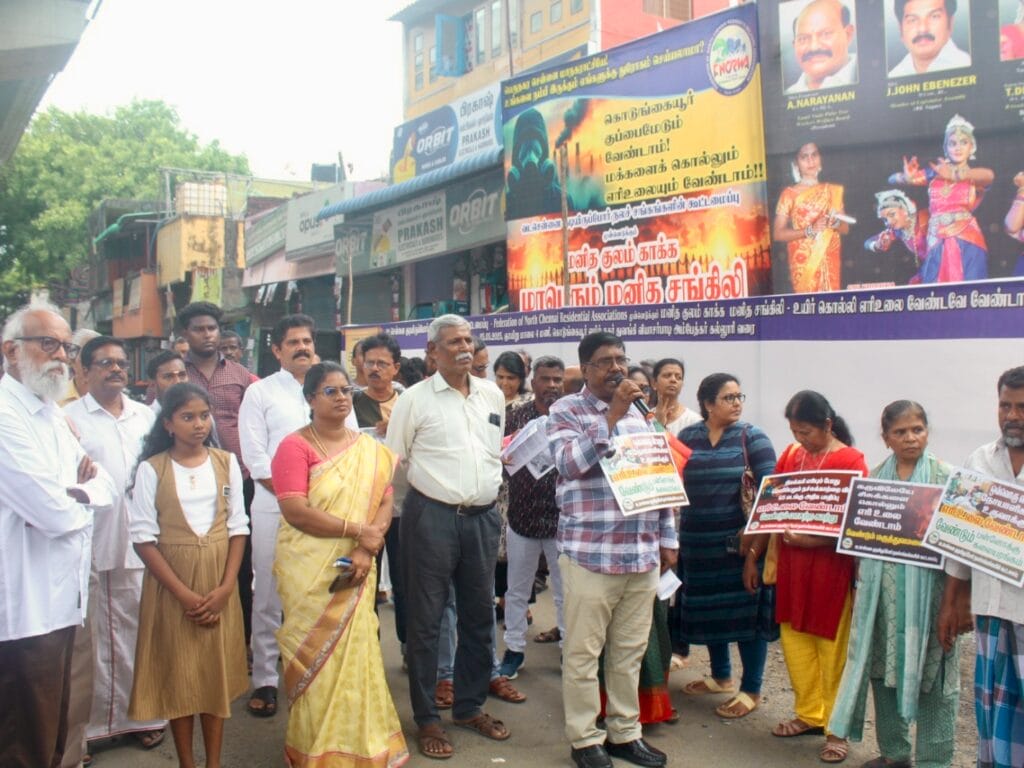
Public protest against WTE.
Public protest against Chennai’s WTE plant. Pic Courtesy: R Jayaraman

With little public consultation and no accessible data on contract terms, Chennai’s waste management is becoming more centralised, more expensive, and less transparent.

Shouldn’t the people of Chennai have a say in how their city is run and how their money is spent?

Watch the full video to know more.

Also read:

Leave a Reply

Your email address will not be published. Required fields are marked *

Similar Story

How one Chennai community is turning household waste into a valuable resource

The KAATRU initiative by SSM Nagar residents has helped divert tonnes of waste from landfills through volunteer action and recycling partners.

The consequences of poor waste management are visible across communities near our own in Chennai. In Tiruvanchery, waste dumped and burnt close to residential areas has caused breathing difficulties, mosquito nuisance, and raised concerns about groundwater contamination. Such conditions don’t begin at dumping grounds alone; they start at home, when recyclable, biodegradable, and non-recyclable materials are discarded together.   For many years, the approach has been standard: collect mixed household waste and transport it to dumping yards. While this may appear convenient, it is neither sustainable nor environmentally responsible. In our own community of SSM Nagar, Perungaluthur, only about 50% of…

Similar Story

Reimagining Deonar: How Mumbai’s toxic dump can become a green lung space

Instead of relocating residents into housing near the Mumbai landfill, restoration efforts could consider creating a buffer zone that the city needs.

Mahesh* owns a small paan and beedi shop near 90 Feet Road. His family has lived in Mumbai’s Dharavi for 50 years. Over the years, they added additional storeys above their home, a common practice in Mumbai's slums. The rent from these upper floors helps Mahesh care for his ageing parents. Redevelopment would cost him both his shop premises and this vital supplementary income. The Maharashtra Coastal Zone Management Authority (MCZMA) has given the go-ahead for the bioremediation of solid waste at the Deonar dumping yard to free the plot for housing “ineligible” residents (those lacking documentation) of the Dharavi…