Two summers ago, even with the fans on, sweat would trickle down Rupali Devi’s face and body relentlessly. Now, she can sit home and eat a meal in peace, without having to wipe sweat off every few minutes.
Rupali, 23, lives in a 128 sq ft house at Nargis Dutt Nagar slum in Mumbai’s Bandra West with her parents and five siblings. With an asbestos sheet for a roof in a congested neighbourhood, summers felt hotter than they actually were. According to a study by the Centre for Science and Environment (CSE), between the decades of 2001-10 and 2014-23, Mumbai’s summers registered a 0.6°C increase in average ambient air temperature and a 7% increase in humidity.
In 2023, cBalance Solutions Hub that works on making low-income houses heat-resilient, installed aluminum foil (Alufoil) pipe motors on Rupali’s roof to reflect heat and light in scorching summers. The initiative has given tremendous relief to the eight residents of the house. Alufoil is a cross-linked polythene foam covered with a low-emissivity, high-reflectivity aluminium coating. The coating restricts the heat emitted inside the space where it is installed.
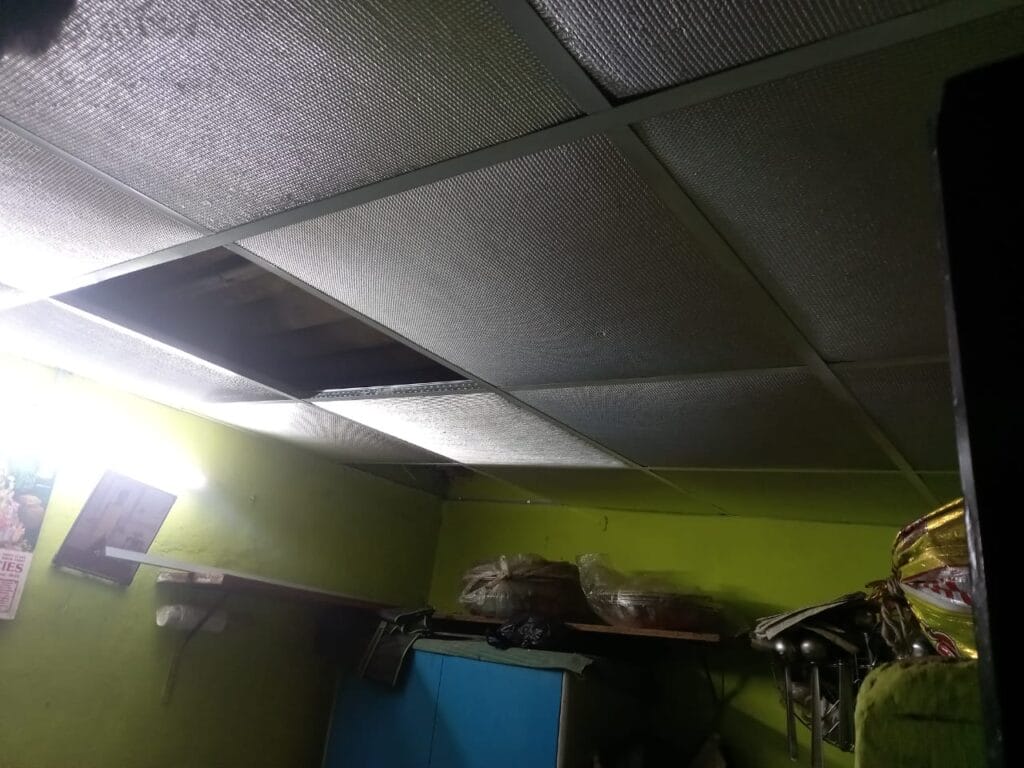
“Between 12pm and 3pm, we all used to suffer as it became impossible to stay out in the sun or inside the house where it was sweltering hot. Now, we can see a difference. Our house is cooler than others in the same locality,” said Rupali. She also sees the silver pipe-lined roof as an aesthetic addition. “It feels as if our house underwent an interior redesign. It is very pleasing to the eye.”
Around 1,300 km from Mumbai, in Delhi’s Bakkarwala village, 45-year-old Rani’s daily income increased by five times after her 120 sq ft asbestos-sheeted house got a makeover last year. Mahila Housing Trust (MHT), an organisation strengthening grassroots collectives of women in the urban informal sector, applied white solar-reflective paint on rooftops in low-income urban settlements like Bakkarwala. According to MHT, these rooftops reflect over 90% of solar radiation, lowering indoor temperatures by 4–5 °C.
A tailor, Rani had given up work during the day in the peak summer months between April and June. “I used to stitch only in the early mornings and late evenings, earning just Rs 50 a day. After they painted my roof white, I saw a drastic change — something even an air cooler couldn’t do. I could stitch during the day and earn Rs 250 to Rs 300 daily,” Rani said, adding that her house was 2-3°C cooler this summer as measured by MHT.
Experimenting with various cool roof solutions
The urban poor living in informal settlements across cities are beginning to benefit from passive cooling solutions. These low-cost interventions — customised to house type and community needs — are helping reduce indoor temperatures and increase economic benefits.
cBalance developed its FairConditioning programme in 2021, aimed at achieving thermal comfort in buildings. Under this programme, they designed the Informal Housing Thermal Comfort Project focusing on the urban poor living in informal settlements. cBalance begins with a listening workshop where community members share the impact of indoor heat stress on their health and financial well-being, and the architectural challenges in remodelling the house. The organisation tailors and implements cooling solutions based on this.
Read more: Engaging communities in informal settlements in the climate change agenda
They piloted the project in 10 houses in Mumbai with Alufoil pipes, fitting them with chain sprockets (wheel-like components). Later, they rolled out the project in Pune, Bengaluru, and most recently, Chennai.
cBalance implements six distinct passive cooling solutions: rooftop garden, aluminium foil–wrapped water pipe system, static aluminium foil sheet installation, multi-layered plastic (MLP) chain-and-sprocket mechanism for movable shading, water-filled PET bottles on the rooftop to absorb and diffuse heat, and wood wool insulation panels which are recyclable materials made from wood wool, cement and water.
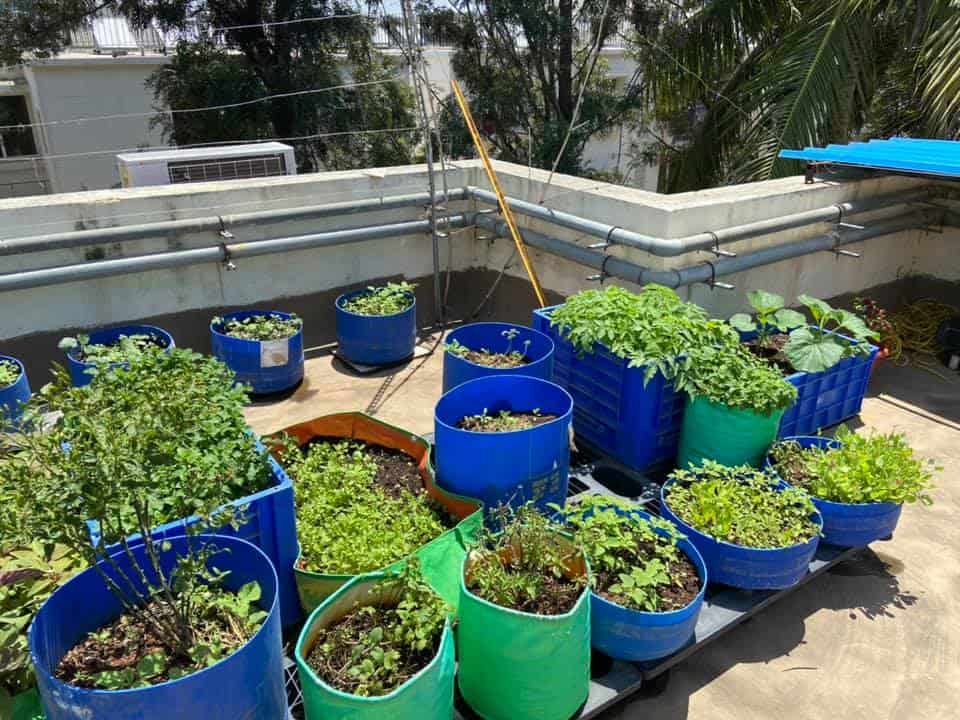
“Among all solutions, rooftop garden had the greatest impact, lowering indoor temperatures by 4–5°C. The next best was the Alufoil-wrapped water pipe system, followed by the MLP chain-sprocket setup, both bringing down heat by 2–3°C. PET bottles offered a 1–2°C reduction,” said Vipul Patil, Project Associate at cBalance Solutions Hub, Pune. “Rooftop gardens are difficult to install in every house as they require strong structural stability to bear the weight of soil and plants. In informal settlements with tin roofs that lack proper terraces or structural integrity, it is almost not feasible”.
Mahila Housing Trust (MHT) has experimented with various models since 2010 and now projects solar-reflective white paint as their most affordable solution. “Even at subsidised costs, we spent Rs 230 per sq ft to fix a modular roof (made of coconut husk and paper waste). There was a reduction in temperature by 4-5°C. However, we find solar-reflective white paint to be effective as it lowers indoor temperatures by 4–5 °C and costs just Rs 35-40 per sq ft,” Bhavna Maheriya, Program Manager at MHT told Citizen Matters.
Finetuning solutions
In Pune, cBalance did the pilot in 15 houses in phases. Only seven of these houses remain part of the project.
“Some requested us to remove the materials because they wanted to make modifications and rebuild. Houses where we had installed wood wool panels had rodents and snakes, so we had to remove those. Further, it is very expensive to customise solutions based on the house,” Patil said.
The team is now working on lighter, more cost-effective designs based on the feedback from their pilot. They have further narrowed down which materials to work with, based on their observations.
Read more: A guide to beat the heat: How smart design can make your home cooler
Bhavna of MHT says solar-reflective white paint comes with its own share of problems as well. “The durability of solar-reflective white paint typically ranges between three and five years. But in places where it rains frequently, their lifespan can drop to just two years. In most slum settlements, rooftops are old, uneven or dangerously inaccessible—making it hard to apply such paints. In Bhopal, one family living under a tin-sheet roof faced this exact challenge. But having experienced the cooling benefits firsthand, they dismantled the sheet, painted it white and reinstalled it.”
There are external challenges too
Mohammad Moieen, 43, lives with 15 family members in a 260 sq ft house on the top floor of a building in Nargis Dutt Nagar slum, Mumbai. “Earlier, we couldn’t sit inside at all in April and May. We used to sweat constantly,” he said. After cBalance installed Alufoil, they felt a difference in indoor temperatures. “Now we are able to sit through the day.” The installation has also helped stop water seepage through the roof during rains.
“The problem is that our houses are going to be redeveloped by the municipal corporation in two months,” Mohammad said. Private builders are set to redevelop the land, partly for luxury apartments and partly for the slum dwellers’ rehabilitation.
In Chennai’s Pulianthope, Gowri (name changed) lives in a two-room, 163 sq ft house with four other family members. The family suffers from extreme heat stress at least six months a year. “We keep the door open in the night for cool air to pass. It is not safe, and I am worried that the neighbourhood boys would bully my daughter. But we have no option as our house is unbearably hot,” Gowri said, adding that the only ceiling fan in their house provides no respite from heat.
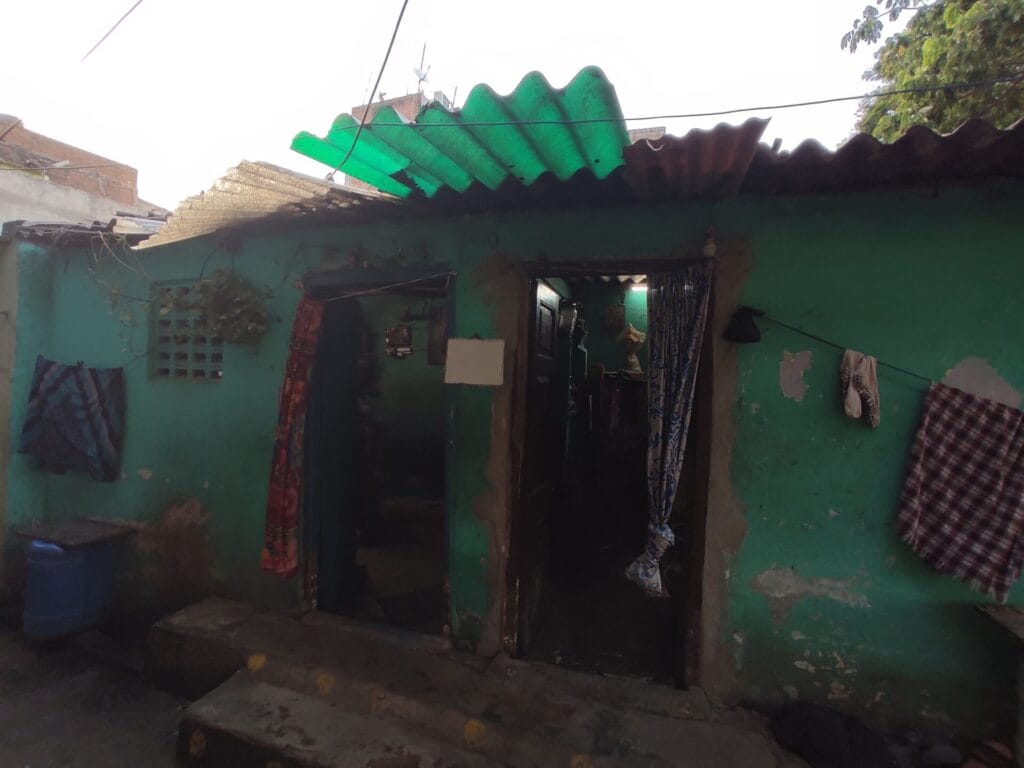
This summer, cBalance installed Alufoil supported on metal frames below the existing roof of the house. However, Gowri noticed no change. “It is still extremely hot. But, our roof no longer leaks during rains,” she said.
Maya Seshagiri, Project Associate, cBalance, said, “Their roof height was very low—just 7 feet. A false ceiling with aluminium foil helped delay and reduce heat radiation to some extent. But with no windows—since these would compromise privacy—the trapped heat had nowhere to escape.”
This experience reflects a larger issue—many homes in urban informal settlements lack proper ventilation and insulation, making it difficult to implement an effective cooling strategy.
Policy change needed for cool roof adoption
Informal settlements are often built with heat-trapping materials and lack ventilation, pushing indoor temperatures up to 35–40 °C during summer. These materials—such as corrugated metal sheets, asbestos cement sheets, tarpaulin, and unplastered bricks—absorb and retain heat, turning homes into virtual ovens. The resulting conditions exacerbate dehydration, heat rashes, respiratory issues and heatstroke, especially among women, children and the elderly, reported Mongabay India.
Despite the urgency, there is no comprehensive national scheme to support cooling for low-income households. While Telangana has a state-level Cool Roof Policy (2023–28) and Tamil Nadu has a cool roof initiative, Uttar Pradesh is still developing its policy and most other states lag behind.
Read more: What cities can learn from Ahmedabad and Hyderabad about climate-friendly buildings
“When it comes to passive cooling for slum and low-income housing, affordability, accessibility, and durability are key. Solutions must also be tailored to the household’s needs, which vary widely based on construction material, roof type and ventilation options. Concepts and technology have to evolve to fit different house types,” said Abhiyant Tiwari, Health Consultant at Natural Resources Defense Council (NRDC) India, an organisation that advises governments and other stakeholders on climate and public health solutions.
Combining cooling solutions with central government policies can have an amplified impact. Abhiyant pointed out that cities in Uttar Pradesh and Gujarat have already piloted cool roofing solutions as part of the Pradhan Mantri Awas Yojana (PMAY) housing scheme.
“To scale this effort and increase thermal comfort across cities, state governments will have to plan and create the right policies for the effective implementation of cooling strategies for residences,” says Abhiyant. He pointed out the Telangana Cool Roof policy as an example of a state-led initiative to reduce urban heat and promote energy efficiency.