Our preferred imagination of an urban lake is mostly blue water with a well-maintained walking track all along, some trees on the periphery and some birds on them. That imagination is of course broken when the lake stinks, froths, has plastic strewn around. And when we see overgrown typha reeds in the lake, floating hyacinth and alligator weed, when the lake turns from blue to green, that imagination is broken. And then we want to rejuvenate the lake and turn it blue again.
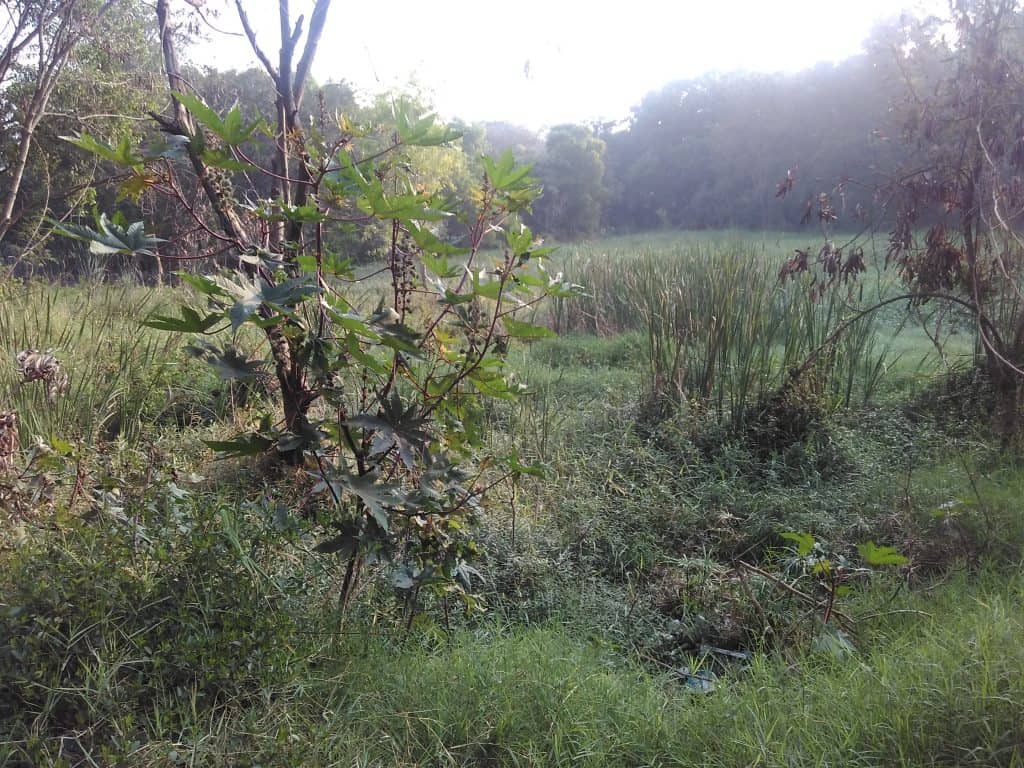
Lower Ambalipura lake / wetland
If we were to step back and think why is it that we really want the blue, or water, we realise a couple of things. These lakes we re man-made, created for purposes of flood control, irrigation, fishing, live stock and domestic purposes. However in most urban lakes, especially the smaller ones, even if the water were of good quality,
– We are not allowed to swim or bathe
– We are not allowed to fish unless we are a fishing contractor (with permissions from the fisheries department)
– We are not allowed to row a boat
– We are not allowed to immerse idols or other offerings. Immersions are to be made in a Kalyani that is specifically made for the purpose
Lakes continue to serve the below purposes:
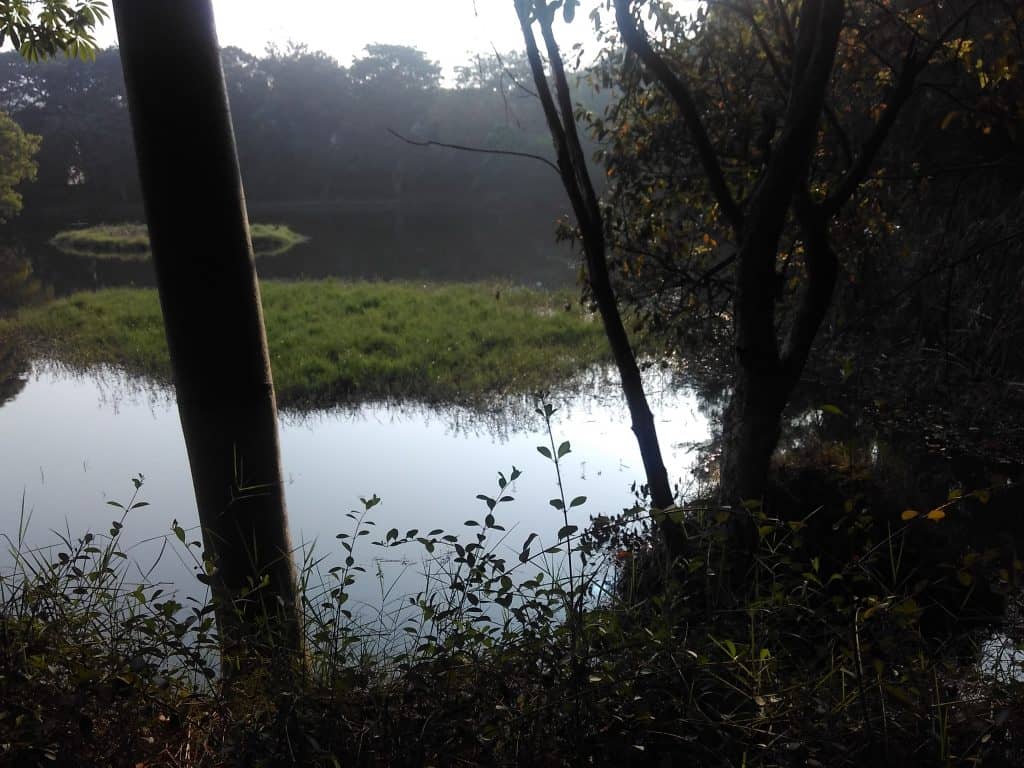
Lower Ambalipura lake / wetland
– Lakes act as a flood control mechanism when the streams connect to the lake (and the flows are not obstructed)
– Lakes allow for groundwater recharge and places nearer the lake do observe an increase in ground water tables.
– Lakes help regulate temperature. The area around a lake is always much cooler
– Lake is a pleasant place to walk around/socialise
– Lake provides spaces for birds, reptiles and other living beings to breed and nest
– Lake is a place where societies/governments let in their treated/untreated waste water
– Lake is a place where grass as fodder mostly grows abundantly and allows for cattle grazers to collect cattle feed.
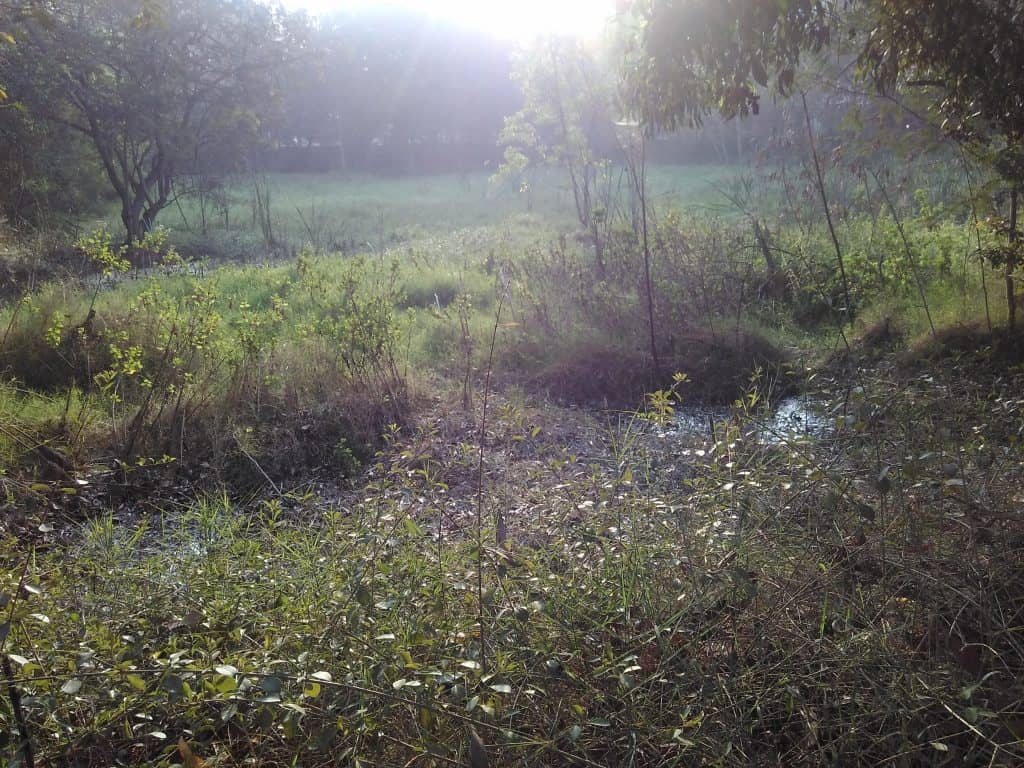
Lower Ambalipura lake / wetland
The above purposes could largely be met even if all or most of the lake were a green wetland, not a blue water body. Birds and reptiles prefer the wetlands for nesting and stay in there for large parts of the day. There are fishes and other biodiversity in the wetland.
The green in the wetlands possibly increases the oxygen levels in the surrounding areas too. The nutrient in the waste water is drawn out by the plants that grow in the wetland and hence the water leaving the wetland is a lot cleaner.
We can’t swim, bathe, fish, wash in the lake. A green wetland serves almost all and more of the purposes that a blue water body can, except for changes in aesthetics and some changes in volume. We are increasingly looking at lakes as being receptacles for treated/untreated waste water. We are also struggling to maintain our STPs in the long term.
Now, what if we imagined more of our lakes as wetlands and not water bodies? Wetlands would serve almost all the functions that the current water body does and additionally allow for better water treatment. Currently most lakes have 1/8 to 1/4 of the total area as a wetland, either by design and maintenance or by the propensity of the wetland to take over.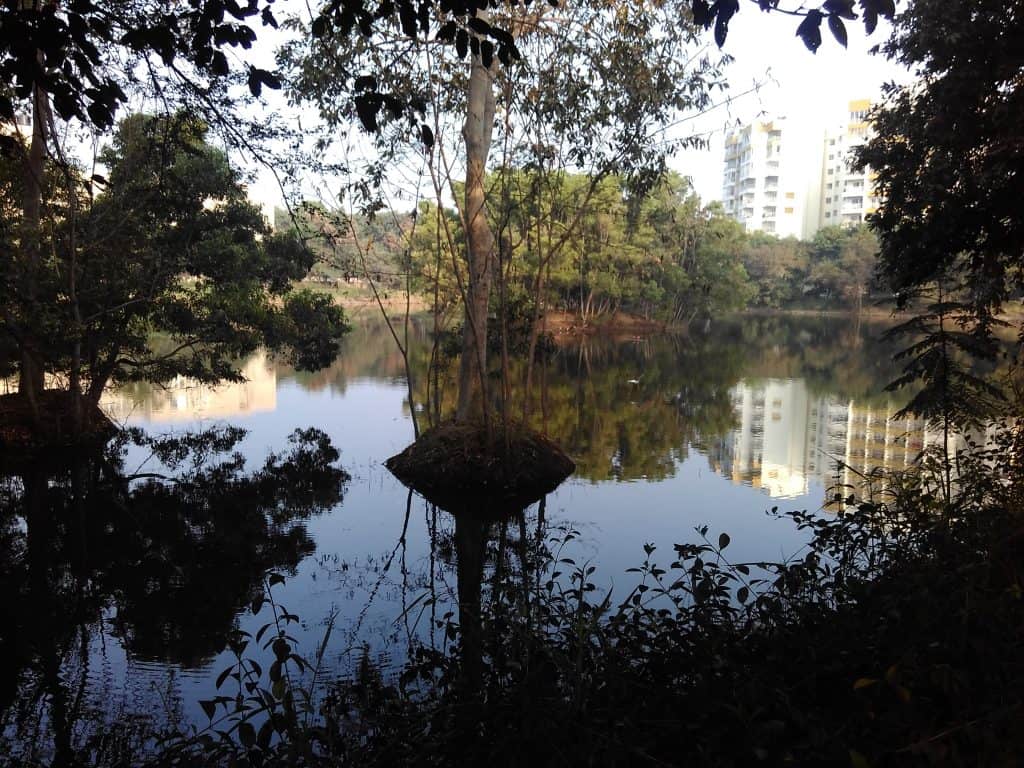
Lower Ambalipura lake / wetland
It does seem a lot more practical and long-term, and realistic to imagine our lakes as green wetlands. This could mean that more of the lake area could turn green or perhaps some lakes could turn completely into wetlands too. The wetland would still need maintenance, management and acceptance, and we would need to learn how to go about with it.
Would we be fine having a small change in our outlook, to change the imagination of a water body as a green wetland?