Carpets of blooms that lift us from gloom

Bengaluru needs more and more such trees that bloom and help us forget our worries, says Deepa Mohan.

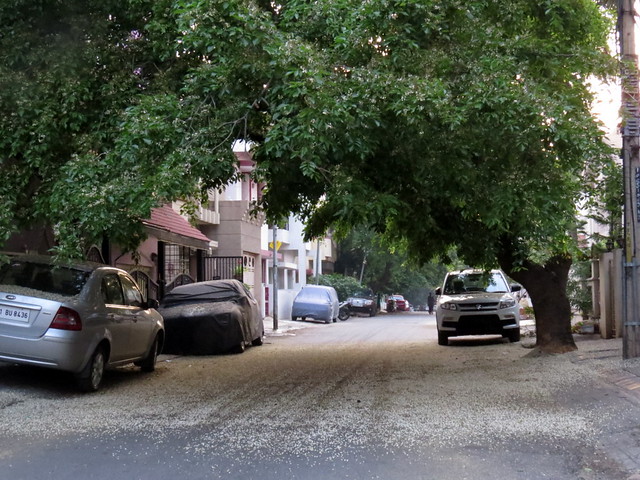
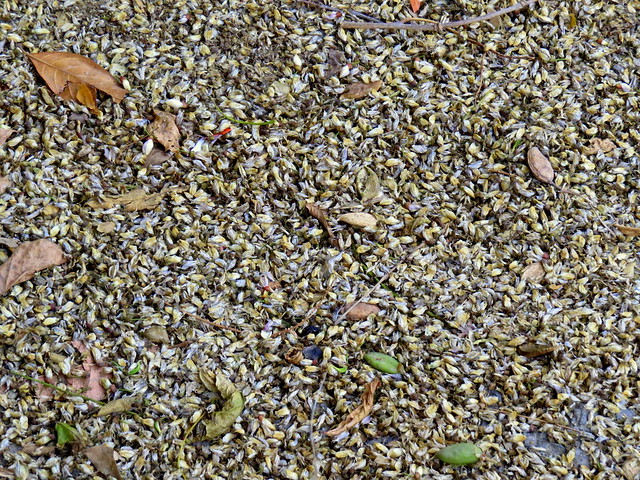
One of the wonderful things about Varsha Ritu and Grishma Ritu in our city is still the wonderful carpets of flowers that the trees lavish upon the ground beneath them.

Here are just three flowering trees, the Copper Pod (Peltophorum pterocarpum), Jacaranda (Jacaranda mimosifolia) and Honge (Pongaemia pinnata). Here is how one of the small roads looks after the Copper Pod flowers have fallen:
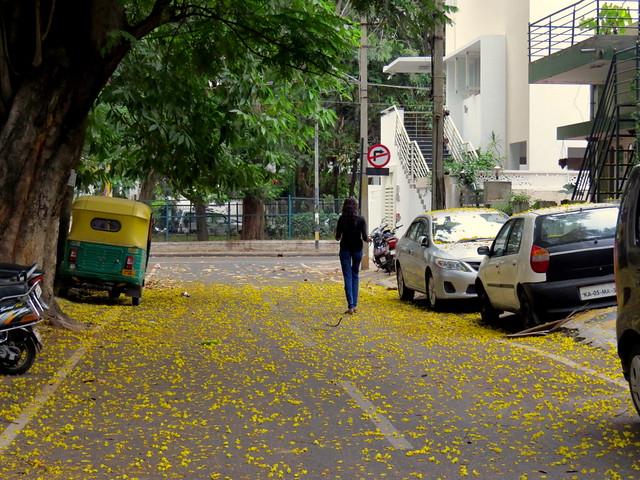
IMG_1619
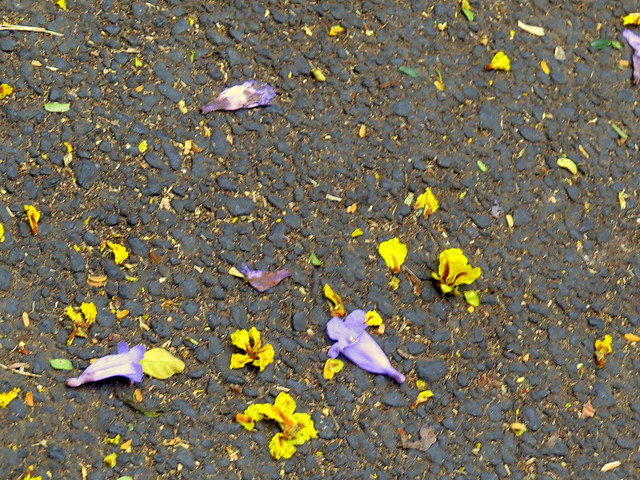
This is a closeup of the Copper Pod flower and the seed which gives the tree its name:
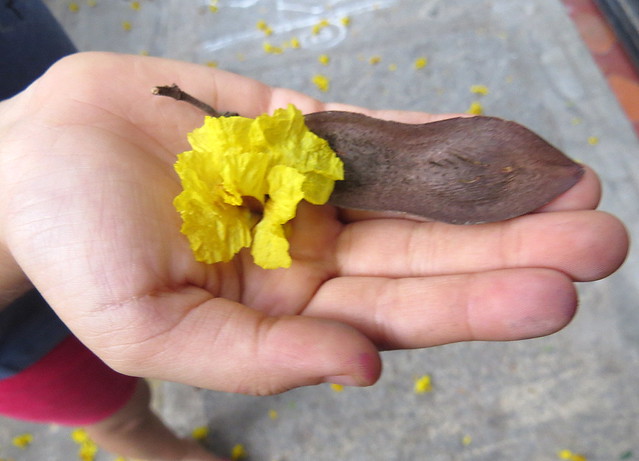
IMG_1618

Here is the carpet of Honge flowers:
IMG_9459

A closer look: Honge carpet: IMG_1967

The purple of the Jacaranda is lovely too:
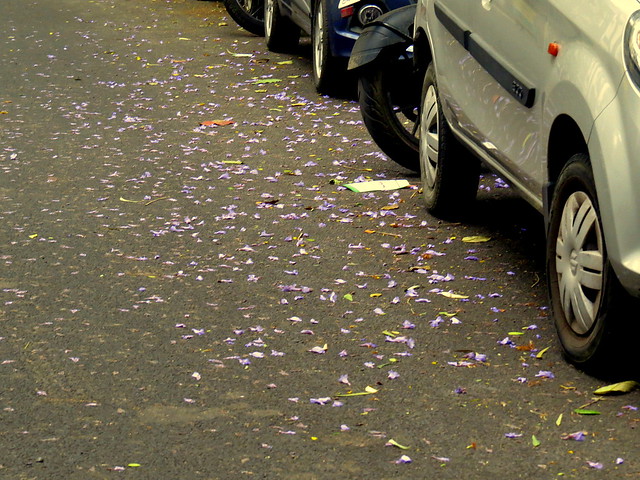
IMG_1621

Sometimes two flowers seem to talk to each other, like the Copper pod and Jacaranda! IMG_1623 As we walk, feeling uncomfortable in the heat, such sights do a lot to mitigate our discomfort, and make our tired steps happier. I do wish more trees are planted regularly, and allowed to grow tall and beautiful.
Related Articles

It’s a world of flowers, with all shades and hues
Lalbagh – Flower Show or Garbage Show?
Gifting flowers? Get a glimpse into Huvina Mandi

Leave a Reply

Your email address will not be published. Required fields are marked *

Similar Story

Beyond the parks and gardens, Bengaluru’s ‘wasteland’ ecosystems call for protection

Open Natural Ecosystems in Bengaluru harbour rich biodiversity. Take a look at what they hold and what we risk losing to unchecked development.

When we discuss urban nature, we often forget about real natural habitats. In Bengaluru, widely called the Garden City, most talks about urban nature focus on landscaped parks, roadside trees, and manicured gardens; in other words, artificial ecosystems designed for looks and human comfort. As lay citizens, we usually notice only such nature as we see around our homes, workplaces or other areas we generally pass by. While these places do have some ecological value, they mostly support a few highly adaptable species. This has strong negative implications for native flora and fauna that depend on open scrublands, grasslands, rocky…

Similar Story

The wild in the city: What citizen scientists tell us about Bengaluru’s biodiversity

Spatial and temporal biodiversity patterns, as observed by citizen scientists in the city during 2016-2025, were studied at a datajam in December 2025.

Imagine you’re out on a morning walk, phone in hand, when you spot a butterfly you’ve never seen before. You snap a photo, log it into a citizen science app, and voila! You’ve just contributed to crucial biodiversity monitoring. This isn’t just a hobby; it’s part of a global movement where ordinary people collect, record, and sometimes analyse data about plants, animals, and ecosystems. Citizen science stretches the reach of ecological research. Every observation adds to unique longitudinal datasets that reveal phenology — periodic events in the life cycle of a species — along with species distribution shifts and population…