To most people, Whitefield is synonymous with ITPL, the Sai Baba Ashram, luxurious villas and of course traffic jams. But there’s another positive aspect of Whitefield which is the number of lakes in the area.
These are some of the lakes which are located to the east/north-east of Marathahalli Bridge and west/south-west of Hope Farm.
-
Munnekolala and Chinnapanahalli lakes inside AECS Layout
-
Hoodi lake behind Zuri (no direct access to the lake)
-
Seetharampalya lake near Graphite signal
- Sheelvantharakere Lake behind Palm Meadows
-
Nallurahalli lake on the Nallurahalli-Borewell road
-
Thubarahalli lake, opposite Mainland China (no direct access to the lake)
-
Kundalahalli lake behind Kalyani Platina
Most of these lakes are in great shape, thanks to the efforts of key stakeholders who have helped in rejuvenating them.
These lakes not only raise the water table in the surrounding area, but also are home to number of bird species. Though not all the birds are resident birds, many migrate here for the season.
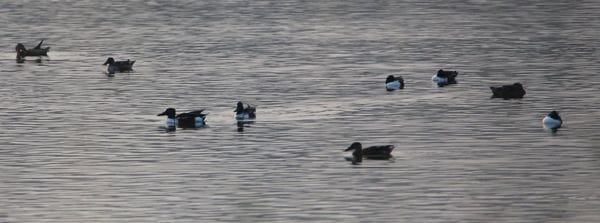
A flock of Northern Shovelers, spotted at Hoodi lake on January 23rd 2016. Pic: Sriram SN
Over the past two years, over 50 species of birds have been spotten at these lakes.
| Ashy and Plain Prinia | Indian Treepie |
| Ashy Wood Swallow | Kingfisher – White Breasted and Lesser Pied |
| Asian Koel | Kite – Black and Brahminy ` |
| Black Crowned Night Heron | Lapwing – Red Wattled |
| Blyths Reed Warbler | Little Grebe |
| Bronze Winged Jacana | Mynah – Common and Jungle |
| Bulbul – Red Vented, Red Whiskered | Northern Shoveler |
| Bushlark | Oriental White Ibis |
| Cinereous Tit | Pelican – Spot Billed |
| Common Coot | Pied Buschat |
| Copper Smith Barbet | Purple Moorhen / Swamphen |
| Cormorant – Little and Greater | Purple Rumped Sunbird |
| Darter Bird | Red Rumped Swallow |
| Drongo | Rose Ringed Parakeet |
| Duck – Spot Billed | Scaly Breasted Munia |
| Egret – Cattle, Little and Greater Egret | Shikra |
| Greater Coucal | Spotted Dove |
| Green Bee Eater | Starling – Rosy, Chestnut Tailed, Brahminy |
| Grey Francolin | Stork – Painted Stork |
| Heron – Grey and Purple | Wagtail – Lesser Pied, Large Pied |
| Indian Golden Oriole | White Breasted Waterhen |
| Indian Pond Heron | White Cheeked Barbet |
| Indian Robin | White Throated Bulbul |
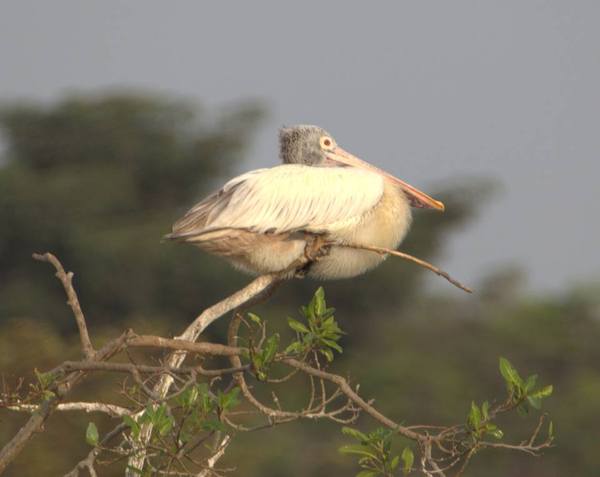
A Spot Billed Pelican at Munnekolala lake, sighted on February 3rd 2016. Pic: Sriram SN
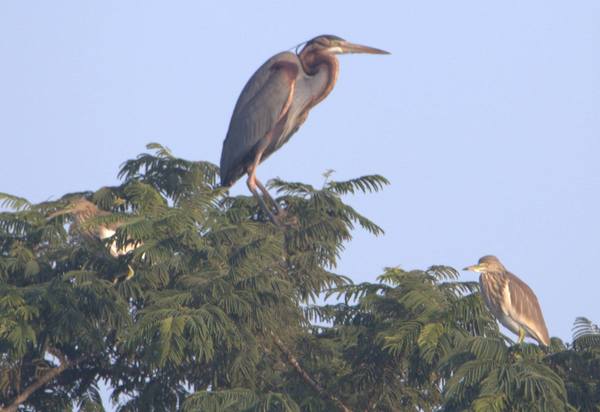
Purple Heron at Sheelavanthakare lake, spotted on January 31st 2016. Pic: Sriram SN
The next time, you visit these lakes, do look out for these birds. The best time to sight them would be in the mornings. While you may not spot all of them at one go, you may just be lucky enough to spot a rare visitor.
Related Articles
Visitors from near and far
Feeding birds and animals for 15 years!
Umbrella Fishing by Painted Storks!