Here’s a video I took, of some remarkable ‘fishers’ that we are able to see, even in urban lakes such as Madiwala or Lalbagh, in the winter. These are Spot-billed Pelicans which are local travellers.
There are some long-distance travellers, too. These are Bar-headed Geese landing at Hadinaru Kere, near Nanjangud, Karnataka, in August 2015; they come all the way from Mongolia! Here’s one, which was tagged in Mongolia (yes, I received a reply from the scientists there when I emailed them, it was quite a thrill).
This winter, we had another lone, and surprise visitor. The Demoiselle Crane was a lone bird that I spotted in a lake near Bangalore (Hulimangala). For nearly a month, this beauty kept bird-watchers fascinated; now, the bird has left, probably to join the hundreds of others who regularly migrate to Khichan in Rajasthan.
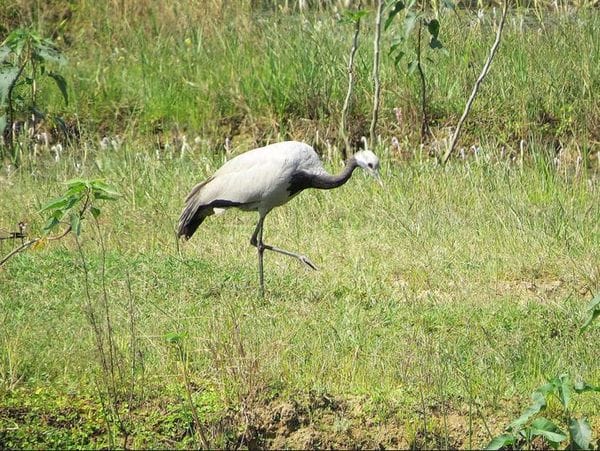
The Demoiselle Crane is known as the Koonj or Kraunch. In Khichan, Rajasthan, villagers feed the cranes on their migration and these large congregations have become an annual spectacle.
In the mythology of Valmiki, the composer of the Hindu epic Ramayana, it is claimed that his first verse was inspired by the sight of a hunter killing the male of a pair of Demoiselle Cranes that were courting. Observing the lovelorn female circling and crying in grief, he cursed the hunter in verse. Since tradition held that all poetry prior to this moment had been revealed rather than created by man, this verse concerning the Demoiselle Cranes is regarded as the first human-composed meter.
Queen Marie Antoinette of France gave the demoiselle crane its name. Demoiselle means maiden, or young lady, in French (one is more familiar with ‘mademoiselle’). The queen was enchanted by the crane’s delicate and maidenly appearance.
Another beautiful and colourful bird that visits the outskirts (and sometimes urban areas of Bangalore, too!) each winter, is the Indian Pitta.
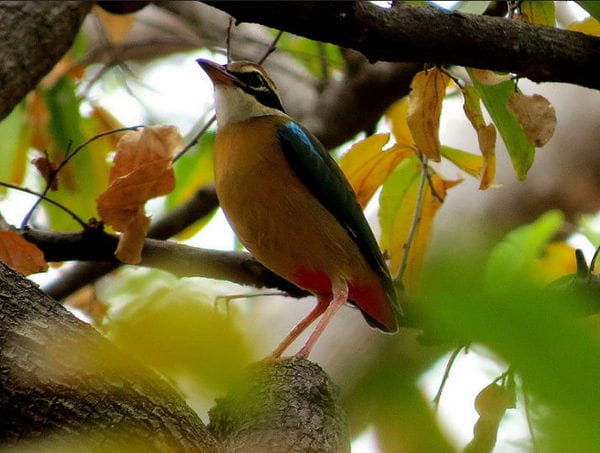
The name is very interesting. The name pitta comes from the Telugu word meaning ‘small bird’. Local names in India are based on the bright colours of these birds, and their behaviour, such as the time of calling. These include Navrang (nine colour bird) in Hindi and Arumani Kuruvi‘ (6 O’ Clock bird) in Tamil.
Apart from these, we have several kind of birds which visit us… flycatchers, warblers, birds large and small, which add to the joy of birdwatchers during the winter months.
These are some of the several birds whose arrival we look forward to, eagerly, every winter, to our city and its environs… giving us the message that all is well with bird migration around the globe.
Related Articles
Record sighting of the Demoiselle Crane in Bengaluru
Umbrella Fishing by Painted Storks!