I had been on the fence with menstrual cups for a few months and felt like a failure every time the time of the month arrived. But at last, I’ve been able to make the switch. And I’m so proud. 🙂
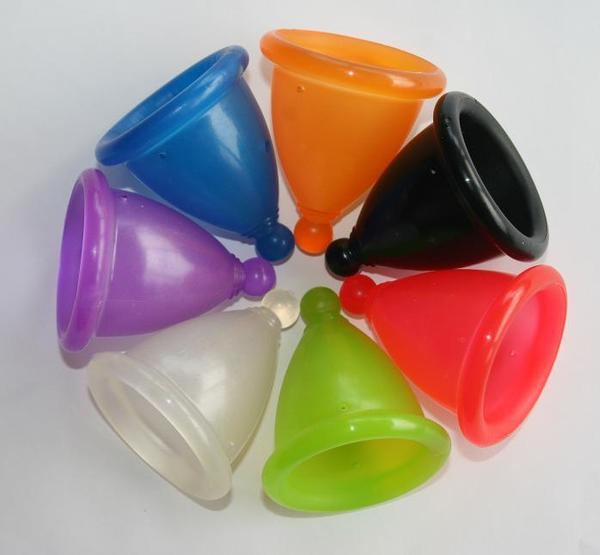
Menstrual cups: an eco-friendly alternative for sustainable mentruation. Pic: Frank Krueger, Wikimedia Commons*
There’s a growing mountain of menstrual waste, which is toxic for our environment. It was something I was contributing to every month in a major way and I hated that. It didn’t help that none of the people I know use reusable cloth pads or menstrual cups (except this one amazing girl who I asked all kinds of weird questions). Typical responses to menstrual cups range from ‘Eeuw… so icky!’ to ‘Who’d wash ’em? Who’d touch that thing?’
I too had the inhibition for far too long. But I’m glad to have finally overcome it. I am so in love with it now! Apart from the great, great high of not contributing to the harm disposable plastic pads and tampons cause to the environment, here are a few other reasons I love using this product:
- Have to deal with emplty-clean-reuse cycle only twice a day. So for 12 hours straight I can forget I’m on my periods. And by forget, I mean absolutely forget. Because it leaves no sign!
- No leakages.I got used to the cup in about two days and now I don’t have to deal with leakages at all.
- Can enter the pool and not worry about a thing.
- No smell! That’s such a great advantage.
- Contrary to what I earlier imagined, this is much more hygienic and cleaner to use than pads. Also, no rashes!
- No icky dryness/wetness feeling all day.
- Quickest solution, once you get the hang of it. No need to carry replacement around, figure out disposal methods while travelling, etc.
There’s a community out there in case there’s any doubt or question: Sustainable Menstruation India.
I only wish I had the good sense of using it sooner! Go ahead and try it out, you will not regret it!
Where can you buy menstrual cups?
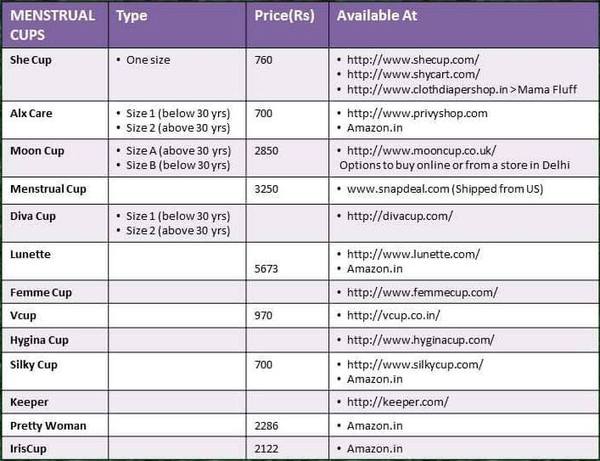
Pic: Leena Talukdar, SMI group
*Picture courtesy: “Meluna farbauswahl 1 1” by Frank Krueger – www.meluna.eu.
Licensed under CC BY 3.0 via Wikimedia Commons
https://commons.wikimedia.org/wiki/File:Meluna_farbauswahl_1_1.jpg#/media/File:Meluna_farbauswahl_1_1.jpg
Related Articles
Menstrual hygiene is not about sanitary napkins
It is time we talked about Menstruation
Hi Aakriti
I had heard about these now and then but never seriously gave them a thought till I read your piece. Especially the landfill bit struck me – I went ahead and bought a Diva cup and have been using it since December – I must say in addition to feeling great about generating zero menstrual waste, the experience and freedom that the cup offers is indeed a HUGE side-benefit 🙂 I wished someone would have invented this years ago!