Last month, I’d discussed spiders. I then thought about the creatures that use them as prey, and this reminded me of the Wasp-and-Spider drama that I witnessed.
About four years ago, I made this post about the Spider or Pompilid Wasp organising food for her yet unborn children, by stunning and burying a Yellow-thighed Tarantula or the Indian Ornamental Spider.
Well, her story repeated itself while we were at the Cauvery Wildlife Sanctuary. This Spider Wasp had already stunned the Tarantula by the time we saw it.
Unhappy with the first site she had chosen, she dug it out of the ground, and dragged the paralysed spider at least several yards, as we watched.
Pompilid wasps prepare very carefully for their offspring. They are solitary hunters.
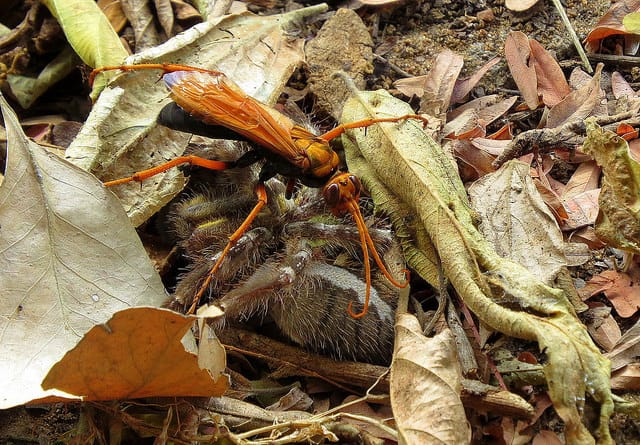
Wasps like this use a single spider as a host for feeding their larvae. For some reason, each time I’ve seen this Pompilid wasp, it’s been a Tarantula that has been stunned.
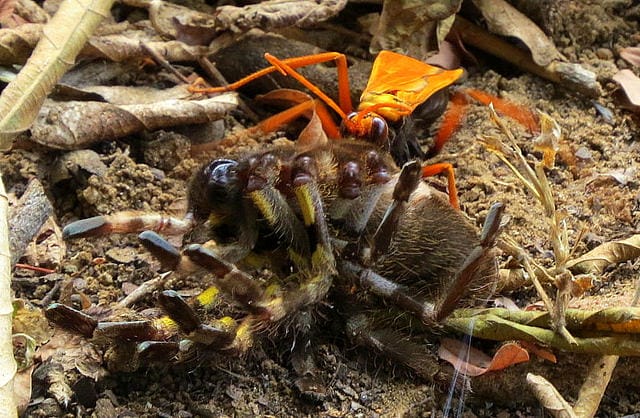
The wasp paralyses the spider with a venomous stinger. Once paralysed, the spider is dragged to a place where a nest will be built – or has already been readied..
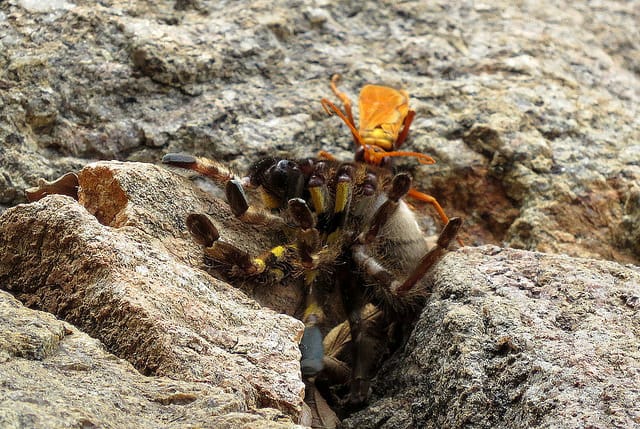
A single egg is laid on the abdomen of the spider, and the nest or burrow is closed. (Here you can see the yellow “thighs” of the Tarantula clearly).
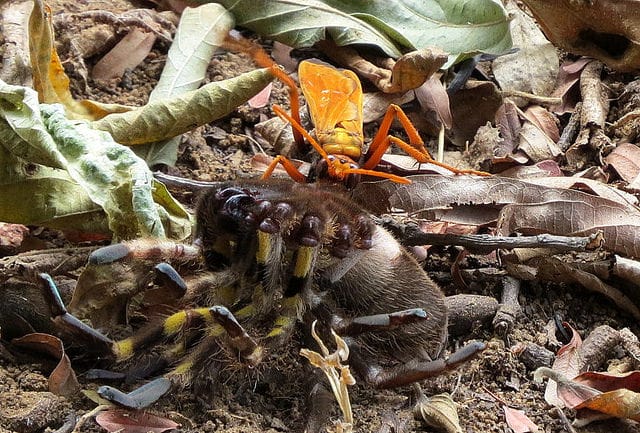
The size of the host can influence whether the wasp’s egg that will develop as a male or a female; larger prey yield the (larger) females. The wasp then spreads soil around, leaving the nest site inconspicuous.
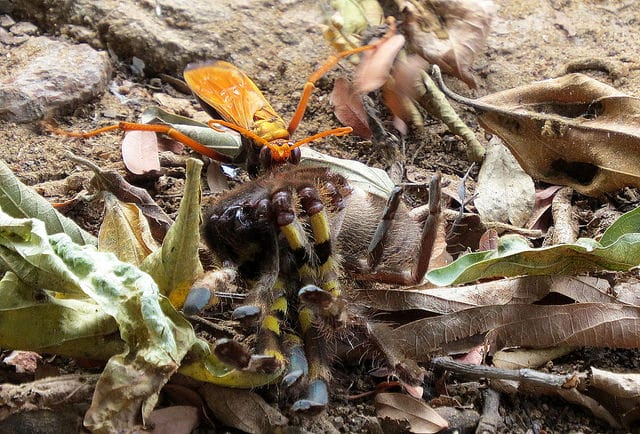
When the wasp larva hatches, it begins to feed on the still-living spider. After consuming the edible parts of the spider, the larva spins a silk cocoon and pupates, usually emerging as an adult the next summer. Some wasps lay the egg on a still-active spider. In time, the spider will die, and the mature wasp larva will then pupate. Here is the mother wasp, dragging the paralysed Tarantula along (you can see its legs faintly moving)… I’ve zoomed out at the end to show how far away she actually is.
An amazing way the wasp has, of providing for children that she may never even see. We can often see this wasp right in the center of our large city, and in our parks and gardens, too! Sometimes, one can get all the excitement of nature trail from just looking at the ground… there is no need to wait for the big cats or elephants!
Related Articles
Website architecture
What’s crawly need not be creepy
Sometimes Harvestmen are not farmers