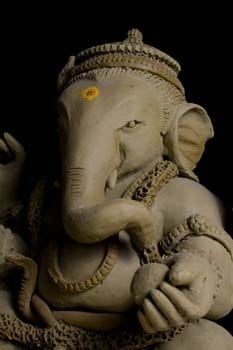
With Ganesha Habba right around the corner, preparations to celebrate the festival are in full swing. Traditionally, the idol would be sculpted out of earth from river banks. After worshipping divinity in this earth icon, it was returned back to the earth by immersing it in a nearby water body. This represented the cycle of nature, from creation to dissolution.
However, with the advent of Plaster of Paris (POP), things changed. Idols are now made of materials that are detrimental to the environment. POP idols should never be immersed in water; it is insoluble in water and releases a host of chemicals that poison our water bodies. Unless the idol is removed from the kalyani within 48 hours after immersion, the organic matter in the water gets putrefied with POP. Harmful chemicals in the paint like lead, chromium, mercury and iron, adversely affect the flora and fauna in the water body.
And once the festival is over, it is heart breaking to see Ganesha idols strewn disrespectfully in lakes and oceans.
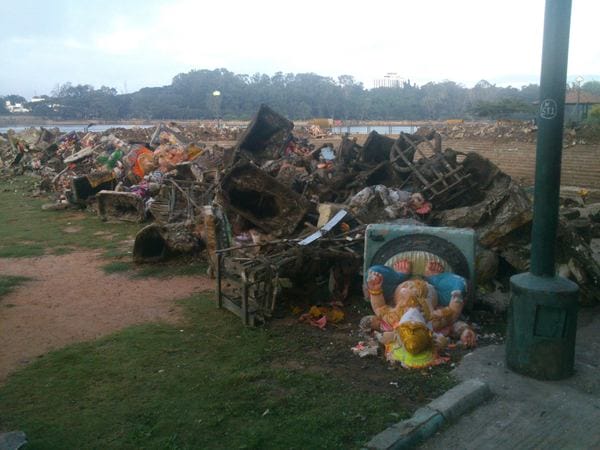
Mutilated ganeshas at Sankey Tank. Pic: Vani Murthy
Festivals are about celebrating our traditions and should be clean, green and fun. Here are five simple recommendations to reclaim our glorious traditions, and celebrate Ganesha Habba in a symbolic and fun way.
Idols
Are you making your idol at home?
If you are making your idol at home instead of buying one, mail us a picture, with a small description of what it is made of. The most eco-friendly idols will be a part of our special photo feature on Citizen Matters.
Stay away from POP Idols. Instead, buy an eco-friendly clay idol. Do avoid clay idols with overly colourful paints, which could be toxic. Clay idols that have been painted with vegetable dyes are a good alternative. Communities can also store their big idols for future use, and only immerse a small clay idol.
Decoration/Puja items
For decoration, use only flowers, diyas and lights. Avoid the usage of shiny ribbons, thermocol, plastic beads etc as they all end up as reject waste. For the puja, use only flowers, fruits, coconut, mango leaves, tulsi, grass, beetel nut leaves.
Avoid purchasing beetel nut, haldi-kumkum or other puja items in packets, as they typically cannot be recycled. Instead, buy the whole beetel nut or buy haldi-kumkum in a box. Also do use a reusable bag when shopping.
Prasadam
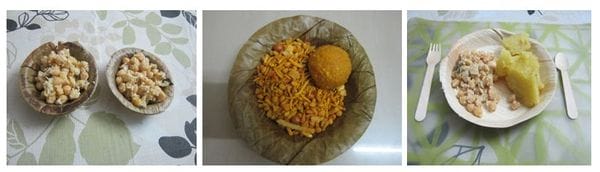
Switch to eco-friendly, recyclable tableware to serve festival goodies. Pic: Deepa Vijay
Serve prasadam in compostable tableware like donnais, banana leaves and arecanut plates. Do not use Styrofoam, paper or plastic tableware. These are not bio-degradable, and once soiled with food they cannot be recycled and end up going to reject waste.
Recreation for children
There is nothing like getting the community together and having kids unleash their creativity. Teach them to make clay Ganesha’s, using paper and natural material like flowers, leaves and shells for decoration.
Immersion/Visarjan
Use a bucket of water at home or large water drums in your community to immerse your idols. Clay idols typically dissolve in two to three days. The leftover mud can be used for plants.
If you want to be a part of the larger community celebrations, go to a government authorised kalyani at the lake.
Go green this Ganesha Habba, and do your bit to save our dying water bodies.
Related Articles
To celebrate the Ganesha festival responsibly…
Make sure it’s an ecofriendly Ganesha this year
Eco-Ganesha : Where to find him, and why?
Five things that can make your Deepavali celebrations more eco-friendly
Make your own eco friendly Ganesha. Explorium campus is having Clay Ganesha making workshops for kids and adults in vignan Nagar. All eco friendly colours. Creativity added by Explorium team. Contact 8030187159 to learn making Ganesha