A ‘hummingbird’ in Lalbagh!

You might confuse this creature with Hummingbird - but it’s not! Meet the unique species that has helped in enriching the fauna in Lalbagh.

Dhiraj Gaurh was astounded by a very large creature, which, he felt, might be a Hummingbird. Here are the excellent shots he got, of the creature drinking nectar from Aster flowers:
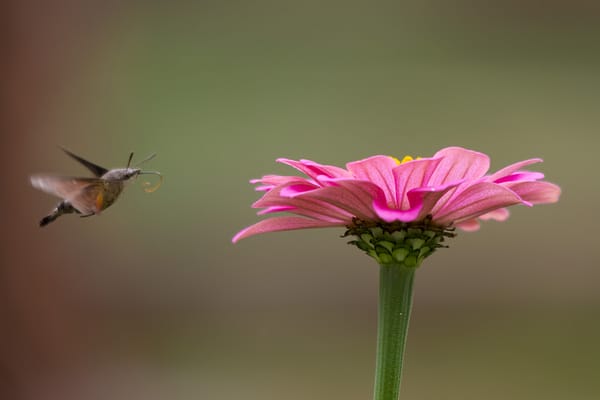
He posted the link to the photos in the egroup of the Bird Watchers’ Field Club (contrary to its name, this is a group of enthusiasts of all forms of wildlife and nature.) Several people (Rachna Shetty, Gautam Krishnan, Vijay Krishna, Ravi Vaidyanathan, Anubhav Vanamamalai, Nandhu Sridhar)  promptly responded to him,  identifying this, not as a Hummingbird (we do not have them in India), but as the Hummingbird Hawk Moth
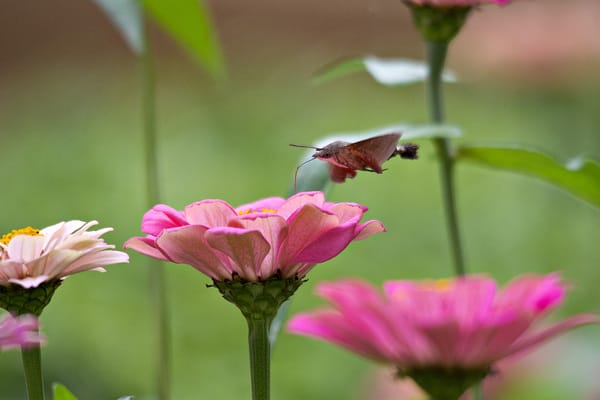
Its hovering behaviour, accompanied by an audible humming noise, makes it look remarkably like a hummingbird while feeding on flowers.

So…the next time you see something which might be a bird…it might not, actually, be one!

Comments:

  1. Amruta says:

    nice clicks of hummingbird

  2. ridhima says:

    nice photographs and thanks for bringing this to attention.

  3. Roli Srivastava says:

    Thanks for the information. I saw exact same creature in my terrace garden and took it for a humming bird

Leave a Reply

Your email address will not be published. Required fields are marked *

Similar Story

The future of Bengaluru’s lakes: How to ensure effective community-led restoration

Clear bye-laws, neighbourhood participation and NGO accountability can save the city's ecological spaces.

Citizen lake groups have historically played an important role in protecting the city’s lakes. The erstwhile Bruhat Bengaluru Mahanagara Palike (BBMP) has a long history of engaging with citizen groups. Citizen-led lake groups have long played a crucial role in acting as “watchdogs” of Bangalore’s lakes. They are often the “first responders” to problems that emerge in water bodies. They have raised alarm bells around illegal encroachments and often help coordinate between agencies to monitor rejuvenation efforts. They foster community awareness on lakes and are often able to innovate new solutions. The most recent version is the Kere Mitra (Lake‑Friend)…

Similar Story

The city and its lakes: Decoding the decline of Bengaluru’s waterbirds

Analysis of 14 Bengaluru lakes shows migratory waterbirds are disappearing faster than residents due to poor urban lake management.

Lying at an altitude of 920 metres in the rain-shadow area of the Western Ghats, Bengaluru’s geography and climate do not support a perennial natural water source. Instead, a north-south ridge divides the city into three primary valleys: Hebbal, Koramangala-Challagatta, and Vrishabhavathi. Rainwater draining down these slopes feeds a network of small streams — forming a cascading lake system that the city historically relied on for its water supply. During the Open City biodiversity datajam held in December 2025, our group examined the ecological trends around Bengaluru's lakes. Data on insects, spiders and flora on platforms like iNaturalist were insufficient…