Birds captured after the rains

Thanks to the rain and the treated water, the level has gone up at the lake. Unfortunately though, the notoriously difficult to control alligator weed is also growing lushly. We hope when the level increases even more, the weeds will be submerged and rot. Well, we may be unhappy about the weed spreading but the birds are very happy about it. The number of birds frequently the lake has increased. 
 
For the past few months, Madhurima Das, a “resident birder” from the neighbourhood has been regularly doing a weekend census of the birds at the lake, and taking pictures as well. Today she was happy to have captured a few candid moments. Pictures below.
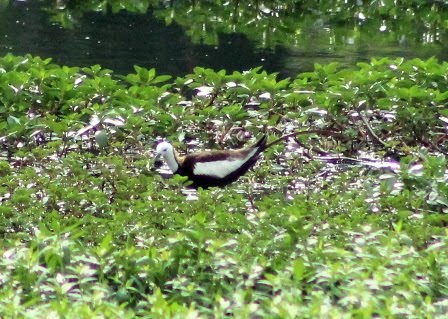
 
Pheasant-tailed Jacana in breeding plumage
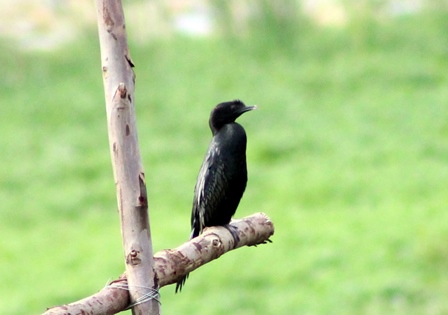
 
Little Cormorant 
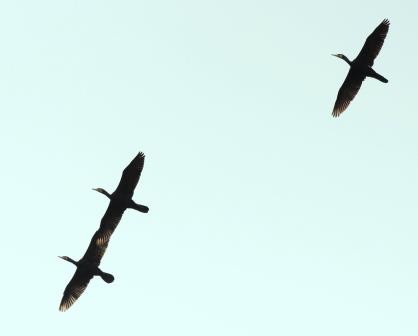
 
Great Cormorants that flew past for a recce perhaps!
 
White-throated Kingfisher with catch
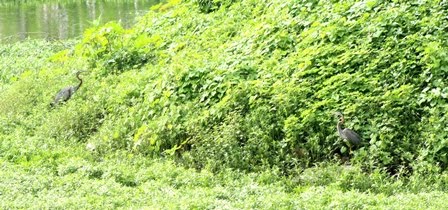
 
Spot the two Purple Herons? 
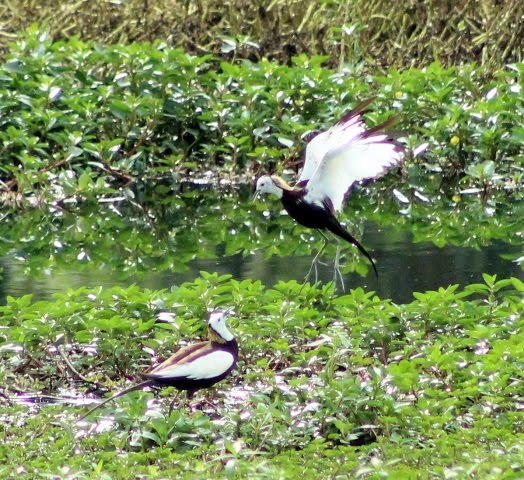
 
Pheasant-tailed Jacanas in a mating dance perhaps …. 
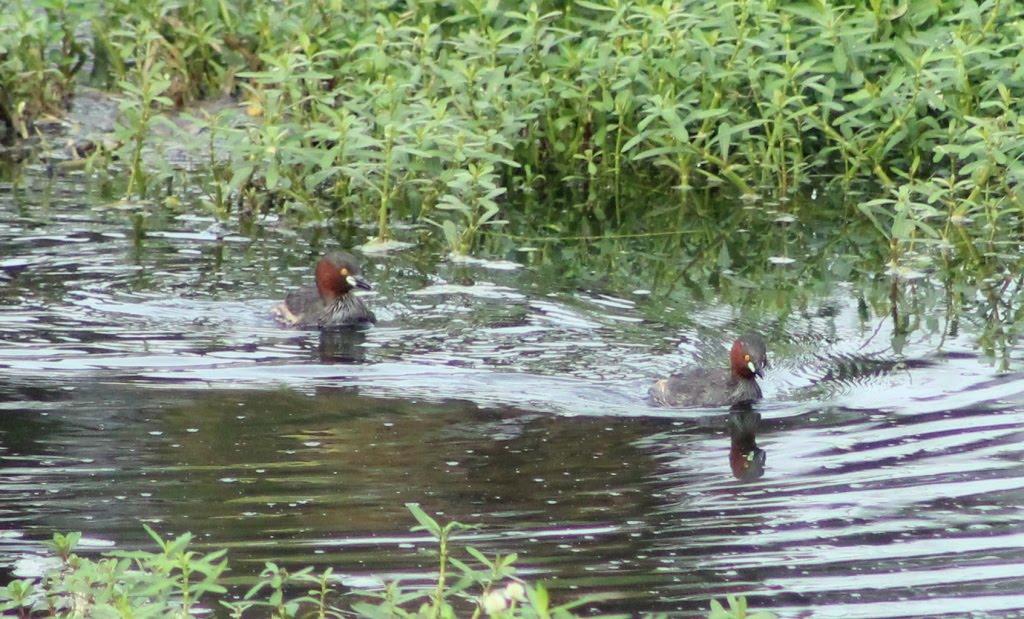
 
Little Grebes – they had laid three eggs but lost two to predators. Way of the wild!
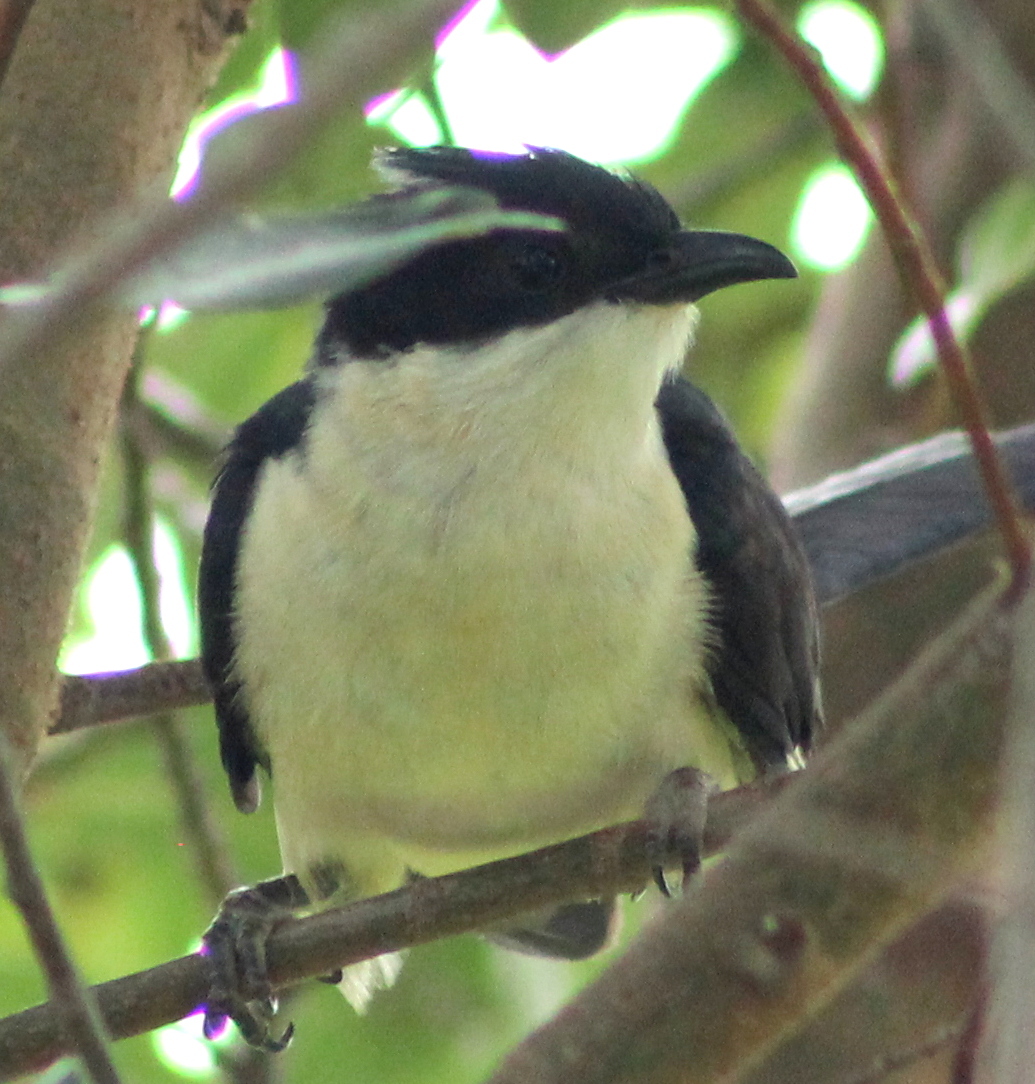
 
A first time visitor to our lake – Jacobin Cuckoo, considered to be a harbinger of the monsoon! 
 
Pics: Madhurima Das
Captions: Usha Rajagopalan 

Leave a Reply

Your email address will not be published. Required fields are marked *

Similar Story

Bengaluru’s Peripheral Ring Road: Traffic relief or ecological disaster?

Even as landowners contest unfair compensation, other issues persist: emissions, large-scale tree felling, and the project's alignment through lake ecosystems.

Two decades after the Peripheral Ring Road (PRR) was announced, the project is far from completion. For farmers, it has meant years of uncertainty and mounting financial losses, while residents remain unsure about the usefulness of the long-pending road development. In an earlier article, we explored how the PRR project could lead to forced migration and threaten the livelihoods of farmers. In Part 2 of the series, we did a deep dive into the manipulation of compensation options that landowners strictly oppose. However, farmers and environmentalists raise different concerns: even if the road is built, will it truly ease traffic…

Similar Story

From Kuruvimedu to Besant Avenue, how Chennai breathes unequally

Ahead of the art exhibition ‘Pugai Padam’, this photo essay captures the contrasting realities of air and the lived experiences of air pollution in Chennai.

The chimneys of the NTECL Vallur Thermal Power Station, billowing smoke, loom over Kuruvimedu in Ponneri, Thiruvallur near Chennai. Wedged between the plant and its sprawling 300-acre ash pond, the hamlet lies under a blanket of kari (coal) and sambal (ash), coating its narrow streets, colourful homes, and trees. Kuruvimedu is hard to find on Google maps, just as its namesake bird. The main road leading to this place is flanked by factories and industrial complexes, its surface riddled with potholes that make every journey dangerous for motorists.  Home to mangroves, networks of canals, and fields, Kuruvimedu once buzzed with…