The garbage amongst us

Not so early in the morning, I look down from my third floor apartment. There’s a lady sweeping the dead-end road. I know her, though I don’t know her name. She wears the official BBMP coat and she collects garbage from each of the apartment building. Sometimes I see her, while walking, from a car and smile and wave at her. She smiles back. A beautiful, cheery smile, but with an edge of self-consciousness. As if unused to be smiled at. As if unacknowledged as a human by those who live in apartments.
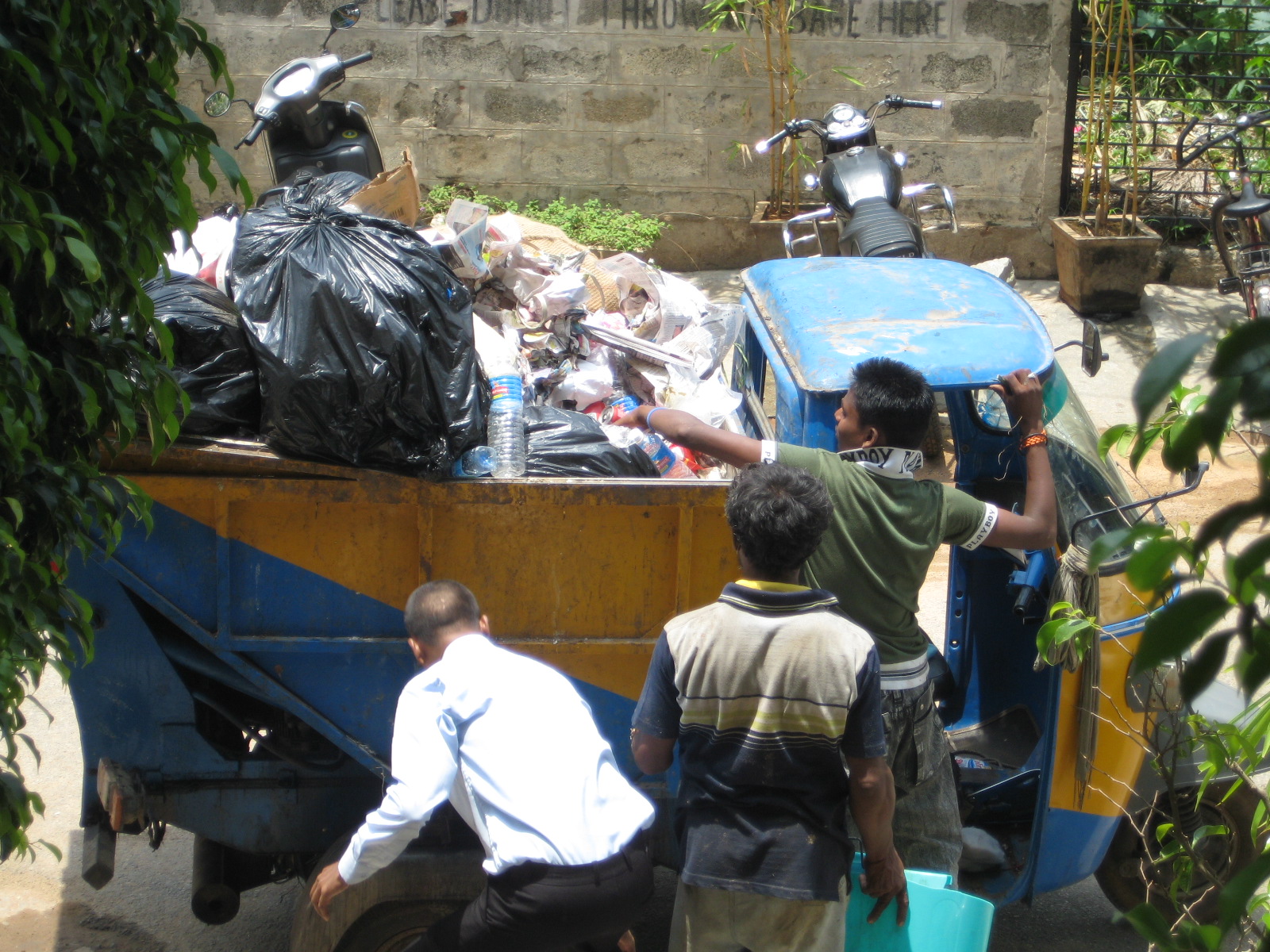
(Pic for representation only. Can’t find the one I clicked)

Then there’s another from BBMP, I see from my third floor apartment. He comes on the open garbage truck, a small one to pick up garbage from the apartment building opposite mine (there are 24 flats there). The building has three long drums which are filled upto the brim with all kinds of icky stuff—polythene bags full of kitchen waste, toilet paper, condoms, leftover curry gone bad and dust. He puts his naked hands into this middle class garbage and efficiently separates the non-biodegradable, the tetra packs, mulchy polythene bags, Styrofoam cups and recyclable waste.

A middle class man who lives in the apartment sees him and makes a face full of disgust. A lady with a little child, walks by, crinkling her nose at the awful smell. And I, clean and distant from the scene, on my third floor balcony, wonder how someone who deals with other people’s shit, can smile so beautifully.

Leave a Reply

Your email address will not be published. Required fields are marked *

Similar Story

Reviving the Cooum: Need for innovation, enforcement and shared responsibility

An analysis reveals how this Chennai river is affected by sewage dumping, encroachment of buffer zones and unchecked urban growth.

The Cooum River, once a sacred river that shaped the history of Madras, has now become a sad sign of urban degradation. For the millions of residents in Chennai, it has transformed into a malodorous, polluted, and stagnant channel, burdened with solid waste accumulation and extensive encroachments along its banks. During a recent datajam organised by Oorvani Foundation and OpenCity, we used Geographical Information System (GIS) datasets and population analytics to investigate the underlying causes contributing to this crisis. The results show that rapid urbanisation, inadequate provision of essential civic infrastructure, and the absence of coherent policy frameworks, along with…

Similar Story

Pallikaranai at a crossroads: Expert warns of irreversible damage to Chennai’s last great marshland

In an interview, naturalist Deepak V says the government must publish ecological maps marking wetlands and waterbodies to boost public awareness.

The Pallikaranai Marshland, one of Chennai’s last remaining natural wetlands, has long been a site of ecological tension. Its designation as a Ramsar site brought national and international recognition, along with renewed expectations for strong conservation measures. Yet the marshland continues to face intense pressure from urban development, infrastructure projects and real estate expansion.  Recently, Arappor Iyakkam, an anti-corruption organisation, alleged that state agencies illegally cleared environmental and construction approvals for a large high-value housing project within the Ramsar boundary. As the matter unfolds, it reveals how regulatory gaps and political inaction make the marsh vulnerable. Meanwhile, residents of Tansi…