RWH pits likely to fail

In the early 80s, the city had abundant ground water available just a few feet below the ground. Today, borewells even below 600 feet are a failure.

There is no area in Bangalore today where rainwater directly seeps into the ground except a few parks like Lalbagh and Cubbon Park. Almost all roads are cemented or tarred.  Natural lakes and ponds have become foundations for huge residential apartments and commercial complexes.
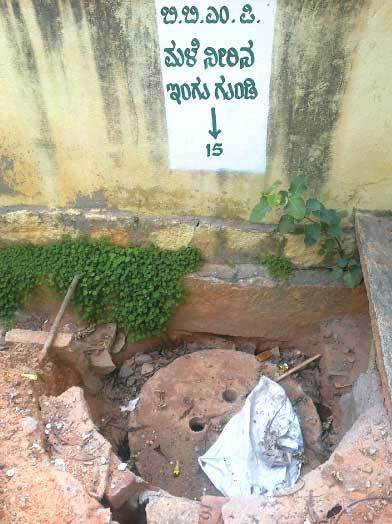
Rain harvesting pit in Jayanagar

BBMP has miserably failed in managing rainwater. The idea of having a 12 feet deep pits reinforced with concrete rings in storm water drains is good but is shabbily executed in Jayanagar.

BBMP officials should have ensured that the rainwater enters the drain and reaches the rainwater harvesting pit.  If this exercise was done, the amount of money, time and energy spent would have been worth it. The recently constructed puts have developed cracks and may turn out unsuccessful.

The holes meant for water to seep inside the pit are blocked by garbage, due to lack of maintenance.

Every pit is numbered. There are a few places where numbers are painted on the compound walls but there is no sign of the pit. This gives room for suspicion that they may not exist at all.

Leave a Reply

Your email address will not be published. Required fields are marked *

Similar Story

Reviving the Cooum: Need for innovation, enforcement and shared responsibility

An analysis reveals how this Chennai river is affected by sewage dumping, encroachment of buffer zones and unchecked urban growth.

The Cooum River, once a sacred river that shaped the history of Madras, has now become a sad sign of urban degradation. For the millions of residents in Chennai, it has transformed into a malodorous, polluted, and stagnant channel, burdened with solid waste accumulation and extensive encroachments along its banks. During a recent datajam organised by Oorvani Foundation and OpenCity, we used Geographical Information System (GIS) datasets and population analytics to investigate the underlying causes contributing to this crisis. The results show that rapid urbanisation, inadequate provision of essential civic infrastructure, and the absence of coherent policy frameworks, along with…

Similar Story

Pallikaranai at a crossroads: Expert warns of irreversible damage to Chennai’s last great marshland

In an interview, naturalist Deepak V says the government must publish ecological maps marking wetlands and waterbodies to boost public awareness.

The Pallikaranai Marshland, one of Chennai’s last remaining natural wetlands, has long been a site of ecological tension. Its designation as a Ramsar site brought national and international recognition, along with renewed expectations for strong conservation measures. Yet the marshland continues to face intense pressure from urban development, infrastructure projects and real estate expansion.  Recently, Arappor Iyakkam, an anti-corruption organisation, alleged that state agencies illegally cleared environmental and construction approvals for a large high-value housing project within the Ramsar boundary. As the matter unfolds, it reveals how regulatory gaps and political inaction make the marsh vulnerable. Meanwhile, residents of Tansi…