RWH pits likely to fail

In the early 80s, the city had abundant ground water available just a few feet below the ground. Today, borewells even below 600 feet are a failure.

There is no area in Bangalore today where rainwater directly seeps into the ground except a few parks like Lalbagh and Cubbon Park. Almost all roads are cemented or tarred.  Natural lakes and ponds have become foundations for huge residential apartments and commercial complexes.
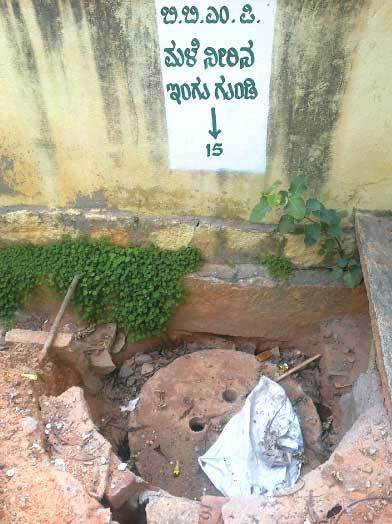
Rain harvesting pit in Jayanagar

BBMP has miserably failed in managing rainwater. The idea of having a 12 feet deep pits reinforced with concrete rings in storm water drains is good but is shabbily executed in Jayanagar.

BBMP officials should have ensured that the rainwater enters the drain and reaches the rainwater harvesting pit.  If this exercise was done, the amount of money, time and energy spent would have been worth it. The recently constructed puts have developed cracks and may turn out unsuccessful.

The holes meant for water to seep inside the pit are blocked by garbage, due to lack of maintenance.

Every pit is numbered. There are a few places where numbers are painted on the compound walls but there is no sign of the pit. This gives room for suspicion that they may not exist at all.

Leave a Reply

Your email address will not be published. Required fields are marked *

Similar Story

Draft eco master plan for Mumbai’s SGNP threatens waterbodies, local livelihoods: Have your say!

The BMC has invited public feedback on the Master Plan for the ESZ around Sanjay Gandhi National Park. As activists and tribals raise concerns, here's your chance to give feedback.

The Brihanmumbai Municipal Corporation has released the draft Zonal Master Plan for the eco-sensitive zone of Sanjay Gandhi National Park (SGNP). The civic body is inviting suggestions and objections till October 17. However, environmentalists have raised concerns about potential ecological damage in the name of development, through the master plan. They allege that commercial activities are planned very close to sensitive ecosystems. Meanwhile, communities living in and around the park fear displacement, loss of livelihood and erosion of their cultural identity. They are also finding it difficult to submit their feedback, as the draft plan is in English. Background SGNP…

Similar Story

Songs of protest: Pune musician’s unique campaign to save the Mula-Mutha River

Watch this video to see how Swapnil Thakur's music is motivating Pune residents to raise their voice against the riverfront project.

The Pune Riverfront Development Project, which aims to beautify the banks of the Mula-Mutha River through concretisation, has been one of the most debated topics in the city. Many citizens have raised concerns about its environmental impact. While the project promises promenades, gardens, and flood control measures, several people believe it comes at the cost of destroying the natural ecosystem that has existed for centuries. Among them is Swapnil Thakur, a Pune-based musician popularly known as the 'One-Man Symphony,' who is using his music to protest against the project. Once a corporate employee, Swapnil’s life took a drastic turn after…