For M Abdulla Saleem, his recent appointment as Additional Commissioner Police (Traffic) is a return to familiar turf. He succeeded Praveen Sood a few months ago. "I am basically a traffic man," proclaims Saleem and it is not without justifications.
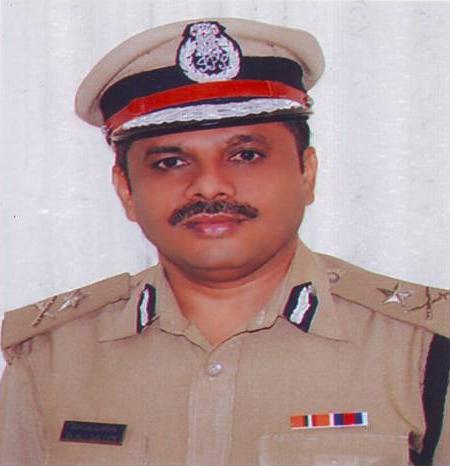
Pic Courtesy: DCP (Traffic) Office
The 1993 batch IPS officer previously served as the Deputy Commissioner of Police, Traffic East Division, Bangalore and in 2010 completed a PhD in Traffic Management from Bangalore University. He has held various posts across the state including Assistant Superintendent of Police, Gulbarga, Deputy Commissioner of Police (Law and Order) and Inspector General of Police, Administration, Bangalore.
In an interview with Citizen Matters, Saleem speaks about the challenges that Bangalore Traffic Police, their initiatives and the upcoming Traffic Management Centre on Infantry Road.
As you take over as the Additional Commissioner of Police (Traffic), what do you see as the challenges before you?
(Smiles) You know very well how chaotic traffic is in the city. Managing it is a challenge by itself as there is a mismatch of capacity of the roads and volume of traffic. Over the last few years, there has been increase in the number of vehicles but there hasn’t been a proportional increase in roads. We are trying very hard to bridge the gap by effective traffic management.
What strategy will you adopt to deal with such challenges?
We have planned several initiatives that will be implemented in the next six months, that we think will be effective in solving many of the issues. (Hands over a document detailing their initiatives, the performance indicators and impact)
What are the specific spots in the city that you feel are the most problematic and take up a lot of your resources?
We were facing a lot issues near Bellary Road, Cauvery Junction, and BTM Layout 29th Main. We made circulation plans and implemented them. We are seeing good results. We have made circulation plans for Nagavara Junction and K R Puram (near the bridge). We will soon implement them.
What are these circulation plans?
The plans include introducing and modifying some u-turns, right turns, one-ways and so on. These plans are implemented after considerable study of the traffic in the concerned area.
Are you heading towards traffic planning rather than just managing? Do you need more rights to do so?
We do have a say in planning only in the aspects of management of traffic and enforcement of rules and our recommendations on that have weightage. We come out with our own studies and recommendations for various projects that help in planning. We are on different committees including Agenda for Bengaluru Infrastructure and Development Task Force (ABIDe). We do not much of a say in other aspects as urban planning is not in our purview.
Are you planning to scale up the use of technology in traffic management?
Yes. We have a new state-of-the-art traffic management centre coming up on Infantry Road. The new TMC will have facilities like video walls where live traffic can be monitored. It has been under construction for a few years now and will be ready in a few months. We have 180 cameras at junctions currently. 500 hundred more will be installed by the Law and Order department and these cameras will also be linked to the TMC so it can be used for traffic management.
How about capacity building of the police? Has that been a concern?
Most policemen come with only Law and Order training. They are not trained in the subject of traffic management. The only know how to book cases. (Smiles) We are constructing a traffic institute near Nagavara. It will be operational by next year and all traffic policemen will be trained in aspects like traffic engineering, regulations etc. The institute has a capacity to train 200 policemen at a time.
We have tied up with Indian Institute of Job Training (IIJT) to provide soft skills training like etiquette, language, communication skills etc.
Your predecessor started a ‘Bangalore Traffic Police’ page on Facebook to connect with citizens? Do you see that as being effective?
Facebook is a good way to connect with citizens but it only caters to the tech-savvy. We also wanted to connect with others too and so we have started an initiative, "Citizens Traffic Forum’, where on the third Saturday of every month, citizens can meet their local traffic inspector at the police station and voice their concerns. We just had the first meeting on 15th October.
How was the response?
The response was very good. Many people came for the interaction. Apart from just receiving complaints in the forum, we will ask citizens to recommend solutions for some of the issues that we face in traffic management.

Traffic police work around infrastructure projects to ensure free-flowing traffic. Pic: Yogaraj S Mudalgi
BTP’s Action plan for traffic management in Bangalore city 2011
Traffic Circulation Plans
Conceptualisation, design and implementation of one corridor every month. The plans is said to improve traffic flow and road safety in every new circulation plan by 25%. Priority is for areas like Coffee Board Junction, the Army area in Ejipura to India Garage corridor, Madivala, Mysore Road etc.
Safe routes to school
Revive the old scheme in 16 schools by this year end and expansion to all important schools in the city in the next academic year 2012-13. The plan aims to improve traffic situation around schools by 50%. Plan is to also ensure a 20% shift from private transportation mode to public transportation mode. It also aims for 50% reduction on road accidents involving school children.
Road safety education and awareness campaign.
The campaign aims to spread awareness against drunken driving, not wearing seat belt, shrill horn, dazzling headlights, usage of mobile phones will be taken up once a fortnight. Also, revive the scheme of Students Association for Road Safety and Catch them young program through Traffic Warden organisation and Traffic Training Institute. A greater compliance for traffic rules and regulation is expected. 10% to 15% reduction in enforcement.
Expansion of Traffic Police organisation
Creation of six additional traffic police station, three additional traffic ACP posts in the city and creation of new post of DCP Traffic (North). The proposals for these have been sent to the government and actual implementation is expected to be done by 30 September 2012.
They also plan to focus on technology driven enforcement by revamping of automation enforcement.⊕
It is time for Mr. Saleem to go one step ahead and say that this city needs trained transportation engineers and deep involvement of urban planners. Traffic police will just enforce rules and help manage traffic.
While traffic management is definitely lacking due to trained personnel, it is also upto citizens to follow rules. Overtaking from left, taking a turn without signal, squeezing between vehicles, is a common sight on twowheels and autos. The buses are also parked in a haphazard manner when at bus stops. There should be strict punishment for offenders, and the traffic policemen should be paid well so that they do not fall a prey to easy money from offenders. They should also not stand at corners and chitchat instead of managing traffic when signals are not working. Even if signals are working, they should have an eye on offenders and report.
It is easy to drive a vehicle in Bangalore, now an International city, without knowing traffic rules and much more easy to break them even if one is aware of them. Enforcement is lacking very badly here. Many of the intersections where there are regulating lights drivers ignore them deliberately with scant respect to rules, wonder is that well educated individuals resort to such things!