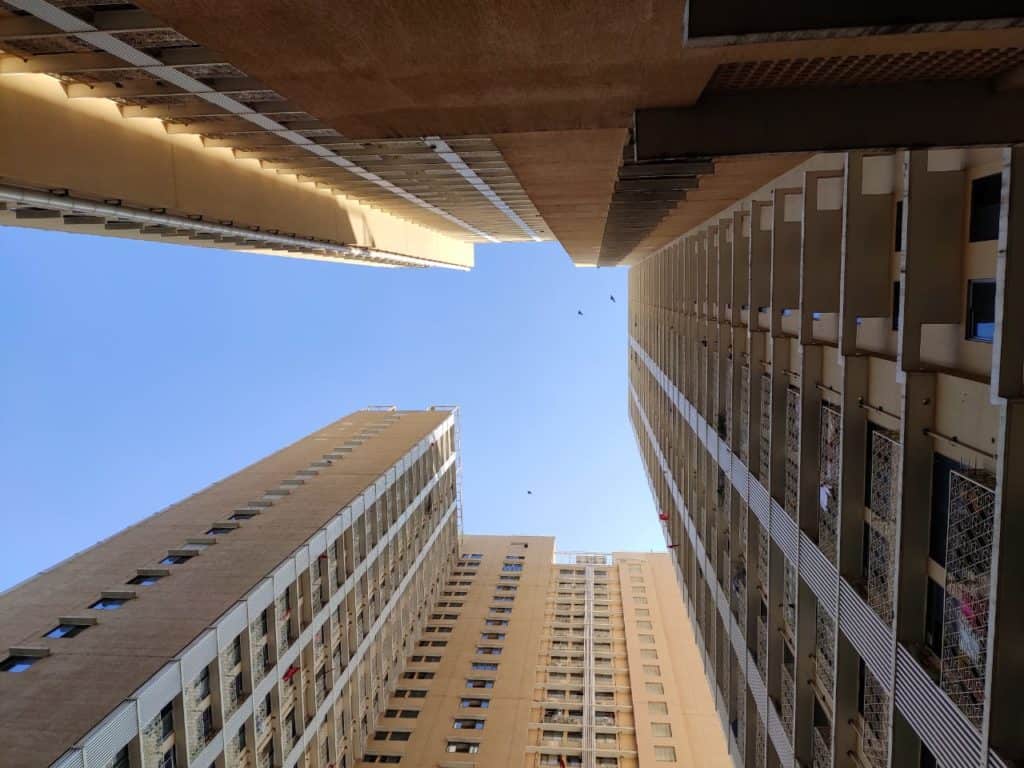
In a small shop in Bhendi bazaar, owner Devendra Jain shows an elderly customer two polka-dotted ridas, the colourful skirt-scarf combo worn by Bohra women, trying to match to a picture on his phone. After decades of running the business that started with door-to-door sales, his loyal customers are now experiencing a more convenient shopping experience.
In the last few years, the shop has gone from a dingy spot under a staircase in a chawl, to a spanking new space on the second floor of the newly redeveloped Al Sa’adah Towers.
13 buildings were demolished to make way for the 41 and 36-storey buildings, soaring over the lowrise blocks that carpet the area. A shopping centre makes up the lower floors, where over 120 shops, including Jain’s, sit at the periphery and look out into the lanes. Parking, service floors, and common amenities, with a playground, benches, and community hall occupy the middle portions. Residential apartments start from the 9th floor, a fair height away from the sounds of honking and the hustle and bustle.
Community-driven redevelopment of Bhendi Bazar
The towers are just a glimpse of the drastic transformation yet to come. Driving it is the Saifee Burhani Upliftment Project (SBUT), a not-for-profit trust under the religious head of the Bohra community, a sect within Shia Islam. On the whole, 250 lowrise buildings over 16.5 acres, 80% of which have been declared unfit to live in by MHADA, will be flattened. 3,200 old families and 1,250 businesses are in various stages of moving out to transit areas, and then to the skyscrapers that will replace them. Termed as an ‘upliftment’ project, each family will get a minimum of 10% increase in their property size, the smallest of which is 350 sq ft.
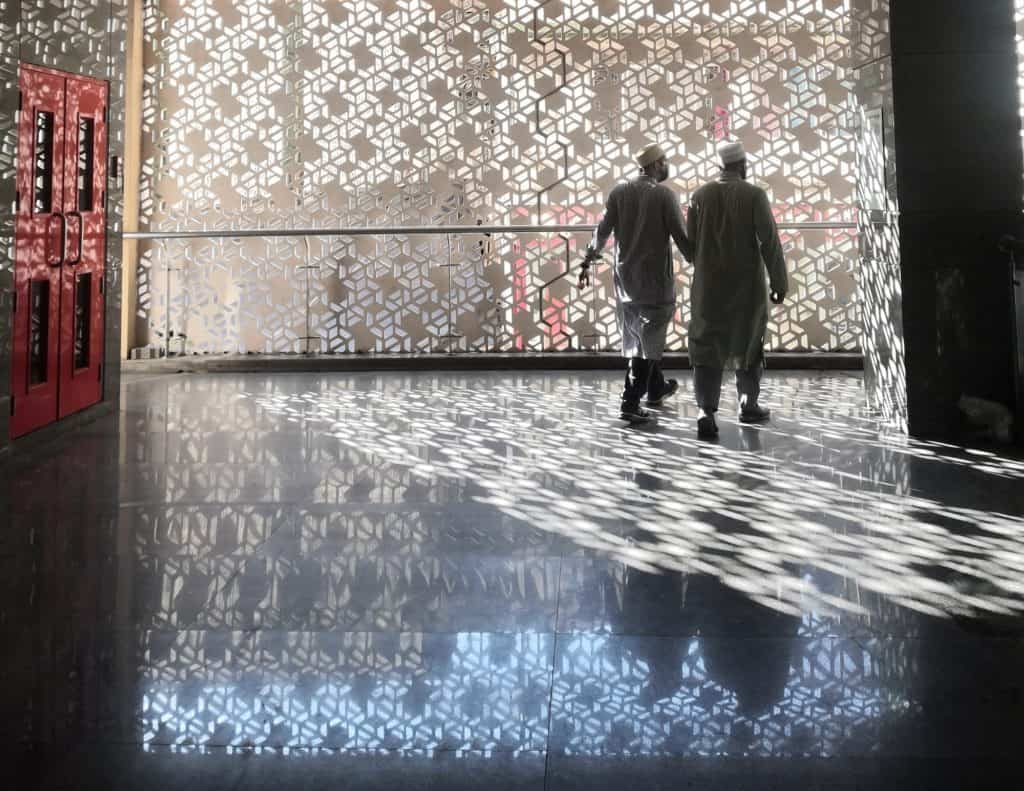
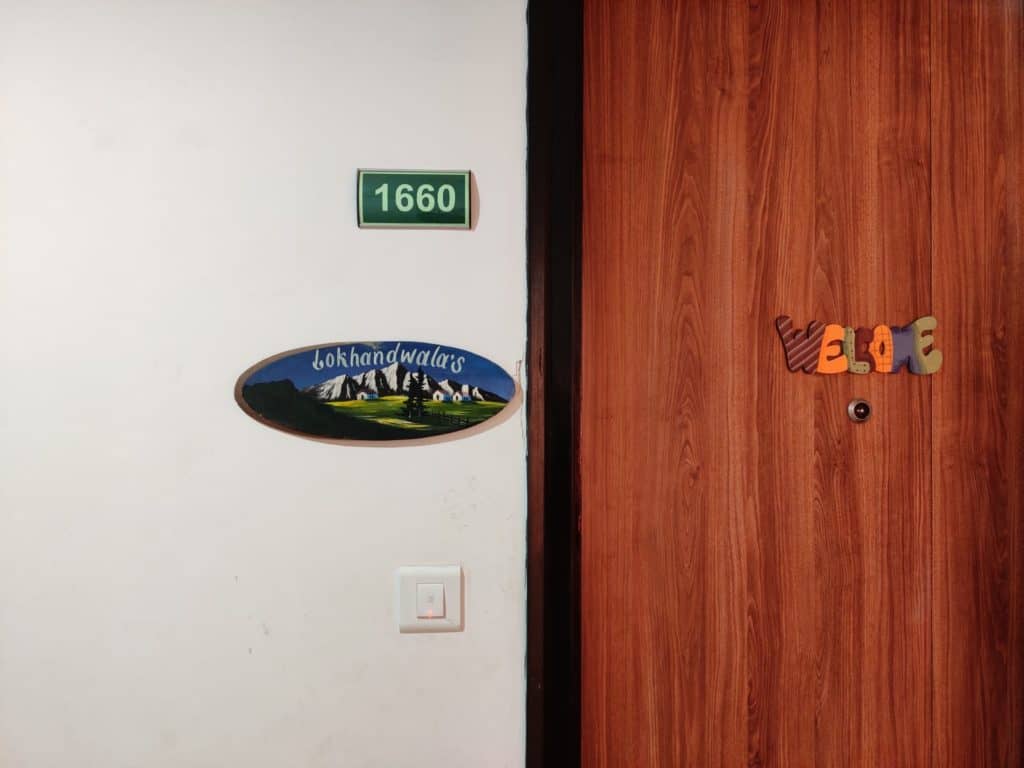
“In every building, there was a narrow corridor called the ‘house galli’, where garbage would be thrown for collection. This would get the water pipes contaminated, especially in monsoon, and we’d have to let the taps run for 15 minutes before the water turned clear,” says Saifuddin Lokhandwala, a house and shop owner in the new towers. With his wife and son, he is among the 550 residents that moved in February 2020. And despite having a second home double the size nearby, this is the one he prefers.
In stark contrast to his old dwellings, the towers not only have segregated garbage chutes for dry and wet waste, composting, and 24×7 water, but also rainwater harvesting, a sewage treatment plant, and solar panels.
A cluster redevelopment approach for Bhendi Bazaar
Across the busy Mohammed Ali road, is Saifee Book Agency. Saifuddin Yusuf Golwala, the owner, is a Bohra, but unlike his peers from the areas marked for redevelopment, he doesn’t expect change will come to his side any time soon. “This is a municipal building,” he points out.
He has good reason to be sceptical. In 2019, data from MHADA revealed that only 7% of cessed properties (those that pay a repair tax) were redeveloped in the 20 years prior. 462 buildings were stuck in redevelopment projects that remained non-starters, despite being given NOCs to go ahead.
Read More: Has urban planning in Mumbai failed?
“The Bhendi Bazaar case is unusual,” says Lalitha Kamath, an urban planning expert at the Tata Institute of Social Sciences (TISS). “Most cluster redevelopment projects of these kinds have failed miserably, largely because it becomes difficult to accommodate all the different claims, of people, economies and time, on a particular space.”
The Maharashtra government introduced the Cluster Redevelopment Scheme (CDS) in 2009, to incentivise area-wide redevelopment of old buildings. Builders are offered a floor space index (FSI) of up to 4, in return for adequate recreation space and infrastructural facilities. But there have been very few takers of the policy. Only one, One Avighna Park in the mill lands at Lalbaug, Parel, has been completed.
The power of religious sanction
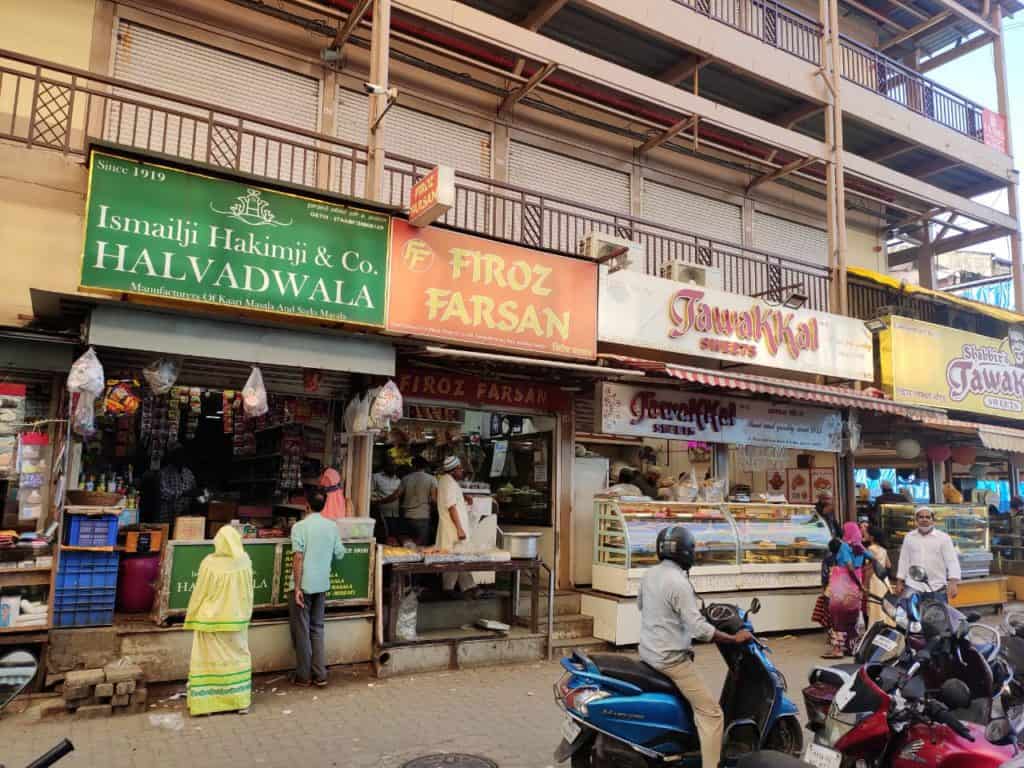
Saifuddin Yusuf admits there are problems, including those of traffic and noise, but moving his shop is simply not an option. The central location and popularity with shoppers helps businesses and attracts street vendors selling their wares in kiosks and handcarts. Shoppers have a choice of goods of different styles and price points lined cheek by jowl, and popular food joints nearby add to the attraction.
Redevelopment also carries with it the risk of failure, or a long drawn-out process and displacement. With cluster redevelopment especially, the scale of the regulations and permissions required can cause derailments. SBUT itself was founded in 2009 to execute the project, but construction didn’t start till 2016. A stop work order, land acquisition issues, and change in builders have delayed plans for completion.
“You need something to cement it all together, and state-led redevelopment is not a sufficient solidifier. A religious head has supplanted it in this case,” says Lalitha.
70% of the residents in Bhendi bazaar – which is incidentally the fraction of consenting tenants required for redevelopment – are Dawoodi Bohras. The Raudat Tahera, the shrine of the last two religious heads, including Syedna Mohammed Burhanuddin who initiated the upliftment project, imparts a spiritual significance to the area. The global patronage enjoyed by the SBUT, not to forget its philanthropic coffers, has been instrumental in making the project a reality.
The question then arises: how viable is such a centralised but community-led project for the city?