Citizens, civil society practitioners, and academia have come together to launch ‘Ellara Bengaluru’, a community-driven coalition.
Representative image. The tabled Greater Bengaluru Governance Bill 2024 provides the Greater Bengaluru Authority executive powers, undermining existing institutions. Pic: Pragathi Ravi
Bengaluru has a culture of active citizenry. Groups working on various issues, such as waste, water, and other civic matters, have mostly been working in silos. Whilst a lot is being said and done on infrastructure, governance etc. the focus on climate change at a grassroots level is still missing.
Now, prominent social impact networks and individuals have joined forces. Citizens, civil society practitioners, and academia have come together to launch ‘Ellara Bengaluru’, a community-driven coalition to create initiatives to make Bengaluru climate-resilient and inclusive.
The coalition will work on enabling people across all wards to be fully equipped to tackle various economic and livelihood challenges caused by growing climate adversities. The initiative has been backed and supported by Mahila Housing Trust. Ellara Bengaluru sets its inaugural footprint in the heart of the city: Shantinagar ward 166.
“With the urban landscape continuously changing, it’s important for the representation of the informal sector; and having actively worked with this sector it becomes crucial for us as an organisation to represent this section.”
Akbar A, Director Programme Design at Hasiru Dala, a partner with Ellara Bengaluru
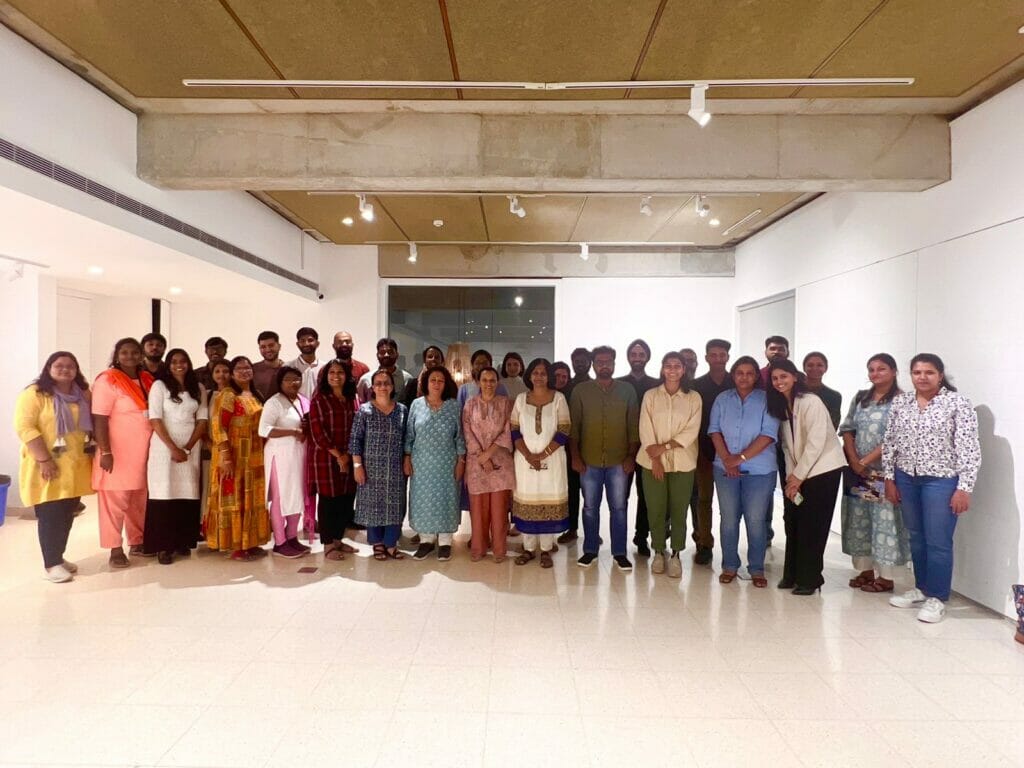
Team Ellara Bengaluru. Pic courtesy: Ellara Bengaluru
Each organisation will bring its own functional expertise and create ward-level factsheets that will tailor comprehensive data tools, which in turn will be used in working on ward-level reforms. These factsheets will capture critical socio-economic and infrastructural data, and environmental parameters that will help facilitate development actions at a ward level.
Speaking on the importance of this coalition, Bijal Brahmbatt, Executive Director of the Mahila Housing Trust, said that this coalition is bringing together the voices of the vulnerable and is intersecting it with concepts of urban development and climate resilience. “With increasing urbanisation, and the climate becoming a big issue, climate plans are still made separately and not integrated with the actual urban development plans in cities. We are trying to bring together these two sects of voices through this coalition,” Brahmbatt added.
The coalition envisions working towards an approach that supports grassroots approaches to integrating principles of climate change and disaster management as well.
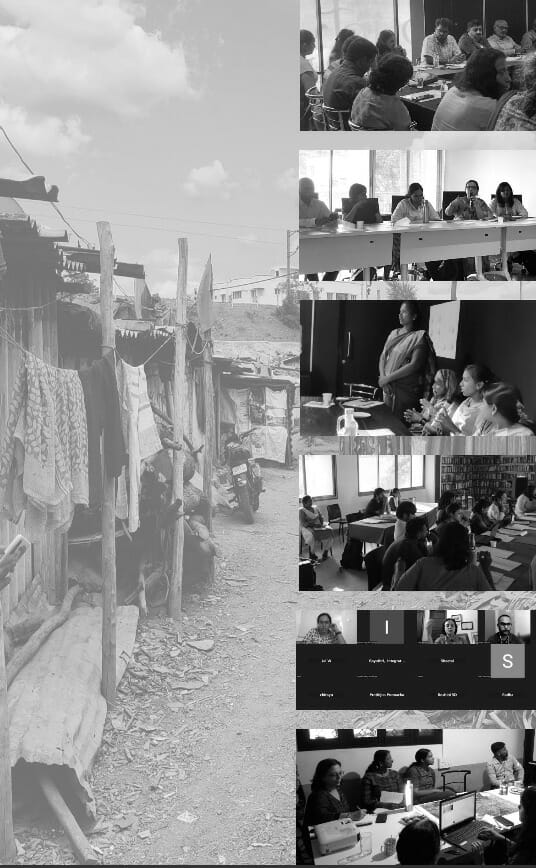
Inclusive ward planning of Bengaluru. Pic courtesy: Ellara Bengaluru
The campaign plans to cut across key thematic urban issues, including water and sanitation, solid waste management, health and nutrition, environment, energy, mobility, public spaces, and livelihood. Climate change -resilient urban housing for the vulnerable, associated disaster management, sanitation and WASH (Water, Sanitation, and Hygiene) will be the initial focal themes for action.
Bengaluru has seen its population increasingly multiply over the past two decades with an influx of people arriving in the city to pursue employment and educational opportunities. These factors, coupled with the adversities associated with global climate change and growing urbanisation, have created multiple urban bottlenecks like rainwater flooding, sanitation, waste management, increase in average ambient temperatures, among other issues.
Policymakers across the globe relentlessly stress the fact that climate change and issues of inequality are deeply connected and cannot be dealt with in isolation. The poorest in the country who depend on outdoor and manual work, and children and women are comparatively more vulnerable to ghastly impacts of climate change.
Ellara Bengaluru, a name that identifies not only the Kannada identity but also resonates with the inclusive spirit of the forum, aims to take this city climate action plan across the ward level.
The coalition plans to engage nodal officers on climate actions to gather inputs from the local communities and incorporate these learnings into the overall framework. Ellara Bengaluru aims to eradicate these inequalities and create more equitable living conditions by empowering the urban poor and vulnerable communities living in Bengaluru.
“With the urban landscape continuously changing, it’s important for the representation of the informal sector; and having actively worked with this sector it becomes crucial for us as an organisation to represent this section,” said Akbar A, Director Programme Design at Hasiru Dala, a partner with Ellara Bengaluru. “Bengaluru has a lot of NGOs working on different things, hence it is important that all these collectives come together and work on their areas of expertise,” he added.
The consortium will also include political representatives, city administrators, and city-level service providers.
The framework introduced by Ellara Bengaluru will seamlessly integrate into the workings of the city and shall continue to improve and evolve in parallel to the city’s growth and development.
[The above information was shared via a press release and has been republished here with minimal edits]
Mumbai's landscape is changing with big infra projects. Experts suggest better use of government plots and improved street design to retain green cover.
Long before Mumbai’s relentless summer even began this year, the city was already simmering. In March, Mumbai was hit by a severe heatwave, with the temperature reaching a five-year high of 40° Celsius. As rapid urbanisation and a flurry of infrastructure projects replace dense tree cover with steel and mortar, heatwaves seem to have gone from being rare occurrences to an annual threat. The Mumbai Metro Rail Corporation Limited (MMRCL) cut a whopping 3,093 trees in Aarey Colony to make way for Mumbai’s Aqua Line ( Metro 3). For environmentalist Stalin Dayanand, this is not just a temporary problem.…
71% of waterbirds at Begur Lake are declining. A visit to one of Bengaluru’s rapidly deteriorating lakes shows what's causing the collapse.
During the Open City biodiversity datajam held in December 2025, our group examined the ecological trends around Bengaluru’s lakes. Our analysis suggests a majority of waterbirds are declining across the city's lakes. Earlier, we addressed crucial questions on how migrant and resident waterbirds are surviving across 14 of Bengaluru’s lakes, how the shape of the lakes influence microhabitats, and how a scoring system can be used to record the decline in lake quality and bird populations. The last of our four-part series turns its attention to an individual site. As part of this study of waterbirds in 14 city lakes,…