An early morning at Lalbagh

You'll have a range of wildlife to keep you company during your walk, from the rare Golden Oriole to the squabbling Pond Herons and more.

The Lalbagh Botanical Garden is one of the most wellknown parks in this part of the country and is particularly treasured by Bangaloreans. Visit the park early in the morning and you’ll see a range of people — from expert naturalists and amateurs to just plain nature lovers and walkers.

Mahesh Srinivas, a Bangalore based amateur photographer has captured a range of pictures of Lalbagh’s vibrant wildlife early in the morning. Here’s a glimpse.
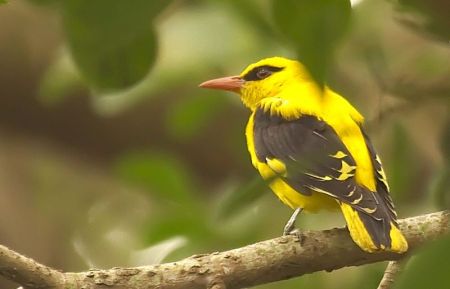
The elusive Golden Oriole on a Peepul Tree, at Lalbagh Gardens.

The elusive Golden Oriole on a Peepul Tree, at Lalbagh Gardens.

Pond Herons squabbling over fishing rights at the Lalbagh Lake.

Pond Herons squabbling over fishing rights at the Lalbagh Lake.

Checkered Keelback snake breakfasting on fish, at the Lalbagh lake.
Checkered Keelback snake breakfasting on fish, at the Lalbagh lake.

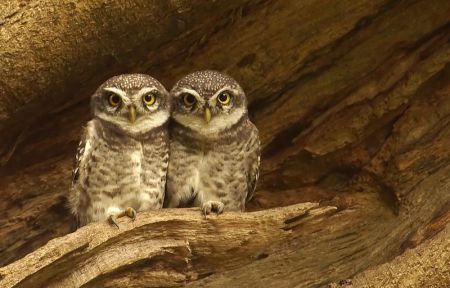
Spotted Owlets on a broken branch of the Spathodea tree.

Spotted Owlets on a broken branch of the Spathodea tree.

Detail of a Hornet's Nest with hornet.

Detail of a Hornet’s Nest with hornet.


Leave a Reply

Your email address will not be published. Required fields are marked *

Similar Story

The wild in the city: What citizen scientists tell us about Bengaluru’s biodiversity

Spatial and temporal biodiversity patterns, as observed by citizen scientists in the city during 2016-2025, were studied at a datajam in December 2025.

Imagine you’re out on a morning walk, phone in hand, when you spot a butterfly you’ve never seen before. You snap a photo, log it into a citizen science app, and voila! You’ve just contributed to crucial biodiversity monitoring. This isn’t just a hobby; it’s part of a global movement where ordinary people collect, record, and sometimes analyse data about plants, animals, and ecosystems. Citizen science stretches the reach of ecological research. Every observation adds to unique longitudinal datasets that reveal phenology — periodic events in the life cycle of a species — along with species distribution shifts and population…

Similar Story

Air quality management is a governance problem, not just an environmental one

Despite massive funding, Indian cities face weak governance, poor data, and limited capacity, as air pollution continues to worsen.

Indian cities are struggling to breathe. Air pollution is a year-round governance challenge. In 2024, 35 of the 50 most polluted cities globally were in India, with PM2.5 concentrations above 66.4 μg/m3. This is at least 13 times the World Health Organization (WHO) guidelines and at least 1.6 times the National Ambient Air Quality Standards (NAAQS) in India. Citizens continue to bear the brunt of worsening air quality, and urban local governments (ULGs) are at the forefront of the problem, being primarily accountable for their citizens' first mile. While they do have a role to play in addressing this threat,…