Websites? I mean, the homes of those that make homes of silk… that is, spiders.
We’ve all seen spider webs around us: in the house, in the garden…and indeed, so synonymous is clearing spiders’ homes with our idea of keeping house well, that even when we talk about clearing our minds, we say, “let’s clear the cobwebs”. However, a closer look at these “websites” show they are marvels of engineering, strength and resilience.
Spiders spin webs out of the silk that they produce, which passes out of their spinnerets. But the actual “architecture” of spider webs can vary very widely.
We are all familiar with the regular “cobweb” that many spiders spin, with a central point and many threads radiating like spokes, outward.
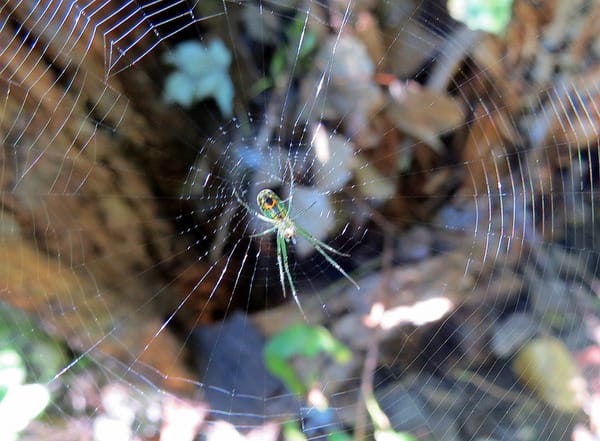
The very large spider in the centre of most webs is female. Most spiders are solitary, and also cannibalistic, which means that the female can often eat up the male after mating!
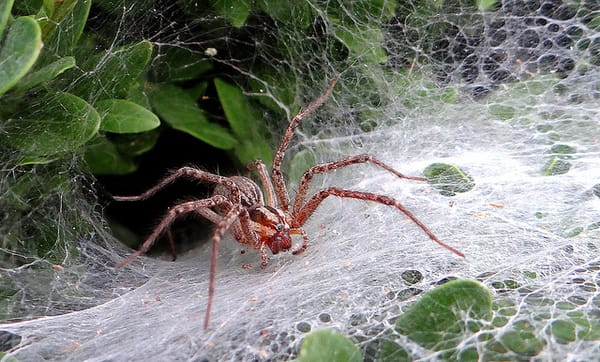
There are Funnel-web Spiders, which make a carpet of silk, which leads to a funnel, at the mouth of which the spider usually sits, waiting for an unwary insect to land on the “carpet of death”. Here, you can see the funnel slightly to the left of the picture.
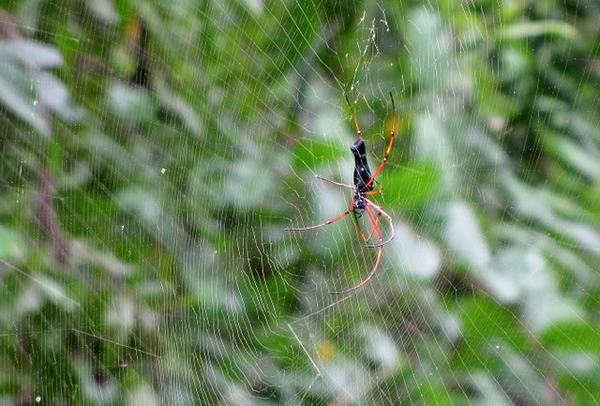
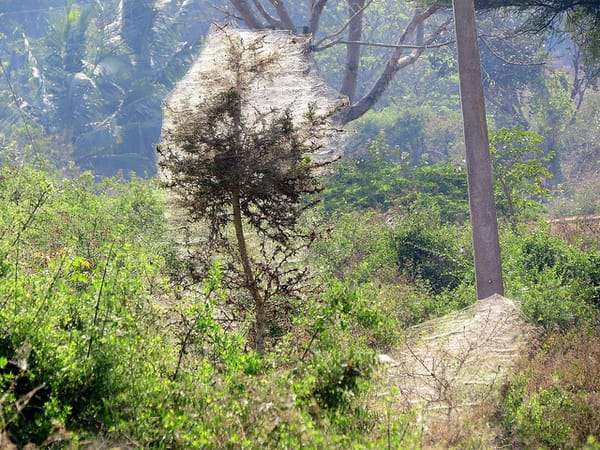
During the pre-monsoon months, the Giant Wood Spiders spin webs as large as they are; you can often see very large, undisturbed webs in the Bannerghatta Zoo area and in the outskirts of our city (which is where I took the following two photos).
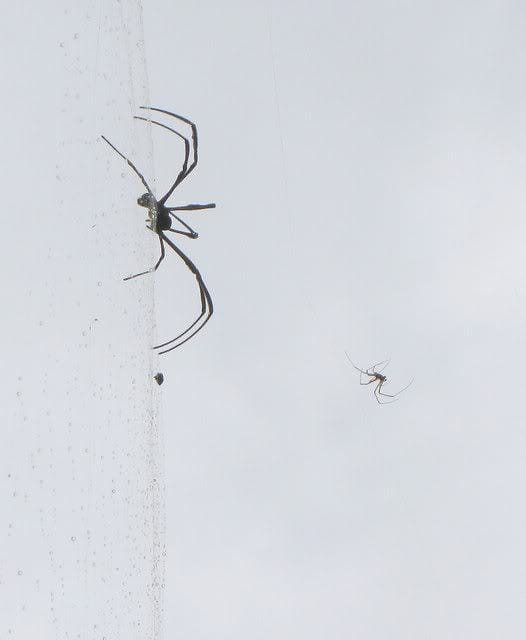
Apart from prey, these webs will often also have the males, which are quite tiny, compared to the ladies.
It can be an amazing sight, sometimes, to see entire plants (and even trees!) covered by webs.
Another kind of web is woven by the Tent Spiders; I found this particularly beautiful 2-tier “tent” structure in the grass.
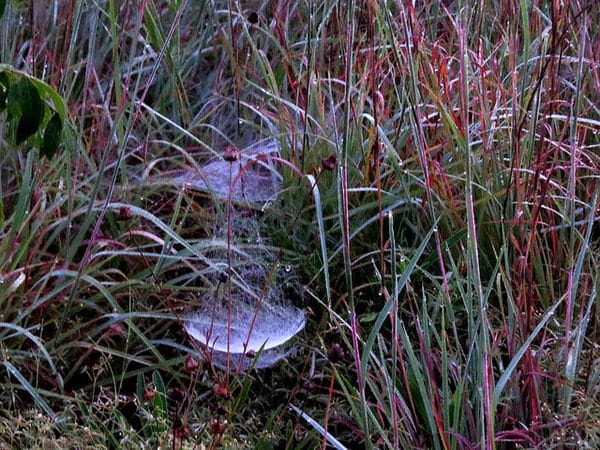
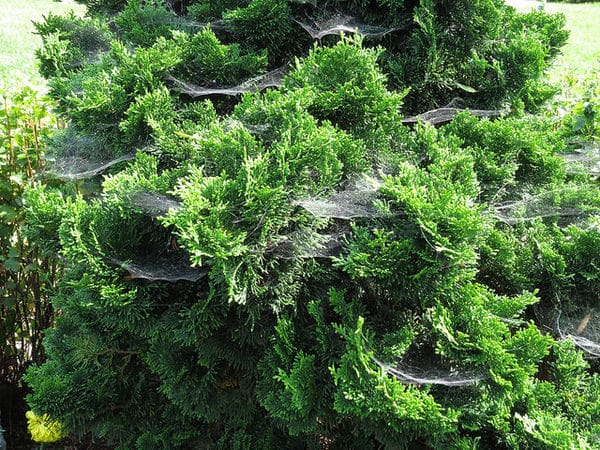
You can also see many of these “tents” here.
It can be an amazing sight, sometimes, to see entire plants (and even trees!) covered by webs.
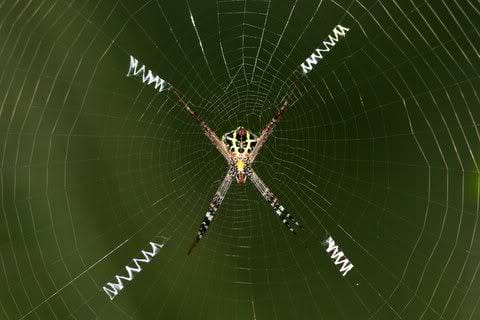
Some spiders add some elements to their webs to give extra strength. Since these elements look like an “X” on the web, the spiders are called “signature” spiders.
One type of spider which likes to live in groups is the Social Spider, and these actually build “apartment complexes”, often covering whole plants. We might find 20 to 30 individuals in one of these very complex structures.
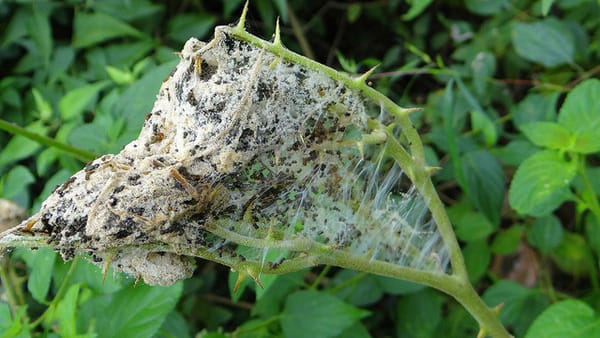
It’s lovely to see these beautiful creations, even after they have been abandoned by the owners.
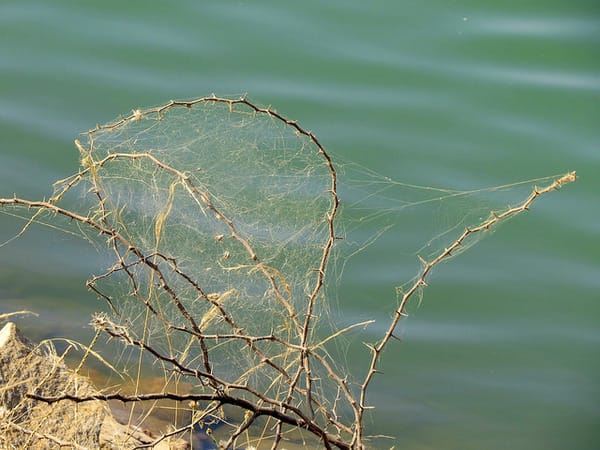
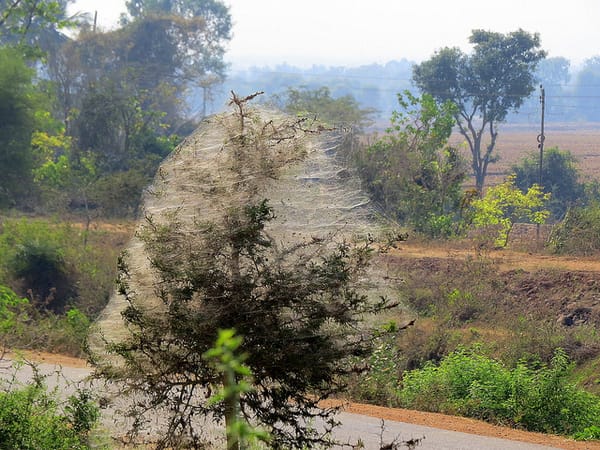
There are also spiders known as “Harvestmen” or “Daddy Long Legs”, which, instead of spinning webs, seem to clump together. What I thought was a piece of the bark of this tree, turned out, on closer inspection, to be a mass of spiders.
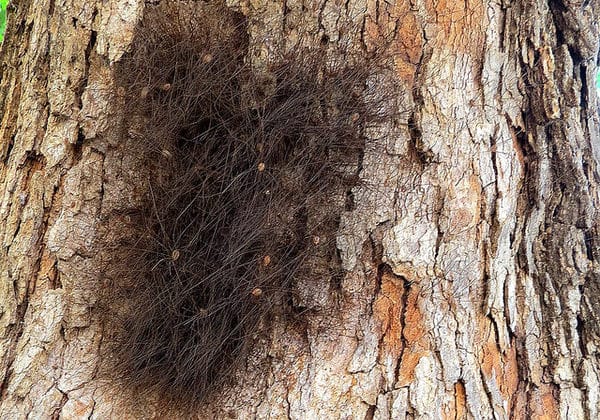
Here they are, moving about! (I just added a little music to that!)
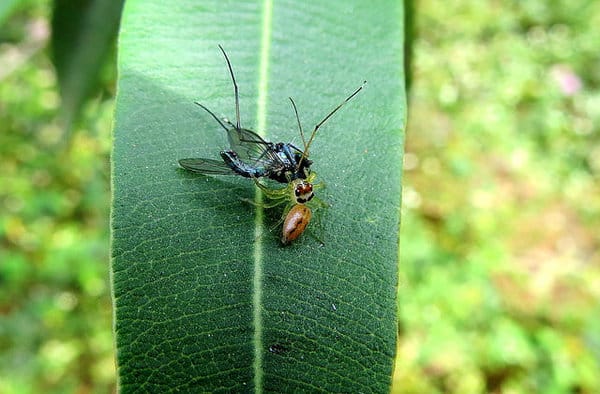
Other spiders, do not spin webs at all, but lurk in plants.
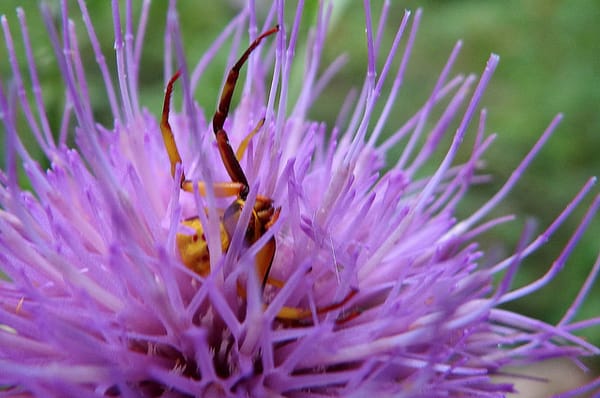
And then quickly pounce on their prey.
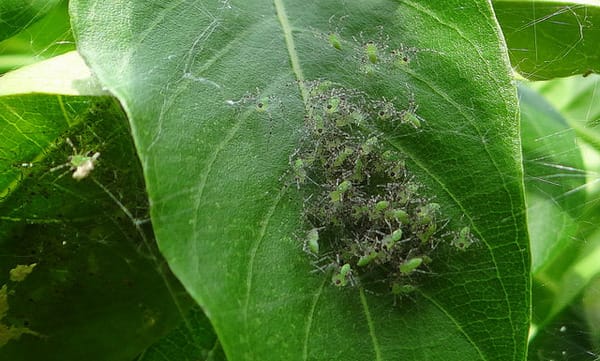
Some webs are nurseries, where you will find babies ready to go out into the world!
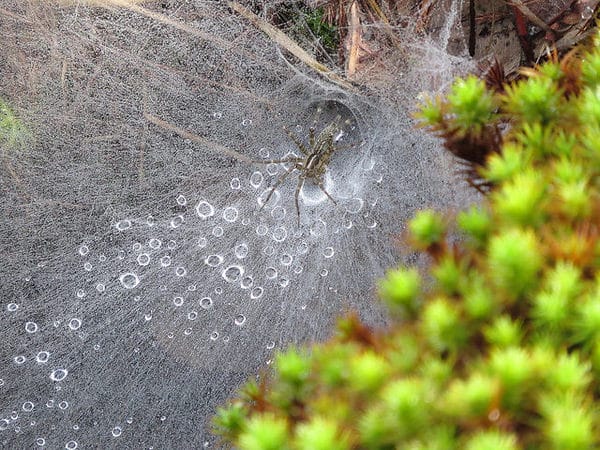
A spider web, festooned with raindrops, can be a diamond-spangled creation of beauty!
So, the next time you find yourself facing a web of silk, don’t “brush it off”, literally or figuratively… do look closer to see the interesting things it contains!
Related Articles
Sometimes Harvestmen are not farmers
What’s crawly need not be creepy
It’s a tunnel. It’s a theatre. No, it’s a spider web!