Anagha Satam’s* son was diagnosed with Attention Deficit Hyperactivity Disorder (ADHD) at the age of six and a half, following a suggestion from his private writing tutor to get him evaluated. But Anagha’s initial attempts to share the results with her son’s school were dismissed. Though the school authorities eventually acknowledged her concerns, Anagha found that the special educators there lacked the right approach and were focused on the child reaching a certain rank in class. “He has ADHD,” she says, “and the special educator’s job is to help him manage his symptoms and to teach him that it is okay if his performance does not match the rest of the class.”
After changing schools this year, things improved. Earlier, her son would feign stomach aches to avoid Math class. Now, when he struggles, the school redirects him to other activities, such as fetching books and running errands. “This keeps him engaged and reduces his urge to run away,” says Anagha. The shift highlights the difference a good special educator can make.
Is inclusion just a buzzword?
Inclusive education is a key objective of policies such as the Samagra Shiksha Scheme (which superseded the Sarva Shiksha Abhiyan), the National Education Policy 2020, and the Right to Education Act, 2009. The Rights of Persons with Disabilities Act, 2016, also ensures that children with disabilities have access to education. It mandates that schools admit students without discrimination and make campus modifications to provide inclusive support. Yet, inclusion often remains a buzzword, with practical challenges hindering implementation.
Mumbai’s schools are struggling to find enough qualified special educators, leaving children with disabilities without the right learning support, despite inclusive education mandates. Professionals in this field often face poor pay, limited recognition, and isolation. Moreover, general teachers lack the training needed to support diverse learners in mainstream classrooms.
Gap in demand and supply
“Institutions are not able to produce so many special educators that they can satisfy the demand that comes from the schools. We also struggle to employ special educators every year,” says Meghana*, Head of the Special Education Department of a Mumbai school chain.
According to this report, only 1.2 lakh special educators are registered with the Rehabilitation Council of India. The 2011 census recorded 2.68 crore (26 million) people with disabilities in India, representing 2.21% of the total population. That census accounted for eight categories of disabilities, but the upcoming 2026 census will expand this to 21 categories. This would significantly increase the number of children with disabilities, further straining the already limited human resources available to support them.
Sujata Bhan, Head of the Department of Special Education at SNDT Women’s University, Mumbai, notes that enrolment in special education programmes remains low, leading to a growing gap between the demand for and supply of qualified special educators.
Meghana adds that while special educators were once limited to special schools, new policies require their presence in mainstream schools. For instance, an amendment to the RTE made in 2022 recommends one special educator per ten students (classes 1–5) and one per fifteen (classes 6–8). Experts say that this ratio varies based on the severity of the student’s disability.
Schools employ special educators to meet the mandate of government policies, but the hiring is often reduced to a checkbox exercise, explains Meghana. As a result, the special educators may become less productive.
Read more: Most urban schools violate law, exclude children with disabilities
Why aren’t there enough special educators?
“With the growing advocacy for inclusive education, many parents now prefer to enrol their children in regular schools,” says Fionika Sanghvi, Principal of SPJ Sadhana School, a special education institution in Mumbai. However, mainstream schools are struggling to keep up, as there are just not enough special educators to meet the rising need, she adds.
There are some glaring reasons for this incongruity. Neha, a special educator at Arushi, a learning centre for children with disabilities associated with the Department of Special Education at SNDT University, says that pay disparity between general and special educators is one of them.
While salaries may widely differ based on the type of schools, a government school special educator in Maharashtra was getting a pay of only about ₹20,000 in 2023, according to this news report.
Moreover, the role of the special educator carries huge responsibilities, and without the right guidance, it becomes more challenging. Neha shares that the support from the Special Education Department helped her in the early years of her profession. She adds that it is disheartening when many parents struggle to see the potential in their child.
Meghana reiterates that poor pay contributes to the shortage of special educators. Unlike other professions, this job also does not offer enough growth opportunities. Special educators rarely get the recognition and acknowledgement they deserve, especially in mainstream schools. General educators often look down upon them and are even dismissive of their suggestions and expertise. “Other staff members often do not invite them for school functions, and even refuse to eat lunch with them,” adds Meghana.
Speaking about similar experiences of her friends, Neha says that many special educators often spend the entire day by themselves in the resource room. “It is ironic that a professional working towards inclusion should be subjected to social exclusion.”
Understanding the special educator’s role
Meghana observes that while schools are eager to label themselves as inclusive, they rarely put in the necessary effort. This can be seen in the way schools often misunderstand the role of a special educator. “Technically, special educators should be helping children develop or refine skills they require to access the curriculum.” For instance, if a child is facing challenges with writing, the special educator would work on strengthening motor skills to enable writing. Or special educators may help class teachers tweak their lesson plans.
Instead, schools urge them to adapt the general curriculum developed by the class teachers and simply teach it to children with disabilities, without ensuring individualised learning supports. Special educators are even used as substitute teachers, a waste of their expertise, adds Meghana.
Challenges in filling this gap
Experts suggest that the most practical way of making inclusive education a reality is by training teachers in mainstream schools to teach children with disabilities. But that is easier said than done.
Sujata explains, “RTE emphasises mainstreaming. Policies are in place. But mainstream schools are not ready for it. Teachers are not trained to manage diversity in class.” She adds that there is an urgent need to build the capacity of mainstream teachers. Waiting to employ special educators in all mainstream schools may turn inclusion into a distant dream.
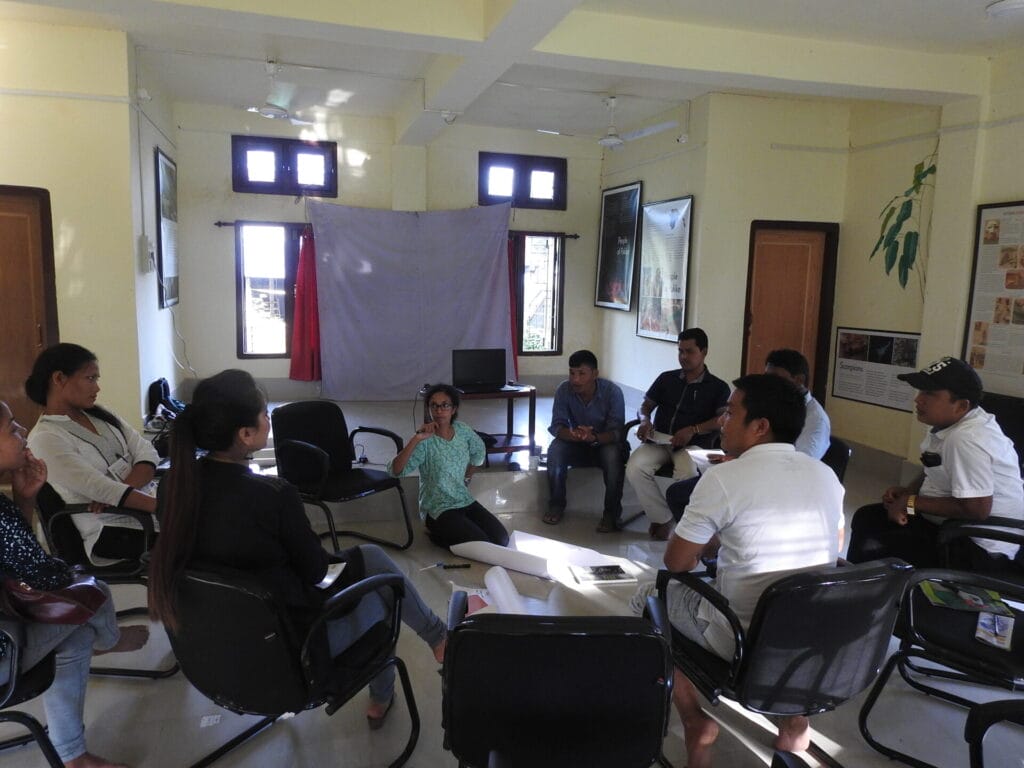
Yamini Purohit, a mainstream school teacher, has had students with disabilities in her class. Her biggest challenge has been a lack of training to support their learning. She says, “A lot of teaching now talks about differentiation, and there are a lot of techniques for differentiation, but these don’t really address the reality of challenges in inclusive classrooms.”
She cites an example to drive her point. She often wonders how she can make students with disabilities comfortable in class and ensure they receive the same quality of education as their peers, without drawing undue attention to them. This becomes especially relevant in cases where students or their parents are resistant to accepting support, which she finds is quite often the case.
Yamini’s concern is shared by Abhay Joshi*, whose son Sohum was diagnosed with dyslexia, dyscalculia, and dysgraphia (learning disabilities) when he was in class seven. Sohum’s school did not have a special educator, so his parents arranged for external remedial support. Abhay says that it made a huge difference. He believes that having a special educator in the school would certainly have helped. But he also expresses his concerns about the psychological impact of classmates knowing that the student is receiving support from a special educator. He appreciates the confidentiality that comes with getting external help.
Educating the educators
So, how can mainstream teachers get the right skills to incorporate inclusive practices in their classrooms? The Bachelor of Education (B.Ed.) course includes a component titled ‘Creating an Inclusive School’ taught in the fourth semester, but educationists argue that it is not enough. The course must include a more robust practical component, with hands-on training to manage diversity in the class, they say.
Moreover, teachers say that learning about inclusion during the B.Ed. course is not sufficient; they require regular in-service training to keep up with new methods of differentiated learning. Some institutions, such as the SNDT University, offer a B.Ed. in Special Education that equips future educators to teach children with disabilities.
Teachers can also take up short-term courses focused on inclusive education. Sujata notes that while the Maharashtra government runs capacity-building programmes, these need to be scaled up to reach more teachers or have master trainers, who can train others. “Managements and school principals must step up and prioritise teacher training,” she says. “They need to release teachers to attend these sessions.”
Steps towards making inclusion a reality
Educators stress the urgent need to create awareness about special education as a profession and to normalise disability. Sujata notes that mainstream teachers often feel unequipped to support students with disabilities, giving up too quickly. Teachers can adapt materials for students with mild disabilities, while students with moderate to severe disabilities may require the support of a special educator.
Meghana agrees. “For example, simple accommodations like larger font, wider lines, and colour-coding can help a student with dysgraphia (a learning disability that affects a person’s ability to write).”
At the heart of all inclusion efforts is the child. Access to qualified educators can ensure effective learning support for children with disabilities.
What changes are needed
At the school level
- Invest in infrastructure changes to ensure inclusion and provide resources for children with disabilities.
- Clearly define and respect the role of a special educator.
- Provide them with a conducive atmosphere to support their work.
- Provide space for a resource room.
- Providing regular in-service training on inclusive education for class teachers.
At the policy level
- Ensure pay parity between mainstream and special educators
- Employ adequate special educators in government schools and monitor private schools to ensure special educators are employed.
- Include a practical component in the general B.Ed. course.
- Build awareness in colleges about special education as a career.
- Make in-service training to teach children with disabilities mandatory for general teachers.
- Investing more in special education
*names have been changed on request
This article is a part of our work supported by the Sudha Mahesh grant, exploring how inclusive education can bridge gaps in access and equity for children with disabilities or special needs.
Also read:
- Discovering abilities through disability
- Accessibility: Mumbai’s lifeline can make lives of people with disabilities easier, but how?
- Mathru school transforms lives of special needs children in Bengaluru
I Pattu Muthuselvan,
Hi all….Gulab Madam and Ruksana Madam You are a true Inspiration to all and Such a Great work that i have seen ever in my life as i have worked with you all and still wish to do more together. I always admire the work that you socially do for needy people.I,am Truly greatful for all your support ma’am!❤️