With air pollution levels hovering between the ‘poor’ and ‘severe’ categories, Delhi has been gasping for breath. The air quality has continued to deteriorate, with the capital recording an AQI of 372 on December 2nd, according to the Central Pollution Control Board.
So, is the winter mist coupled with the vehicular pollution only to blame? The reality is more complex than that. Dust from construction activity and malba or construction and demolition (C&D) waste contribute significantly to air pollution in Delhi.
Moreover, managing this waste is a huge challenge for the city’s civic administration, and the majority of C&D waste ends up in the landfill. India generates around 150 million tonnes of C&D waste annually, accounting for 35% to 40% of total waste generated. And only 1% of this is managed and recycled, says a 2020 study by the Centre for Science and Environment.
Eliminating construction waste
But a civic initiative in Delhi and four other States is quietly working to change the narrative. The Air Pollution Action Group (A-PAG) is collaborating with the government to tackle construction debris and improve air quality. Founded in 2019, A-PAG is a non-profit foundation working with the vision of improving air quality to meet basic sustenance levels in India. Their focus is on the indo-gangetic plains as the impact of deteriorating air quality is acute there.
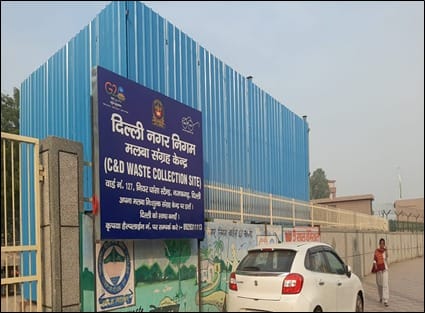
By establishing malba collection points, awareness building and monitoring, the A-PAG team has managed to divert C&D waste from landfills to processing units.
“Strengthening C&D recycling helps cities shift away from mining-intensive construction toward circular urban development,” says Kritika Choudhary. “When RWAs, homeowners and contractors know where to dispose of malba, they become partners in keeping streets clean.”
Kritika Choudhary is the Associate Director and Head – Strategy Planning and Policy at A-PAG. In a video interview with Citizen Matters, Kritika says the team has collected 3.5 lakh metric tonnes of C&D waste over the past two years and has operationalised 67 secondary collection points.
“Scaling secondary collection points, digital tracking, and driving demand for recycled products are the big opportunities for Indian cities,” Kritika said. Citizen Matters discussed with her about the challenges and opportunities that our urban local bodies have in managing the waste. Watch the full interview below.